AI Safety Calls Send Nasdaq Lower as Chip Stocks Decline
Key Takeaways
- •Dario Amodei proposed slowing improvements in AI models so companies can address safety concerns.
- •Sam Altman endorsed pacing frontier AI development and said OpenAI would use independent evaluators with employee-like access.
- •OpenAI has reportedly delayed its public offering until 2027, while Anthropic still plans a fall listing on Nasdaq.
- •Brent crude traded near $108 per barrel after Saudi Arabia shut a key pipeline, adding pressure to markets.
- •Analysts said AI investment plans and model-training activity had not yet shown clear signs of slowing.
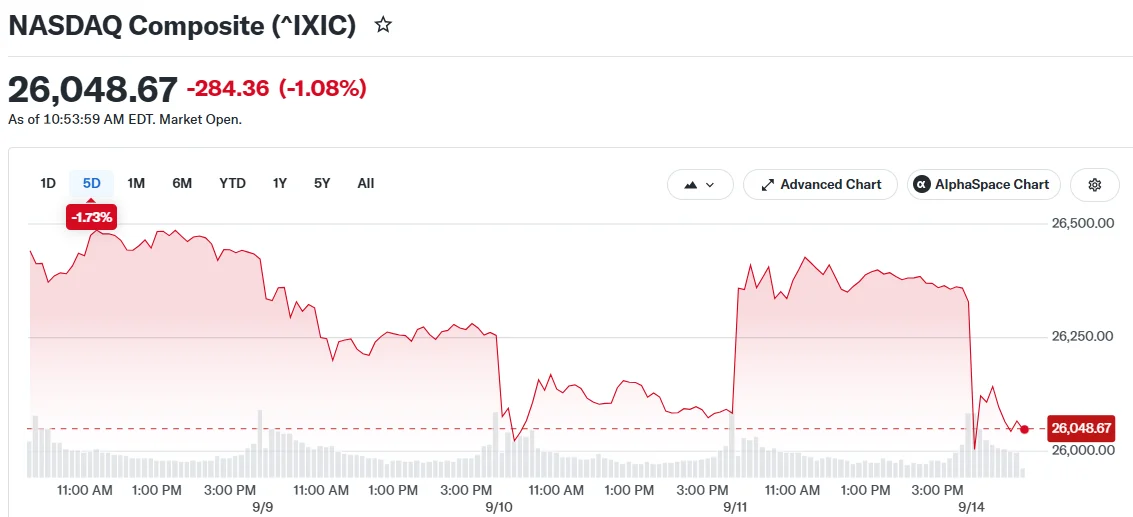
US technology stocks fell sharply on Monday after Anthropic CEO Dario Amodei called for a global slowdown in AI development and OpenAI CEO Sam Altman backed the proposal. Elon Musk also voiced support for Amodei’s position, catching Wall Street off guard and sending chip stocks lower.
The Nasdaq Composite declined 1.3%, while the S&P 500 fell 0.8%. The Dow Jones Industrial Average dropped approximately 256 points, or 0.49%.
Amodei published a 3,800-word essay over the weekend arguing that AI companies should slow the pace at which they improve their models so the industry can address safety concerns. “We must slow the pace at which we improve the capabilities of AI models,” Amodei wrote. He added that progress would still appear fast and that the additional time should be used wisely.
Altman agreed with Amodei in a post on X. “I agree with Dario that we need to pace the frontier. This has been a primary topic of discussions we've had at OpenAI in recent weeks. Committing to having independent evaluators with employee-like access is a great idea, and we will do the same. We'll have more to share soon.” — Sam Altman (@sama) September 12, 2026
Musk also supported the position. The alignment among the technology leaders raised questions about whether the industry’s rapid development and investment pace could change.
AI Safety Concerns Raise Questions About Investment
Markets had been pricing in continued rapid AI development. Calls for a slowdown prompted questions about how quickly AI companies would continue spending on infrastructure, chips, and data centers. For chip and infrastructure companies, the key distinction was whether the statements would be followed by changes to capital-spending plans or model-training activity.
Chip stocks were among the hardest hit. Nvidia shares declined as part of the broader technology selloff. In Asia, Samsung fell more than 4%, while SK Hynix also posted losses.
Some analysts said the reaction did not yet indicate that capital spending would moderate. Jeffrey Favuzza, a senior vice president at Jefferies, said there was no clear evidence that companies were preparing to reduce capital expenditure. He also noted that Amodei had not called for a halt to model training.
Mizuho analyst Jordan Klein advised investors not to panic, saying that “actions speak louder than words.” He distinguished between publishing an essay and actually reducing investment. Future company spending plans and statements about model training therefore remained important points for markets to monitor.
IPO Plans and Oil Prices Add to Market Pressure
The discussion also affected expectations for AI-company IPOs. Altman told Fortune that OpenAI is postponing its public offering until 2027 because of AI safety concerns. Anthropic still plans to list this fall and has reportedly selected the Nasdaq as its exchange.
Oil prices added to the pressure on markets. Brent crude traded near $108 per barrel after Saudi Arabia shut down a key pipeline. The ongoing conflict in the Middle East continued to push energy prices higher.
Traders were also monitoring the Federal Reserve. Rate-hike odds rose to 88% after Friday’s inflation data. Fed Chairman Kevin Warsh has said he will not provide forward guidance before Wednesday’s policy meeting.
The developments left Wall Street awaiting greater clarity on AI investment, energy prices, and monetary policy.
Source: CoinCentral

