The Business Case for AI Image Editors in Modern Digital Marketing
Key Takeaways
- •Marketing content volume has outgrown available design capacity at many organizations, creating bottlenecks for routine image requests across platforms, campaigns, and formats.
- •AI editing tools absorb repetitive work such as background removal, resizing and reformatting, batch editing, and minor touch-ups, freeing designers for higher-value creative tasks.
- •No sign-up editors, such as the tool from Ezeditor, remove adoption friction for quick, low-stakes, while account-based platforms remain better suited to core creative workflows.
- •Turnaround for simple edits typically shifts from hours in a shared design queue to minutes when handled directly, with queue times and the allocation of designer hours serving as observable signals of impact.
- •Human oversight remains essential for brand consistency, complex creative direction, and final review of client-facing assets, while implementation of these tools carries relatively low risk and cost.
Marketing teams are producing more visual content than ever before, distributed across more platforms, under tighter turnaround expectations — while design headcount has generally not kept pace with that growth. This imbalance is the practical backdrop behind the expanding use of AI image editing tools inside marketing operations. Rather than treating these tools as a novelty, this article examines the concrete business reasoning behind adopting them, organized around the specific problems they solve. For teams weighing how to allocate limited design resources, that reasoning matters more than any single tool's feature list.
What AI Image Editing Brings to the Workflow
At most organizations, the volume of marketing content has outgrown available design capacity. AI image editing tools close this gap primarily by automating routine, repetitive editing tasks such as background removal, resizing, and basic corrections, freeing skilled designers to concentrate on higher-value creative work. Lower-friction options, including tools that offer an AI image editor with no sign-up requirement, further reduce adoption barriers for quick, everyday editing needs. Human oversight remains essential for brand consistency and creative direction, which means these tools function as an operational efficiency improvement rather than a replacement for design expertise.
Reason One: Content Volume Has Outgrown Design Capacity
A typical monthly marketing calendar can demand dozens of image variations spanning different platforms, campaigns, and formats. Routing every one of these requests through a design team working in professional software creates a bottleneck, particularly for tasks that are repetitive rather than creatively demanding. AI image editing tools absorb a meaningful share of this routine workload, narrowing the gap between how much visual content marketing needs and how much design capacity is actually available to produce it.
Reason Two: Routine Tasks Consume Disproportionate Design Time
Several categories of marketing image work are time primarily because they are repetitive, not because they require significant creative skill.
Background removal and replacement is one of the most common examples, since product photos and campaign assets frequently need new backgrounds for different uses. Resizing and reformatting a single asset into multiple aspect ratios for different platforms is another recurring task that AI tools can now handle through intelligent reframing rather than simple cropping. Batch editing — applying consistent color correction or branding overlays across many images at once — is significantly faster with automated tools than with manual, image-by-image editing. Minor touch-ups, such as removing a small distracting element or adjusting lighting, can often be completed in a lightweight browser-based editor rather than a full design program.
Reason Three: Lower-Friction Tools Remove Adoption Barriers
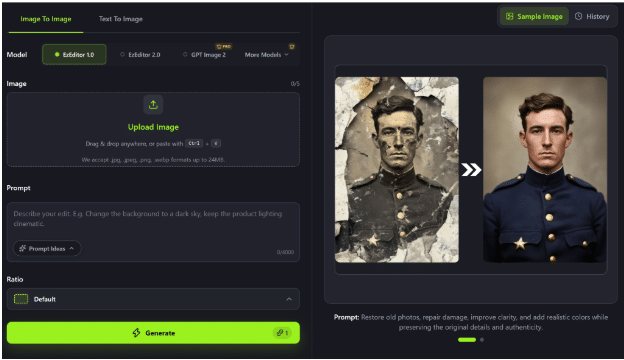
Marketing teams frequently need to complete small, one-off editing tasks throughout the day, and being required to set up an account for every new tool discourages quick adoption. An AI image editor with no sign-up option, such as the tool available from Ezeditor, removes this friction entirely, allowing someone to finish a task immediately rather than pausing to register and configure an account first.
This matters specifically for quick, low-stakes edits rather than a team's core creative workflow, where a more fully featured, account-based platform with saved projects and collaboration tools often remains the better fit. The value of the no sign-up approach lies in absorbing the frequent, minor editing requests that arise constantly in day-to-day marketing work.
Reason Four: The Impact Is Measurable, Even Without Exact Numbers
While specific savings vary by team size and existing workflow, a few consistent patterns tend to emerge. Turnaround time for simple edits typically shifts from hours — when routed through a shared design queue — to minutes, when a team member handles the task directly using a straightforward tool. Design team capacity gets redirected toward higher-value work, since routine resizing and basic corrections no longer compete with campaign concept development for the same hours. Smaller teams and solo marketers without dedicated design support gain access to editing capabilities that would otherwise require hiring outside help or learning professional software themselves.
For teams without formal tracking, those same patterns double as observable signals worth watching: how long a routine request sits in the design queue before it is handled, and how designer hours split between repetitive corrections and creative work. Movement on those two fronts offers a practical read on whether the shift is taking hold.
Reason Five: Human Oversight Is Still Part of the Equation
Adopting these tools does not remove the need for human review, and treating automation as a full replacement for design judgment tends to create new problems. Brand consistency still requires a human check, since automated tools do not inherently understand a specific brand's visual guidelines beyond what is explicitly provided in a given edit. Complex creative direction, such as developing a new campaign concept from scratch, remains squarely in the domain of skilled designers. Client-facing or high-visibility assets benefit from a final human review before publication, since automated edits — while generally reliable — can occasionally introduce subtle issues worth catching early.
The realistic business case is about redirecting routine, lower-complexity tasks away from limited design capacity, not about removing designers from the process entirely.
Reason Six: Implementation Is Low Risk and Low Cost
Compared with many operational changes, adopting AI image editing tools carries relatively low risk and cost. Teams can start by identifying which specific tasks currently consume disproportionate design time relative to their actual complexity. Testing a tool directly on real marketing assets, rather than relying only on demonstration examples, gives a more accurate sense of how well it fits a team's particular content style. A lightweight review step for anything AI-edited before publication helps catch occasional inconsistencies without recreating the bottleneck the tool was meant to solve. Training non-design team members on a simple, no-account-required tool allows routine requests to be handled directly, reducing pressure on a shared design queue.
Conclusion
The business case for AI image editing tools in marketing comes down to a fairly direct efficiency argument. Routine, repetitive image editing tasks consume a disproportionate share of design capacity relative to their actual creative complexity, and shifting a meaningful portion of that work to automated tools frees skilled designers to focus on work that genuinely requires their expertise. Lower-friction options, including an AI editor with a no sign-up approach for everyday tasks, further reduce the barrier to bringing these tools into regular use. Applied alongside continued human oversight for brand consistency and creative decisions, this represents a practical operational improvement rather than a passing trend.

