AI boom lifts mining while competing for power
Key Takeaways
- •E3 Lithium says data-centre developers near its Clearwater project have failed to engage local communities properly, tarnishing the reputation E3 built through eighteen months of stakeholder consultation.
- •The Alberta Electric System Operator has placed an interim 1,200-megawatt limit on large new power connections through 2028 while drafting longer-term allocation rules that would prioritize projects paired with new generation.
- •S&P Global projects copper demand will rise from 28 million tonnes in 2025 to 42 million tonnes by 2040, with a potential supply shortfall of 10 million tonnes absent major investment in mining and recycling.
- •At least twenty U.S. data-centre projects worth US$42 billion and requiring 3.5 gigawatts were cancelled in the first quarter of this year following community opposition over noise, water, power demand, and limited long-term employment.
- •Meta has secured both dedicated and grid-linked power for its Alberta facility, including a 250-MW agreement with Capital Power and a planned 932-MW gas plant from Pembina Pipeline and Kineticor to reduce strain on the public grid.
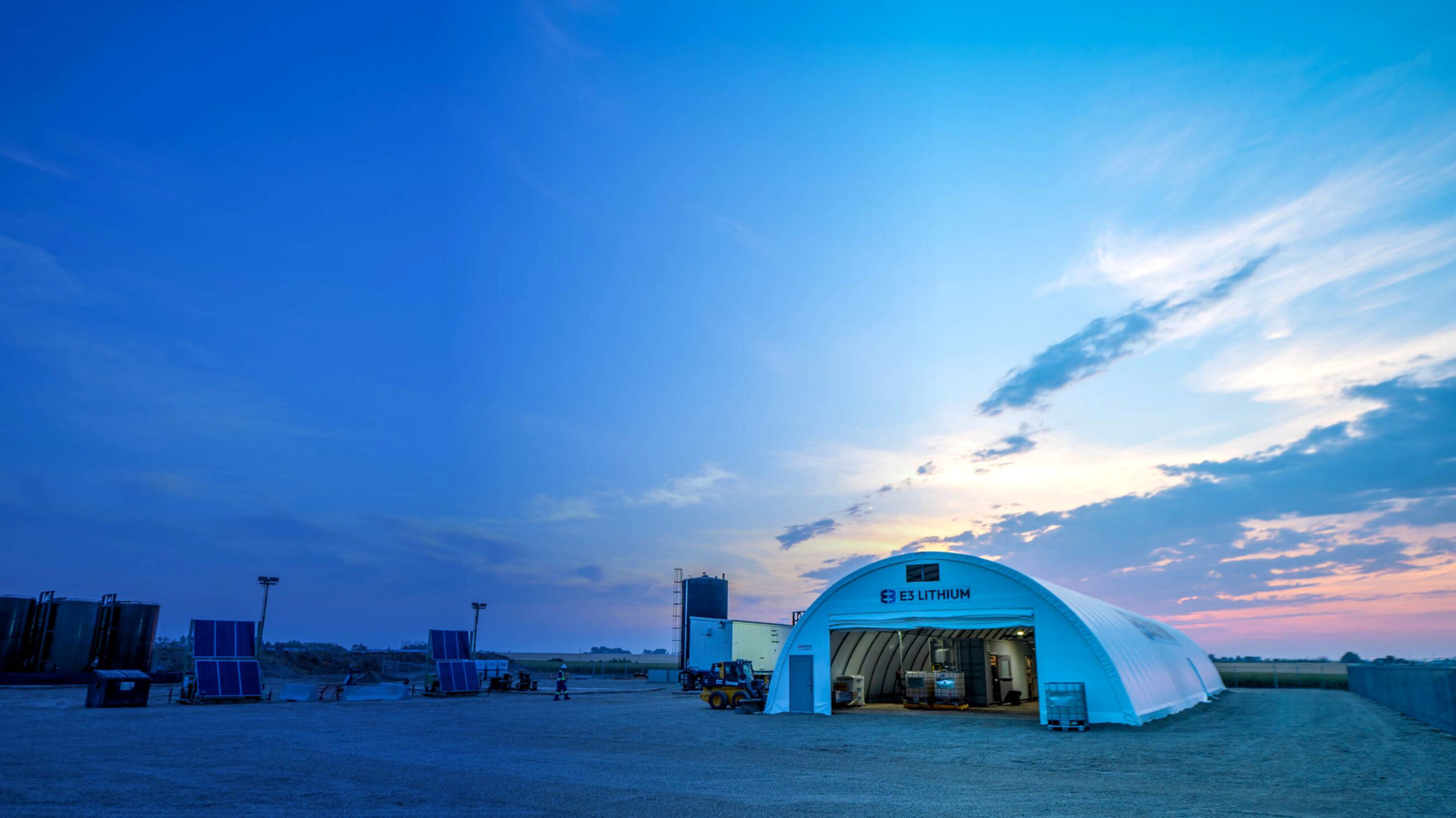
Alberta’s data-centre rush is spilling into mine development, with E3 Lithium (TSXV: ETL; US-OTC: EEMMF) saying opposition to nearby proposals is tarnishing the goodwill it built around its Clearwater lithium project.
Facebook owner Meta Platforms (Nasdaq: META) broke ground in July on a 1-gigawatt AI centre worth more than $13 billion (US$9.5 billion) in Sturgeon County, about 35 km northeast of Edmonton. Roughly 200 km south, E3 is advancing one of Canada’s largest battery metals projects, Clearwater near Olds, where separate data-centre plans have raised concerns about noise, water and industrial growth.
“We have a very strong reputation that’s being tarnished a little bit by the data centres who have come in and not done that proper engagement,” E3 CEO Chris Doornbos told The Northern Miner. “They have just come in and stated what they’re going to do without really listening.”
Artificial intelligence is emerging as both a customer and a competitor for mining. Data centres increase demand for copper, lithium, aluminum, uranium and rare earths, but they also consume the same electricity, workers, equipment and public support that miners need to bring those materials to market. Alberta and British Columbia are already adjusting power rules as fast-moving technology companies begin to crowd slower mine projects out of scarce infrastructure. Alberta’s deregulated electricity market and cold climate, which reduces data-centre cooling costs, have made the province a magnet for hyperscale developers, intensifying the competitive pressure on other industrial users.
Metals pull
The demand opportunity from AI is substantial for mining. With the International Energy Agency expecting global data-centre electricity use to roughly double to about 950 terawatt-hours by 2030, or close to 3% of world demand, the buildout will require large amounts of copper and aluminum.
Data halls, substations, generating plants and transmission lines all require metals. Backup systems add battery metals, while chips depend on silicon, gallium and other specialty materials.
S&P Global (NYSE: SPGI) forecasts copper demand will rise by half to 42 million tonnes in 2040 from 28 million tonnes in 2025. Without major investment in mines, processing and recycling, supply could fall 10 million tonnes short, the research firm told The Northern Miner by email.
Vale Base Metals, the copper and nickel arm of Brazil-based Vale (NYSE: VALE), also sees AI as a driver of copper demand and, to a lesser extent, nickel demand, mainly through batteries used for backup power.
“The rapid growth of AI, cloud computing and hyperscale data centres has added a new structural source of copper demand on top of electrification, renewable energy, grid expansion, defence, robotics and electric vehicles,” Vale Base Metals Chief Technical Officer Chris McCleave said in responses to emailed questions.
Doornbos said some data-centre developers are considering extending battery backup from four hours to eight, which would double the battery capacity needed at those sites. Western battery plants built for stronger electric-vehicle forecasts are already pursuing stationary-storage customers, he said.
Power queue
The Alberta Electric System Operator has imposed an interim 1,200-megawatt (MW) limit on large new connections through 2028. The grid operator is now drafting longer-term rules for data centres and other large users, including a system that would favour projects paired with new power generation.
Generation is the biggest bottleneck to serving data centres and traditional industries at the same time, the operator told The Northern Miner by email. It assesses all large users by the power requested and whether the grid can serve them reliably, though it recognizes data centres carry a different risk than established industrial loads.
“Any significant increase in firm load requests, AI or otherwise, impacts the availability of firm power for future requests until new supply is added to the system,” the operator said.
British Columbia has made the trade-off explicit. AI and data-centre proposals must compete for as much as 400 MW over two years, while mining, forestry, manufacturing and liquefied natural gas projects remain outside the cap.
BC Hydro judges technology projects by their economic, community, First Nations and environmental benefits, the price users are willing to pay for power and their ability to cut demand when the grid is tight. The utility told The Miner the system is meant to protect capacity for mines and other established industries. It said it knows of no mining project delayed by a data-centre application.
Tech giant
Meta has arranged both dedicated and grid-linked supply for its Alberta project. Capital Power (TSX: CPX) agreed to provide 250 MW for more than 10 years starting in the second half of 2028. Pembina Pipeline (TSX: PPL; NYSE: PBA) and Kineticor are building a 932-MW gas plant dedicated to data-centre customers, reducing the project’s draw on the public grid.
Clearwater shows the importance of power even where a data centre has not displaced a mining project. Electric pumps would drive E3’s planned operation and electricity would account for about a third of operating costs, Doornbos said.
E3 completed its power engineering early in anticipation that equipment and connection work could take three to five years. Suppliers now indicate the company could secure what it needs within a couple of years. Power remains an execution risk, but Doornbos said data-centre growth has not yet materially constrained the project.
The developer is expanding its demonstration plant and completing a feasibility study with as much as $36.5 million in federal support, part of Canada’s broader Critical Minerals Strategy to secure domestic supply chains for battery and energy-transition materials. It aims to have Clearwater ready for construction by mid-next year.
Competing projects
As more industries shift to electricity, rivalry for the same resources is expected to intensify, Vale’s McCleave said.
“As the electrification trend accelerates, the level of competition is increasing. This could spur higher costs, slow production and delay projects,” McCleave said. “Electricity has become a strategic resource, just like the critical minerals we mine.”
The conflict may affect metal processing before many mines. U.S. aluminum smelters already struggle with high power costs, while large data-centre operators can pay substantially more for firm supply, S&P Global said.
High electricity costs helped drive the decline of U.S. smelting from the 1980s, and efforts to rebuild the sector may falter if data centres continue bidding up power, S&P said. Higher grid rates could also weaken mine economics, while competition for electricians, engineers and other skilled workers could raise construction and maintenance costs.
Social credit
Around E3’s Clearwater project, community support has become the more immediate conflict. Doornbos said some data-centre proponents entered the Olds area without first listening to residents or adapting their plans. He declined to name them.
E3 spent about a year and a half meeting landowners, community groups and local governments before filing permit applications. That effort may not protect it if residents come to view data centres, mines and other large projects as a single wave of industrial development.
“Anytime somebody does something like this, it paints a bad brush over all developments,” Doornbos said. “People look at industry and don’t necessarily tell the difference between you or somebody else.”
Build bubble
Data centres can create a burst of construction activity but employ relatively few people once operating, Kaiser Research Online founder John Kaiser said in an interview. Noise, power demand, water concerns and worries about AI-driven job losses can harden local opposition.
“There is a growing anxiety, which is easy to translate into opposition to a local data centre being built,” Kaiser said. “Once these things are built, they also run on minimal human workers.”
Kaiser warned that cheaper open-source models may leave some expensive data centres as “white elephants.”
At least 20 U.S. data-centre projects worth US$42 billion and requiring 3.5 gigawatts were cancelled in the first quarter after local pushback, The Economist reported in June. The disputes centred on power, transmission lines, noise, water and the limited number of lasting jobs.
Respectful engagement
The conflict will not affect every mining district. Data centres tend to cluster near cities, power lines and gas pipelines, while many explorers work in remote mountain and desert regions, Kaiser said. Slow permits and shortages of rigs, crews and equipment remain more immediate threats for many juniors.
Alberta may have enough gas, land and engineering expertise to host both industries. Whether it can add power and preserve public trust quickly enough will determine whether AI helps build the mines it needs or makes them harder to develop.
“We all have to approach stakeholder engagement respectfully,” Doornbos said. “If somebody doesn’t, it impacts everybody.”
With files by Colin McClelland.

