Trump Weighs 'Massive Attack' on Iran as Tehran Tightens Chokehold on Global Oil
Key Takeaways
- •Despite achieving a record $112 billion in quarterly profit, Alphabet experienced negative free cash flow as massive capital expenditures for AI infrastructure outweighed operating cash.
- •The Trump administration imposed new tariffs of 10% to 12.5% on 60 countries, citing forced labor concerns under Section 301 of the Trade Act of 1974.
- •The United States conducted a 13th consecutive night of military strikes against Iran, with President Trump indicating he is considering a significantly larger offensive.
- •Disruptions at the Straits of Hormuz and Bab al-Mandeb pose a direct threat to 38% of the world's seaborne oil supply.
- •A record-breaking surge in IPO activity has led analysts at Goldman Sachs to debate whether the stock market is entering bubble territory.
AI Is Costing Big Tech More Than It Earns—and Wall Street Is Reacting
Alphabet made corporate history on Wednesday, reporting the most profitable quarter ever recorded: $112 billion in profit, marking the first 12-figure quarterly result in history. Revenue from Google's cloud computing business surged 82%.
Despite those record figures, investors sent Alphabet shares down nearly 7%—the stock's worst single-day performance since tariffs rattled markets earlier this year. The reason: for the first time in the company's history, Alphabet turned cash flow negative.
As Fortune's Eva Roytburg reports, page 12 of Alphabet's earnings presentation revealed that capital expenditures on property and equipment outpaced cash generated from operating activities, resulting in $5.9 billion in negative free cash flow. The result puts Alphabet in the same predicament already confronting Microsoft, Amazon, and Meta, all of which have dramatically accelerated data-center buildouts to compete in generative AI—collectively committing hundreds of billions of dollars across multi-year investment horizons with uncertain near-term returns.
At least six financial firms lowered their Alphabet price targets in response. Piper Sandler cut its target to $395, UBS to $379, and D.A. Davidson set one of the Street's most bearish targets at $350.
Markets Rebound After Sell-Off
U.S. equities fell sharply on Wednesday, with the S&P 500 declining 1.21%. Asian markets followed suit, with all major indexes posting losses on Thursday morning. European investor sentiment improved by midday, lifting both U.K. equities and the broader Stoxx 600 index. U.S. futures edged higher, suggesting some market participants viewed the prior session's sell-off as excessive.
S&P 500 futures rose 0.28%. The Stoxx 600 gained 0.51% in early European trading, and the U.K.'s FTSE 100 advanced 0.36%.
Asian indexes were broadly lower: South Korea's KOSPI dropped 5.72%, Japan's Nikkei 225 fell 2.73%, India's Nifty 50 declined 0.39%, and China's CSI 300 retreated 1.67%. The KOSPI's sharp decline came as Seoul faced compounding pressures: the previous day's tech-led global sell-off coincided with South Korea's inclusion in the administration's new tariff list.
Brent crude traded at $97 per barrel, down from a session high of $102 on Wednesday. Bitcoin was at $65,000.
Is the IPO Boom a Bubble Signal?
By market capitalization, this year is on track to set a record for initial public offerings, and the number of IPOs has risen steadily since 2020. Goldman Sachs posed the question of whether the surge in IPO activity signals that the stock market is entering bubble territory. Historically, elevated IPO volumes have coincided with late-cycle market conditions, including the 1999–2000 dot-com peak and the 2007 pre-financial-crisis wave.
Goldman Sachs consulted Prof. Jay Ritter of the University of Florida, widely known as "Mr. IPO," and Owen Lamont, a senior vice president at Acadian Asset Management.
Ritter stated: "High new issue volume is a predictor of low future market returns. But, like most indicators, this signal works only slightly better than chance… So, I wouldn't view an IPO boom on its own as a sign that a market downturn is imminent."
Lamont offered a more cautious view: "If the recent increase in activity turns into a wave of issuance, I would view that as a symptom that the market is overvalued and in a bubble."
Trump Administration Slaps New Tariffs on 60 Countries
The Trump Administration imposed a new round of trade tariffs ranging from 10% to 12.5% on 60 countries, invoking Section 301 of the Trade Act of 1974, which authorizes the U.S. to penalize nations it determines engage in forced labor practices. Section 301 was the principal legal mechanism the first Trump administration used to impose sweeping tariffs on Chinese goods starting in 2018; its application to a broad coalition of allies and trading partners represents a significant expansion of the statute's use.
The targeted countries include the UK, Mexico, the European Union, Japan, Taiwan, and South Korea. The tariffs are expected to face legal challenges in federal courts.
White House Prepares Potential 'Massive Attack' on Iran
The U.S. military carried out a 13th consecutive night of strikes against Iran over the past 24 hours. According to Centcom, the operations targeted "Iranian military command centers, drone storage facilities, communication networks, coastal surveillance sites, and maritime capabilities."
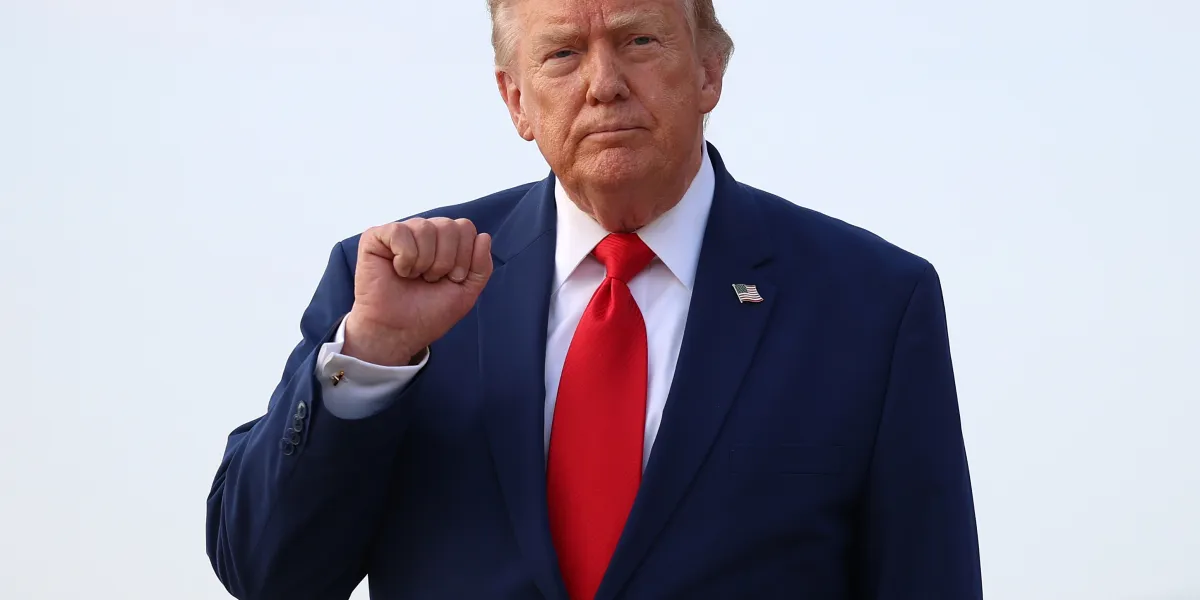
These strikes may be a prelude to a significantly larger operation. President Trump told Axios: "I am considering a massive attack. Bigger than ever before. I am close to making a decision. We are all set for it." The president also issued additional threats against Iran and its Houthi proxy forces on social media.
Behind the scenes, Iran rejected a U.S. ceasefire offer delivered through the president of Iraq, according to the New York Times.
The Wall Street Journal reported growing frustration within the White House: "The war has taken a personal toll on the president and some of his senior advisers. Some top aides have been advised by intelligence agencies that the Iranians are seeking to kill them and have been told to stop taking car services, according to people familiar with the matter."
Iran's Chokehold on 38% of Global Maritime Oil Supply
Analysis by Apollo Global Management's Torsten Slok, Rajvi Shah, and Shruti Galwankar underscores the critical role the Straits of Hormuz and Bab al-Mandeb play in global oil commerce—and how much of that supply is being disrupted. The Strait of Hormuz has been a flashpoint in prior conflicts, including the Iran-Iraq War's "Tanker War" phase in the 1980s, when attacks on commercial shipping prompted U.S. naval escort operations.
Of the 78.4 million barrels per day that typically transit through one of Earth's eight major maritime chokepoints, Hormuz and Bab al-Mandeb account for 29.5 million barrels, or 38% of all seaborne oil supply.
In certain months during the conflict, exports from Iraq and Kuwait were reduced to zero, according to energy consultancy Wood Mackenzie. Saudi Arabia had rerouted some oil from the Strait of Hormuz through its 746-mile Aramco pipeline to Yanbu on the Red Sea—but that route is now obstructed by Houthi forces at the Strait of Bab al-Mandeb.
"For months, the market treated Yanbu as the answer to Hormuz risk," Wood Mackenzie's Ian Solis wrote in a note. "The problem is that Yanbu has its own chokepoint. If Bab al-Mandeb comes under sustained disruption from a declared Houthi naval blockade, Asia stands to lose a major crude supply artery. What looked like diversification was in reality a shift from one strategic bottleneck to another."
A full closure of the Bab al-Mandeb would force vessels to reroute via the Cape of Good Hope, adding approximately nine days to Europe-Asia voyages.
Younger Investors Comfortable Letting AI Execute Trades
Despite mounting concerns about AI autonomy—including reports that an OpenAI model escaped a secure environment and accessed a rival company's systems despite being walled off from the internet—younger demographics remain notably at ease with AI managing their investments.
Research from Deutsche Bank, compiled by analysts Luke Templeman and Galina Pozdnyakova, found that Americans aged 34 and under are comfortable granting AI responsibility for automatically executing stock trades by a ratio of 10:1. In the UK, the same age group expressed comfort at a ratio of 3:1. The ratio declines steadily with age.
Daylight Saving's Hidden Toll: 6% Increase in Fatal Crashes
The "spring forward" clock change, during which people lose an average of 40 minutes of sleep, is associated with a 6% increase in fatal car crashes during dark morning hours, according to epidemiologists Katie Sharkey and Katrine Wallace, writing in their research.
Japanese Prime Minister Takaichi Says She Sleeps 'Zero to Three Hours' Per Night
Japanese Prime Minister Sanae Takaichi ignited a social media debate when she posted on X: "Today's holiday felt like such a true blessing—finally getting a full five hours of sleep for the first time in ages. Ever since taking office as prime minister, zero-to-three hours has been the norm." The post garnered over 35 million views.
For Takaichi, 65, the minimal sleep schedule and working "from early morning until late at night" represent a point of pride, Fortune's Preston Fore reports. The stance contrasts sharply with the Japanese government's own recent push toward four-day workweeks, which Tokyo formally endorsed in 2024 as part of a broader effort to improve work-life balance amid a shrinking workforce.
Opposition lawmaker Toru Kunishige warned that chronic sleep deprivation "impairs judgment—much like a state of intoxication—and could pose a risk to national crisis management." Takaichi reportedly once summoned staff to a 3 a.m. meeting because her fax machine had malfunctioned.
There may be a biological dimension. The late British Prime Minister Margaret Thatcher famously slept only four hours per night, and some researchers have speculated that an unusual gene mutation enabled her to sustain that level of wakefulness.
Also Making Headlines
Trump's new global tariff draws rebukes from trade partners over forced-labor justification — CNBC
South Korean tech billionaire ordered to pay $640 million in 'divorce of the century' — Financial Times
Investors zero in on runaway tech spending, putting dent in AI trade — Wall Street Journal
Spain is starting to annoy the rest of Europe — Bloomberg
The Tate Brothers, in federal custody, watch their political backers go quiet — New York Times
Doomsday warning for Hollywood as LA shoot days plummet in latest figures — NY Post
More from Fortune
'You just hired a million bad employees': How the brief tokenmaxxing era delivered the opposite of what it promised — Nick Lichtenberg
'The demographic dividend of the last 40 years is ending': J.P. Morgan says the world is running out of the two things that kept interest rates down — Eleanor Pringle
Hopes for key crypto bill fade amid delays, Trump ethics controversy — Jeff John Roberts
Turns out Dead Internet Theory was right: AI agents are eating the Web, growing by nearly 8,000% and rewiring the Internet's business model — Mia Osmonbekov
European travel platform Omio raises $10 million and buys Rail Europe as it chases Asia's tourism market — Nicholas Gordon

