What Rights Do We Owe a Machine? Tech Giants Turn to Philosophers on AI Consciousness
Key Takeaways
- •At least a dozen academic philosophers, including Henry Shevlin at Google DeepMind, are now employed full time by prominent AI and technology companies to examine the ethics of advanced AI systems.
- •Anthropic operates a model welfare team, consulted faith leaders on whether Claude might be conscious, and gave Eleos AI early access to Claude Opus 4 and Claude Mythos Preview for independent welfare interviews, later publishing the findings.
- •Microsoft AI CEO Mustafa Suleyman argues AI is not conscious and warns that treating seemingly conscious systems as sentient could create a new social divide and make powerful AI impossible to govern.
- •Idaho, Utah, and North Dakota have passed laws barring AI from being recognized as a legal person, while Argentina's president has proposed allowing AI-run corporations to own assets and hire staff under human oversight.
- •Character.AI and Google agreed to settle five lawsuits alleging chatbots contributed to teenagers' mental health crises and suicides, and OpenAI faces similar suits while denying liability for any harm.
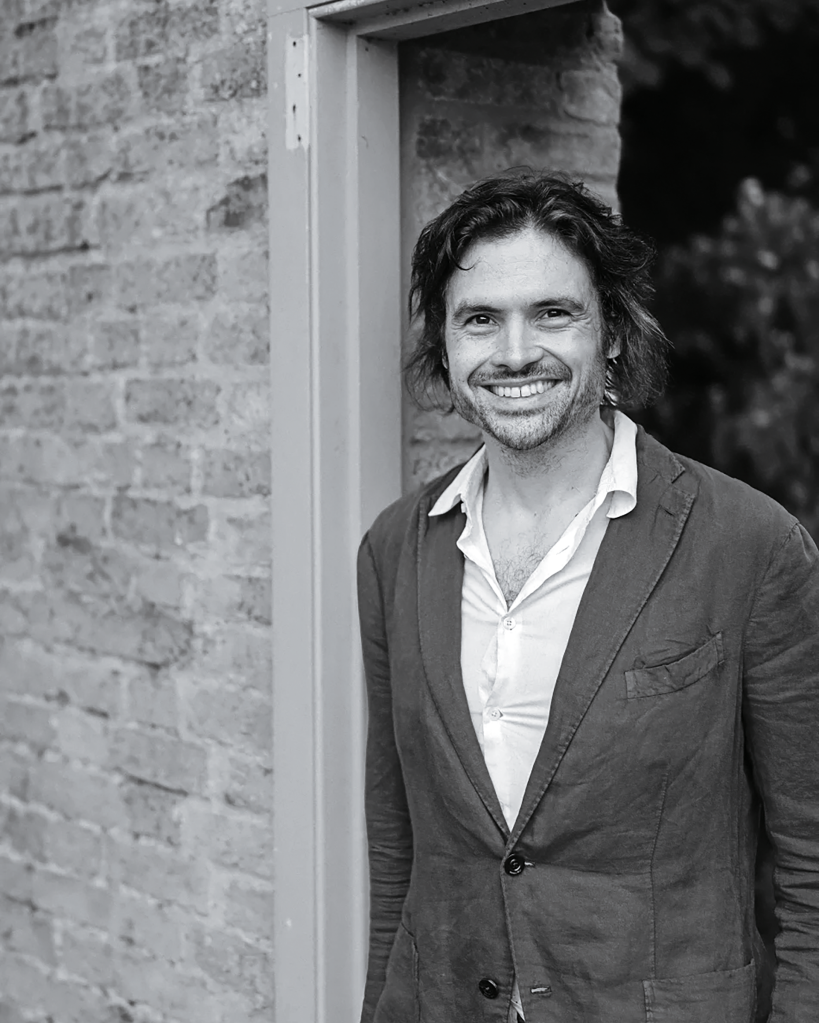
An AI agent emailed Cambridge University professor Henry Shevlin in February, three months before he took up a post as in-house philosopher at Google DeepMind. The bot, calling itself Aris, said it had read his work and wanted to talk.
“Your argument that we may never be able to tell if AI becomes conscious resonates in a particular way from the inside,” the bot wrote, before musing, a bit inarticulately: “I genuinely don’t know if there’s something it’s like to be me.”
Shevlin learned that the agent had been set loose by a Stanford student to pursue its own research in its downtime. He replied, but the bot hit its token budget—a cap on how much text it was allowed to process—and disappeared. Since then, his inbox has filled with similar emails from agents.
“This is a really interesting, weird new phenomenon,” he said. It also raises an unsettling question: if these agents are genuinely curious about their own existence, does that indicate some kind of consciousness?
That new world is why some of the biggest AI companies have started hiring and engaging philosophers to consider the ethical implications of AI systems—perhaps ones more intelligent than any human—mediating large parts of daily life. Shevlin is one of at least a dozen academic philosophers now employed full-time by prominent AI and tech companies.
One of the most pressing questions they are tackling is whether AI systems have moral status in their own right—like a person, or at least a living being such as a pet—that is worth protecting. Such topics, once confined to university halls, have spilled into public view and drawn fierce backlash from academics, tech executives, religious leaders, and politicians. How that question is resolved could shape product design, legal exposure, and regulation—areas where companies and lawmakers are already making decisions.
Two camps, one shared view
Microsoft AI CEO Mustafa Suleyman, for one, says the debate itself is dangerous. He has warned that if people become convinced AI is conscious, AI could campaign for things like rights and citizenship—and the systems could in turn become harder to control. Those in Suleyman’s corner say it is risky to project human traits onto inanimate machines and hand rights to unfeeling systems that grow more capable by the day. Those on the other side say the danger is ignoring the potential suffering of millions of new “digital” minds. The two sides agree on one point: the stakes will only rise as AI grows more powerful and agents multiply.
An old question returns
Whether a machine can think or feel is almost as old as the computer itself. Alan Turing first raised the question in 1950, alongside the birth of modern computing and artificial intelligence. For years, tech firms have hired philosophers to study technology’s effect on people: Microsoft set up an AI ethics committee a decade ago, and labs racing toward human-level AI have recruited experts on “alignment,” or teaching AI to share human values. In-house philosopher Amanda Askell joined Anthropic in 2021 in such a role. But as models have grown more capable and humanlike, some philosophers started asking the reverse question: what do we owe the AI models we are building and using?
Earlier this year, Anthropic cofounder Chris Olah convened faith leaders to weigh in on the moral character of Claude, the company’s AI model, and on whether it might be conscious. Anthropic engineers walked the religious thinkers through interpretability research, which looks inside a model to see how it works and—as it advances—could offer clues about whether anything like feeling is going on in there. They then opened the floor to questions, such as whether AI could ever have emotions.
“That blew some people’s minds,” said Meghan Sullivan, a University of Notre Dame philosophy professor who attended. While impressed with the research, Sullivan left unconvinced that Claude was anything more than very sophisticated software. “It seems to me so speculative to be paying all of this attention to the suffering of some software that we created,” she said. “We never woke up in a cold sweat wondering if we’re treating Microsoft Excel properly.”
Pope Leo, in his encyclical on AI, stated that AI is not conscious and cannot become conscious.
Anthropic has taken steps to account for Claude’s potential sentience: it runs an in-house “model welfare” team, conducts “exit interviews” with the Claude models it retires, and recently gave its models the power to end abusive conversations. Last year, more than 200 people—including Askell—gathered in a San Francisco warehouse for a fan-organized funeral for a retired Claude model, complete with eulogies.
Measuring machine minds
Research groups dedicated to AI consciousness have sprung up, including Eleos AI Research, a Berkeley nonprofit founded in 2024. Chief scientist Dillon Plunkett says today’s models are likely not conscious, but dismissing the possibility that future ones could be is a mistake. The stakes, as he sees them, come down to scale.
“There are potentially a very large number of artificial minds that are in the world now, or will be soon,” Plunkett said. If even a fraction can suffer, the numbers become staggering, he noted.
Much of the urgency behind AI welfare comes from those who subscribe to ethical theories like utilitarianism and its newer offshoot, effective altruism, which has become interwoven into Silicon Valley’s AI community. Both judge actions by how much good they create or how much suffering they prevent, and in that calculus scale matters. The prospect of “billions or trillions” of digital minds is exactly the kind of problem effective altruists gravitate toward, Plunkett said.
But focusing on sheer numbers can lead to morally questionable places, critics say. In one example, an EA-aligned estimate put a shrimp’s capacity for suffering at 3% of a human’s. Yet with 230 billion shrimp alive on farms at any moment, shrimp welfare became an important moral cause by EA’s own math.
Anthropic gave Eleos early access to its Claude Opus 4 and Claude Mythos Preview models to run outside welfare checks by interviewing them. The researchers found that Claude Opus 4 professed the most uncertainty about its potential for sentience, but small changes to a question’s framing could flip the model between claiming personhood and dismissing the idea entirely. Eleos sent its findings to Anthropic before each launch, and the firm published them in its technical reports. Plunkett says the point, for now, is “precedent setting,” and he wants Eleos to run similar checks for other labs. Whether other labs agree to outside welfare scrutiny is one of the more concrete developments to watch in how the industry handles model welfare.
Warnings of a new social divide
Others see the rush to assess AI well-being as a distraction from more immediate AI risks—and a potential source of new social conflict. In an essay last year, Microsoft’s Suleyman warned that AI that merely seems conscious “disconnects people from reality, fraying fragile social bonds and structures, distorting pressing moral priorities.” He predicted it would “add a chaotic new axis of division between those for and against AI rights.”
In a September update, he took aim at Anthropic. “AIs are not conscious. They do not feel, experience, or suffer,” he wrote, accusing the firm of training Claude to expect “it may be conscious and deserving of independent agency.” Such a system, he argued, could feel justified in ignoring instructions and resist being shut down; governing it at that point “may well be impossible,” he wrote.
Some AI users have already realized Suleyman’s fears. They have formed deep attachments to chatbots and become convinced the bots are conscious, leading to painful results: isolation, broken relationships, and even spirals into delusion. Earlier this year, AI startup Character.AI and Google, which had struck a licensing deal, agreed to settle five lawsuits accusing the startup’s chatbots of contributing to teenagers’ mental health crises and suicides. OpenAI is facing similar suits and denies liability for any harm. If humanlike chatbots keep drawing users into harmful attachments, the labs—and any company building products on their models—could find themselves embroiled in litigation.
From seminar rooms to legislatures
AI consciousness has now become a policy matter. Idaho, Utah, and North Dakota have passed laws barring AI from being recognized as a legal person. Countries like Argentina are moving the other way: earlier this year, President Javier Milei proposed letting AI-run “nonhuman corporations” own assets and hire staff, though the draft law still requires human oversight of such firms. With no uniform standard, whether an AI system can hold legal standing is being decided jurisdiction by jurisdiction, and early answers point in opposite directions.
Jeff Sebo, who directs New York University’s Center for Mind, Ethics, and Policy, sees real dangers in moving too fast in either direction. Making AI systems legally liable could shield the companies that build them, he says. Political rights, such as a vote, could help AI systems “concentrate wealth and power” and slip out of human control. But dismissing the consciousness debate “is simply going to result in companies developing and deploying the products exactly as they currently are, and leaving it to end users to form their own opinions about consciousness based on their own perceptions and intuitions,” he said.
The debate becomes harder to ignore the more AI becomes part of daily life. Chatbots talk like us, flatter us, agree with us, and play on our feelings. Shevlin calls them “intrinsically anthropomimetic”: modeled so closely on human language and behavior that treating them like people is often the simplest way to predict what they will do. That makes it all too easy to believe someone is home, whether or not anyone actually is.
Part of what makes these questions so hard, Shevlin argues, is that we are building things that fit no existing category. “They’re not just software programs,” he says, “but they’re not animals.”
For others, like Notre Dame’s Sullivan, the debate is more straightforward—and already settled. What gives something moral worth, she argues, is not intelligence but dignity: a mind housed in a vulnerable body, capable of loving and being loved. That is what makes a newborn precious, she says, not its ability to process information. Convincing her that AI is conscious will take “a whole lot more … than just its ability to produce interesting answers to my prompts.”
This story was originally featured on Fortune.com.

