OpenAI Cuts Fundraising Target to $20 Billion as Wall Street Pushes Back on AI Spending; S&P Warns on Meta's Cash Flow
Key Takeaways
- •OpenAI lowered the target of its latest fundraising round to $20 billion from $30 billion and cut its expected valuation to $1.25 trillion from $1.4 trillion following a sharp technology stock selloff.
- •Anthropic filed an S-1 showing soaring revenue and positive cash flow in the first half of the year, and its IPO next month will put the first public-market price on a cash-flow-positive frontier AI lab.
- •Alphabet's third-quarter cash flow sank deeper into negative territory and its shares fell about 12% on Thursday, the company's worst day on record.
- •S&P Global revised its outlook on Meta to negative while maintaining the AA- rating, projecting capital expenditures rising from $140 billion this year to $252 billion in 2028 with free operating cash flow remaining negative throughout.
- •Market veteran Ed Yardeni argued that the financial, physical, and political constraints on the AI investment boom are healthy for its durability and that further AI jitters could set up buying opportunities.
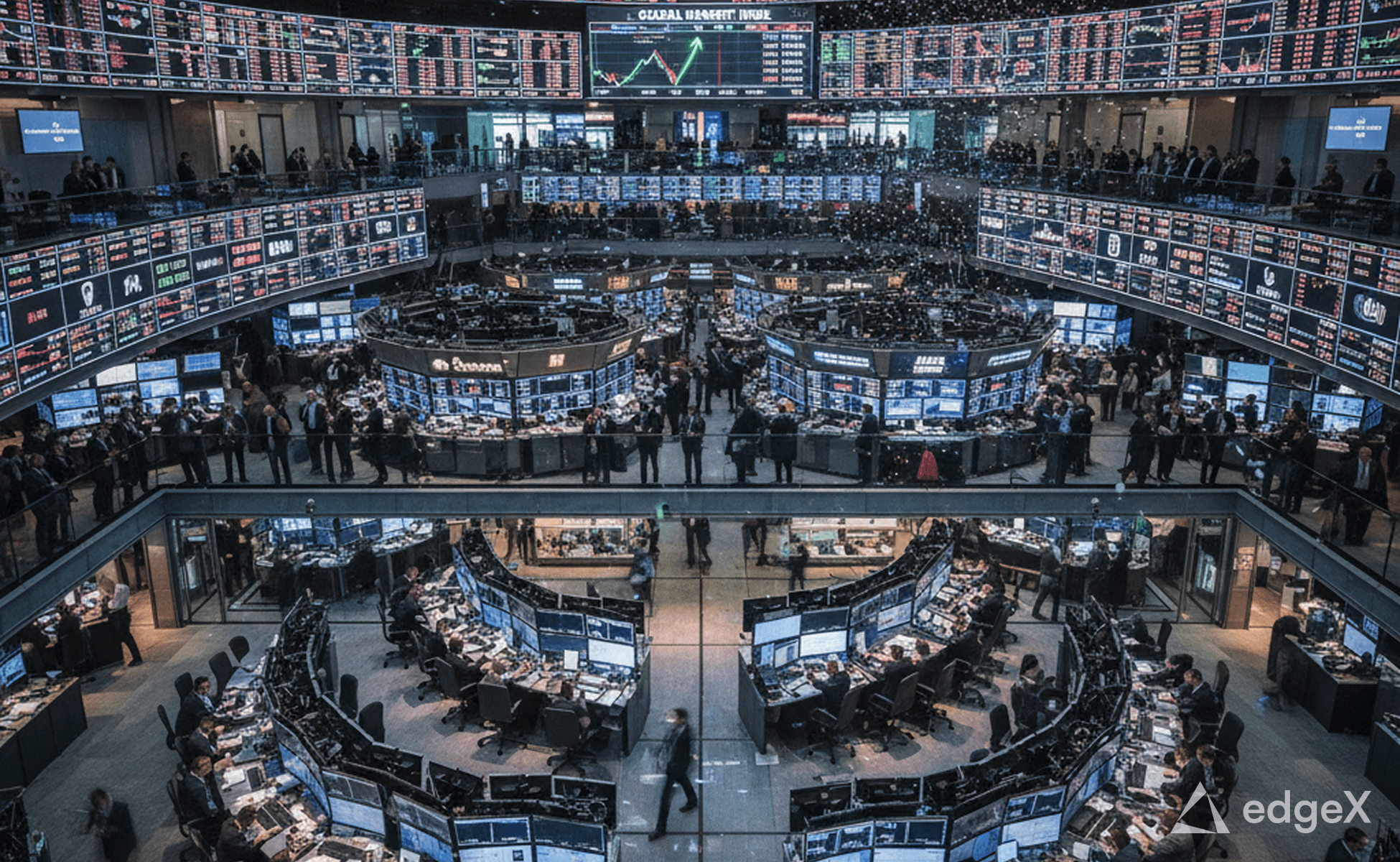
The torrent of capital that has poured into Silicon Valley during the artificial intelligence boom may be nearing its end, as Wall Street increasingly pushes back on the industry's massive spending plans.
OpenAI Scales Back Its Round
Following a brutal selloff in technology stocks over the past week, OpenAI slashed the target on its latest fundraising round to $20 billion from $30 billion, sources told the Financial Times. The move also cut the company's expected valuation to $1.25 trillion from $1.4 trillion.
Unlike public companies, whose shares are repriced on exchanges every trading day, private companies set their valuations round by round, which makes each new fundraising target a closely watched gauge of investor appetite behind the scenes.
According to the report, the round was upstaged by Anthropic, OpenAI's arch-rival, which is preparing to go public next month. Ahead of its IPO, Anthropic filed an S-1 on Monday showing that its revenue has soared and its cash flow turned positive in the first half of this year. An S-1 is the registration statement a company files with the U.S. Securities and Exchange Commission ahead of going public, and it gives outside investors their first detailed look at a once-private company's financials. Anthropic's debut next month will therefore put the first public-market price on a cash-flow-positive frontier AI lab.
OpenAI did not immediately respond to a request for comment.
Hyperscaler Earnings Unsettle Investors
The timing could hardly have been worse. Quarterly earnings reports from hyperscalers this week rattled investors. Alphabet saw its cash flow sink deeper into negative territory in the third quarter, and the Google parent joined Meta and Amazon in charging ahead with massive spending plans. On Thursday, Alphabet fell about 12%, its worst day on record.
There were positive signs as well. In addition to Anthropic's bullish S-1, Microsoft reported strong cloud growth and remained cash flow positive, though it said its capital spending will accelerate, while AI chipmaker SK Hynix blew away earnings forecasts.
The narrative had already turned bearish, however, especially after AI debt fears sent shares and bonds of "neocloud" companies — newer AI-focused cloud providers that have leaned on borrowed money to buy the GPU fleets behind the boom — tumbling earlier this month.
OpenAI's search for more capital also came just as other AI giants tapped financial markets heavily. In the past week alone, Elon Musk said SpaceX closed $40 billion in debt financing, Meta announced plans to raise $95 billion in equity, and Microsoft raised $25 billion in a bond sale. The flurry underscores how the AI buildout is being financed at scale through debt and equity issuance rather than operating cash flow alone.
S&P Cuts Meta Outlook to Negative
The prospect of hyperscalers continuing to hemorrhage funds proved too much for S&P Global, which late Friday cut its outlook on Meta to "negative" from "stable," citing negative cash flow and uncertainty around the company's capital expenditure plans. A negative outlook leaves a rating unchanged, but it signals that the agency sees elevated risk of a downgrade over time.
The credit ratings agency maintained Meta's rating at AA- but warned that the social media leader's leverage — a measure of debt against earnings — could top 1.0x as soon as 2027, the downgrade threshold for the current rating. That is up from about 0.1x in 2025 and primarily reflects Meta's strategy of leasing data center capacity rather than issuing debt.
S&P sees Meta's capital expenditures reaching $140 billion this year, topping $225 billion in 2027, and hitting $252 billion in 2028 before flattening out. As a result, it expects free operating cash flow to remain negative: minus $22 billion this year, minus $71 billion in 2027, and minus $39 billion in 2028.
Other hyperscalers are also spending heavily and running cash deficits, but S&P said Meta's ability to monetize its AI investments is more limited than that of its peers.
"While we believe the company intends to monetize these investments via improved advertising tools that support faster ad revenue growth, as well as from the development of new revenue streams stemming from its introduction of agentic apps such as Muse, it is unclear when these revenue streams will generate material contributions that exceed their rising costs over the next few years," S&P said.
Meta's rivals, the agency added, are monetizing their data centers by leasing compute capacity, including to frontier model labs and enterprise customers.
In a statement to Fortune, a Meta spokesperson said the company disagrees with S&P's assessment of its AI monetization capabilities, pointing to "significant product and business opportunities" ahead.
"Meta is already delivering stronger engagement, better recommendations, and greater returns for businesses as a result of AI investments," the spokesperson said. "We believe the technology and infrastructure we're building now will open new revenue streams, create long-term shareholder value, and bring us closer to delivering personal superintelligence to everyone."
A Tougher Backdrop
The bearish environment on Wall Street also comes as rising bond yields have sent borrowing costs sharply higher, political backlash against data centers is expected to help Democrats retake Congress, and the Iran war could re-escalate after the midterm elections.
Bulls See Healthy Discipline
Still, some bullish voices are not convinced the AI boom is about to go bust, and some even think a measure of retrenchment is a good thing.
According to market veteran Ed Yardeni, the AI investment boom faces financial, physical, and political constraints. If any of these constraints worsen, stocks could dive further, especially considering that AI is now a major driver of corporate earnings and GDP growth, he said in a note this week.
"However, we view these constraints as healthy for the durability of the AI boom!" he added.
For example, if the supply of capital does not flow as easily, it could lead to more efficient allocation, lowering the risk of overinvestment. Yardeni expects hyperscalers to retain access to financing—thanks to their strong balance sheets—and to keep spending.
In his view, it all comes down to the U.S. economy, which he said has performed remarkably well over the past few decades. Even the midterm elections are unlikely to derail it, regardless of which party controls Congress.
"Further AI jitters therefore could set up buying opportunities rather than signal the end of the boom," he said.
This story was originally featured on Fortune.com.

