Agility Robotics Unveils Digit 5, a Safety-Focused Humanoid Built to Work Alongside People
Key Takeaways
- •Agility Robotics introduced Digit 5 on Tuesday as the latest version of its humanoid robot, built to operate cooperatively and safely with people in industrial settings.
- •Digit 5 can repeatedly lift loads of up to 50 pounds and features interchangeable grippers tasks such as tote handling and machine tending.
- •The new robot follows three years of commercial deployment of its predecessor, Digit 4, which recorded more than 65,000 operational hours across customer sites.
- •Agility is the first launch partner for Nvidia's Halos for Robotics platform, combining its own safety systems with Nvidia's IGX Thor and Halos Core infrastructure.
- •Early access to Digit 5 is planned for the first half of 2027, with general availability for manufacturing, warehouse and distribution operators expected by the end of that year.
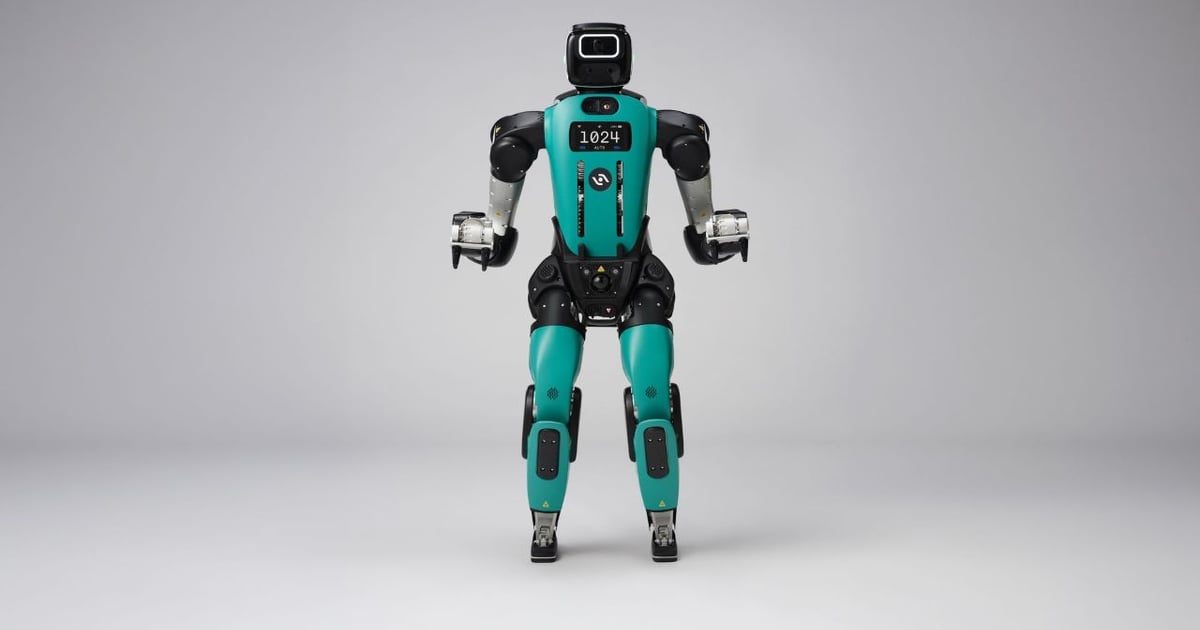
Agility Robotics unveiled Digit 5 on Tuesday, the newest version of its humanoid robot, designed to work safely alongside people in industrial environments at scale. The U.S. robotics maker shared details in an official announcement.
The company said it developed the new model following three years of commercial deployments of its predecessor, Digit 4, which accumulated more than 65,000 hours of operational time across customer sites.
Building on that deployment history, Digit 5 can repeatedly lift loads of up to 50 pounds. It is fitted with a swappable gripper system designed to let different end-effectors be used for a variety of tasks, including tote handling and machine tending.
The launch comes as humanoid robots increasingly move from laboratories to real-world deployments, with developers paying closer attention to human-robot interactions and safety standards as a result. Agility, which said safety remains "one of the biggest obstacles to scaling humanoid robots" commercially, designed Digit 5 specifically to address these concerns. The new model carries a range of systems to detect people, communicate motion intent and adapt its behavior to potential dangers.
"Safety is a real bottleneck, and Digit 5 is the clearest industrial attempt to address this challenge," said Lian Jye Su, analyst at Omdia, a division of Informa TechTarget. "Digit 5 will likely be deployed in well-defined commercial and industrial use cases with clear safety and security parameters before it rolls out to more consumer or home use cases."
Su added that while designs such as Agility's reflect an increased integration of safety into robot design from the ground up, the industry still relies heavily on individual vendors' safety frameworks, and total trust in humanoids will require industrywide standardization.
"While hardware is relatively mature, humanoid robotic AI model safety and security require more robust verification frameworks," he said. "As with AI safety, vendors and enterprises need clear practices for auditing, logging, testing and governance of humanoid software. Safety policies and guardrails are also lacking."
Humanoid Safety Presents New Challenges
Traditional industrial robots typically operate within relatively constrained environments, with their movements and tasks tightly defined. The rise of general-purpose humanoids, by contrast, means these machines are increasingly expected to operate in unstructured, dynamic settings, a shift that introduces new safety considerations.
"The industry will need a more robust approach to humanoid robotics safety, including dynamic balance, fall envelopes, unstructured human motion and AI behavior," Su said. "It will involve a combination of vendor certification, industry-standard formulation, AI model safety and security testing, and robust filters and guardrails."
Agility is contributing to the development of standards for dynamically stable industrial mobile robots, including humanoids, as part of the American National Standards Institute's ANSI/A3 TR R15.108 technical report. The company is also contributing to ISO 25785-1, an international safety standard for humanoids that is currently under development.
According to Agility, Digit's safety architecture, including its human-detection systems and motion-intent communication, is intended to reduce the need for protective physical barriers and enable robots to operate in closer proximity to human workers.
Agility is also partnering with Nvidia on the safety architecture, becoming the first launch partner for Nvidia's Halos for Robotics platform. Digit 5 combines Agility's systems with Nvidia's IGX Thor and Halos Core infrastructure.
"Safely operating around people and assets is what moves humanoid robots from pilots to industrial deployments at scale," Deepu Talla, Nvidia's vice president of robotics and edge AI, said in a statement.
Agility said it expects early access to Digit 5 to begin in the first half of 2027, with general availability for manufacturing, warehouse and distribution operators expected by the end of 2027. The timeline leaves space for the still-developing ISO 25785-1 standard, which Agility is helping shape, to mature alongside early deployments — a reminder that formal industrywide rules remain a work in progress even as commercial rollouts approach.
Reporting by Scarlett Evans for AI Business.

