Far-Right AfD Thanks Elon Musk After Landslide Win in Saxony-Anhalt Election
Key Takeaways
- •The AfD won just over 44% of the vote in Saxony-Anhalt, with the CDU finishing a distant second at 17.1%.
- •Ulrich Siegmund thanked Elon Musk for his support and said the AfD would welcome cooperation if it leads the state government.
- •The AfD was on track for 39 of 83 state parliament seats, short of the 42 needed for an absolute majority, but could still end up leading the government, which would make Siegmund the first far-right leader of a German state since 1945.
- •Mainstream German parties maintain a firewall against cooperating with the AfD, and Germany's domestic intelligence agency has classified the party or parts of it as a suspected extremist threat.
- •Elon Musk and Donald Trump publicly celebrated the result, while European officials and commentators expressed alarm at the far right's growing strength.
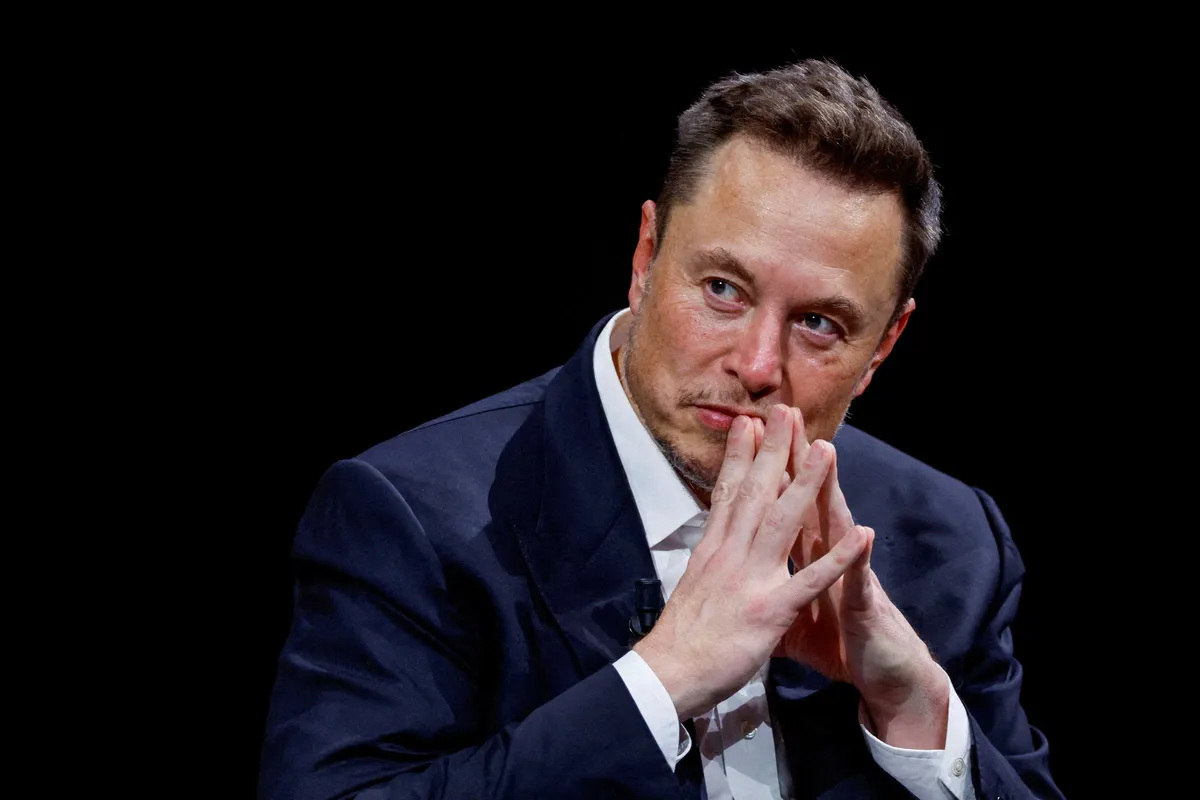
The far-right Alternative for Germany (AfD) thanked Elon Musk, the world's richest man, after decisively winning a key regional election on Sunday, a result that sparked alarm across Europe and around the globe and underscored the party's growing dominance in Germany's formerly communist eastern states.
Ulrich Siegmund, the AfD's lead candidate in the eastern state of Saxony-Anhalt, praised Musk—who has openly advocated for the far-right, xenophobic party—for his support and his "clear and highly important perspective on the political developments of our time—including here in Germany". Siegmund wrote that if the AfD ends up leading the state government, the party "would very much welcome the opportunity for strong and constructive cooperation," adding that "Germany would once again be a place worth investing in."
Siegmund's post on X, the social media platform Musk owns, came after the AfD won just over 44% of the vote in the Saxony-Anhalt election, trouncing the Christian Democratic Union (CDU) led by Chancellor Friedrich Merz, which finished a distant second with 17.1%. The result extends a pattern of strong AfD performances in eastern Germany, where the party has repeatedly polled at or near the top of state elections in recent years.
"Well done!" Musk wrote, in German, following the AfD's election win. The mega-billionaire has previously called the AfD "the only hope for Germany".
US President Donald Trump, a political ally of Musk, posted to Truth Social a screenshot of exit polls showing the AfD leading the regional election on Sunday afternoon.
"Leave it to Trump to celebrate the victory of a far-right German party that shows sympathy for the Nazis, downplays the Holocaust, and flirts with Putin," wrote Kenneth Roth, the former executive director of Human Rights Watch, in response to the US president.
The Associated Press noted that "to win an absolute majority, AfD needed to clinch 42 of the 83 seats in the state parliament, but the party appeared on track to win 39. Depending on the ultimate make-up of parliament, it could still end up leading the state government." If that happens, Siegmund would become the first far-right leader to govern a German state since 1945.
However, other German parties have refused to work with the AfD—maintaining the longstanding informal cordon sanitaire, or firewall, that mainstream parties have upheld against the far right—raising doubts about its ability to form a government in Saxony-Anhalt, a state with a population of around 2.1 million people. Germany's domestic intelligence agency has also classified the AfD, or parts of it, as a suspected extremist threat in recent years, a designation the party has contested in court.
David Adler, co-general coordinator of the Progressive International, wrote that the election "sent a clear message, to Germany as to all of Europe, that the far-right rampage is not slowing down, but accelerating instead."
The AfD focuses heavily on immigration, vowing "deportation from minute one" and calling for the abolition of "the fundamental right to asylum."
"In addition to deporting immigrants, the party has proposed cutting funding for public broadcasters, banning gay pride flags in schools, and teaching more Russian, as well as tax breaks for large families and free childcare," The New York Times reported. The newspaper also noted that Siegmund declined to condemn supporters who "chanted his surname... in the style of the Nazi salute, 'Sieg Heil.'"
European officials voiced deep concern about the AfD's surge, with France's Europe minister calling the results "a serious moment." "Nationalism and xenophobia will never be a solution," said Benjamin Haddad. "We must listen with humility to the anger, the concerns, the fears, and respond to them. We cannot forget our history. That is the meaning behind the choices made by France and Germany."
Spain's Julen Bollain wrote on social media that "the far-right is managing to turn discontent, economic insecurity, and disaffection into votes."
"AfD is doing something that should especially worry the left: transforming precarity, frustration, and disaffection into political identity and votes," Bollain added. "And if we don't manage to give a collective response to the existing social discontent, someone always shows up ready to turn it into fear, hate, and scapegoats. And there they beat us, because they move like fish in water."
This story was published in partnership with Common Dreams.
