Shipping's Decarbonisation Challenge Is Shifting from Prediction to Execution, ABS Warns
Key Takeaways
- •ABS's 2026 Sustainability Outlook contends that success through 2035 will depend on efficiency, flexibility and execution at scale rather than bold fuel bets.
- •Shipowners are expected to face five to seven overlapping regulatory regimes covering the IMO, EU, UK, China, US states and green corridors.
- •Carbon costs for a conventional-fuel 14,000 teu containership trading substantially in Europe could approach $20m per vessel annually by 2035 under ABS base assumptions.
- •D-rated ships face charter discounts of 5-15% and E-rated vessels can carry secondhand price discounts of 12-15%, yet no customers will pay a genuine 'green premium'.
- •Retrofit yard capacity could become constrained before 2030, with shortages possible as early as 2028, making 2027-28 critical for securing slots and resources.
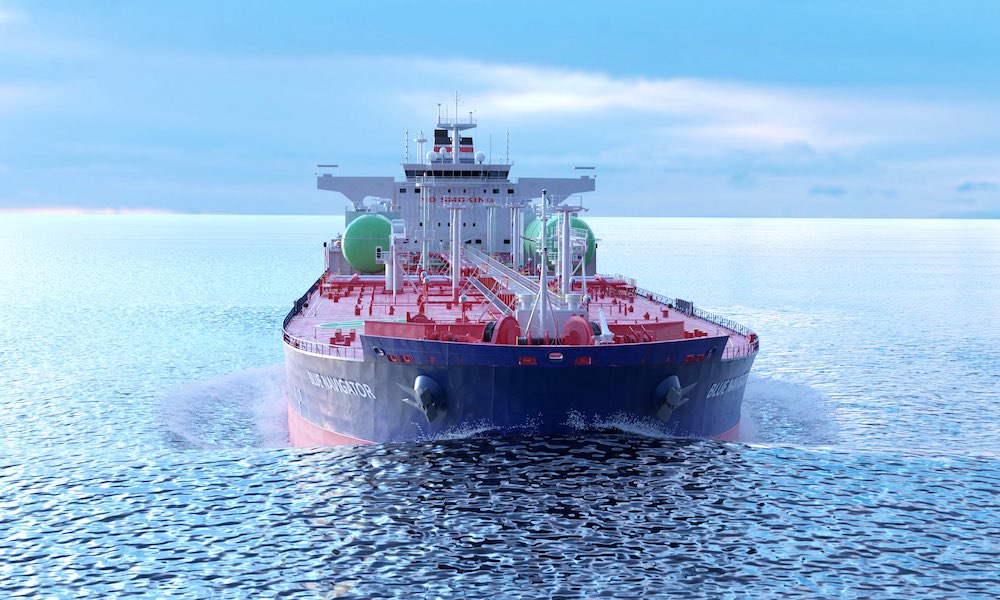
Shipping's decarbonisation debate is moving beyond the search for a winning fuel, with owners now confronting a far harder challenge centred on execution, capital allocation and preserving asset value as carbon costs rise and regulation fragments.
That is the central message of ABS's 2026 Sustainability Outlook, Decision Point: Practical Pathways to 2035, which argues that the industry's winners over the next decade will not necessarily be those placing the boldest fuel bets, but those best able to improve efficiency, retain flexibility and execute investments at scale.
Among the report's strongest conclusions is that trade pattern matters more than ship type when determining future fuel and investment strategies. ABS contends that the business case for dual-fuel capability is considerably stronger on predictable liner trades than for spot-trading bulkers and tankers, where future fuel availability along constantly changing routes remains far less certain.
The regulatory picture is also becoming considerably messier. Rather than converging around a single global framework, ABS expects shipowners to operate under five to seven overlapping regimes covering the IMO, EU, UK, China, individual US states and emerging bilateral green corridors. That fragmentation reflects an already complicated landscape: shipping was brought into the EU Emissions Trading System from 2024, the FuelEU Maritime regulation took effect in 2025, and the IMO is developing its own net-zero framework alongside existing Carbon Intensity Indicator (CII) rating requirements.
Carbon, meanwhile, is becoming a significant operating cost rather than a distant compliance issue. ABS calculates that the carbon-cost component for a conventional-fuel 14,000 teu containership trading substantially in Europe could approach $20m per vessel annually by 2035 under its base price assumptions.
The report also points to evidence that environmental performance is already beginning to influence vessel economics, consistent with charterers' growing use of CII-linked clauses in fixtures. D-rated ships can face charter discounts of between 5% and 15%, while E-rated vessels in some sectors are harder to fix and can carry secondhand price discounts of 12% to 15%.
Yet ABS's interviews with owners and operators reveal that there is still virtually no genuine "green premium". Not one respondent identified customers willing to pay more than the direct savings generated through EU ETS or FuelEU Maritime compliance.
Measures capable of delivering returns without requiring owners to commit to a particular future fuel feature prominently in the report, including wind propulsion, air lubrication, waste heat recovery, advanced weather routing, predictive maintenance and digital performance monitoring — an approach that lets owners cut emissions now while preserving the option to adopt whichever alternative fuel, such as methanol, ammonia or LNG, eventually proves commercially viable.
The bigger bottleneck may ultimately prove to be yards. ABS warns that global retrofit capacity could become constrained before 2030, with shortages emerging as early as 2028 under an aggressive retrofit scenario. Standard energy-saving retrofits occupy a yard for a median 22 days, while complex alternative-fuel conversions average 67 days.
With 57% of new vessel contracts currently scheduled for delivery after 2028, newbuilding congestion is also spilling over into repair and conversion capacity. ABS argues that the 2027-28 period could therefore prove critical for owners seeking to secure yard slots, equipment and engineering resources before demand intensifies.
"The decade ahead will be defined less by prediction and more by execution," said Rostom Merzouki, ABS vice president, global sustainability. "The industry has no shortage of potential pathways. The challenge now is converting those pathways into commercially viable actions at scale."
