Aave Halts Planned Deployment on Scroll, zkSync, Sonic, Metis, Soneium, and Aptos
Key Takeaways
- •Aave has halted planned deployments across six networks: Scroll, zkSync, Sonic, Metis, Soneium, and Aptos, pending governance review.
- •The pause affects only prospective expansion targets and does not alter any assets already deployed on existing live markets.
- •The decision aligns with ongoing governance discussions about tightening deployment standards and focusing resources on chains with demonstrable usage and demand.
- •Users, builders, and integration partners on the six affected networks face uncertain timelines as they await revised governance proposals.
- •The move reflects a broader DeFi industry trend of major protocols reevaluating multichain expansion due to operational overhead and security concerns.
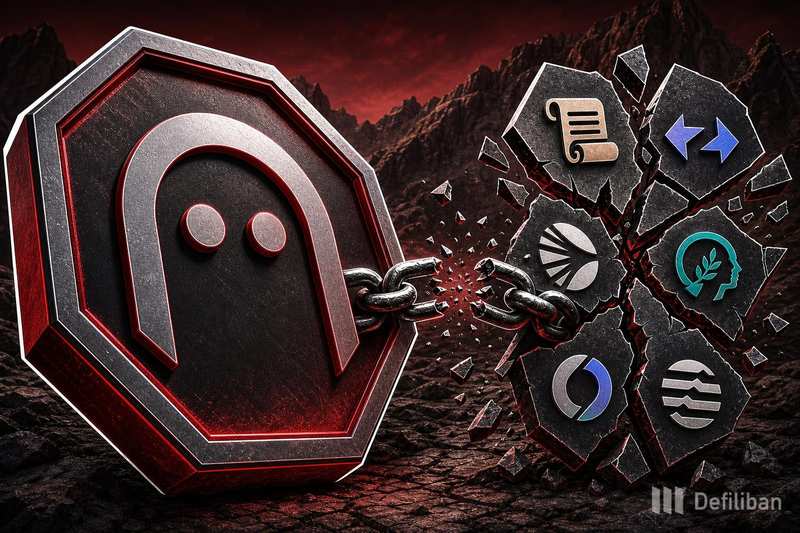
Aave has halted its planned deployment across six networks — Scroll, zkSync, Sonic, Metis, Soneium, and Aptos — in a decision that places the lending protocol's multichain roadmap back under governance review.
The pause concerns prospective expansion targets rather than long-established live markets. It signals that Aave is reassessing which ecosystems warrant new lending markets, not announcing any changes to assets already deployed.
The six affected networks span a range of architectures and ecosystems. Scroll and zkSync are zero-knowledge rollups built on Ethereum, Sonic is the successor chain to Fantom, Metis is an Ethereum Layer 2 with optimistic execution, Soneium is an entertainment-focused chain developed by Sony Block Solutions Labs, and Aptos is a Layer 1 using the Move programming language. The diversity of the paused targets underscores that Aave's reassessment is not limited to one category of chain.
Alignment with Tighter Deployment Criteria
The decision aligns with Aave's ongoing governance discussions around tightening deployment standards, including a proposal covering low-adoption asset deprecation on Aave V3. This direction reflects a preference for concentrating resources where usage and demand are demonstrable rather than spreading thin across numerous networks.
The pause also echoes an earlier governance effort to focus the Aave V3 multichain strategy, which examined whether expanding across many chains genuinely served the protocol's growth or diluted it. Deployment decisions of this nature affect governance workload, market prioritization, and alignment with partner ecosystems.
The underlying governance materials establish that Aave is narrowing its expansion focus, though they do not specify a single stated reason for pausing each of the six named chains.
The move comes amid a broader DeFi trend in which major lending and liquidity protocols have been reevaluating multichain sprawl, weighing the operational overhead and security surface area of many deployments against actual user demand.
Implications for Users, Builders, and Partner Ecosystems
Each of the six named networks stood to gain a potential Aave market, meaning the halt directly affects launch timing and the expectations built around it. Users on Scroll, zkSync, Sonic, Metis, Soneium, and Aptos who anticipated new Aave lending venues will not see those markets open on the previously assumed timeline.
For these ecosystems, an Aave deployment typically represents a meaningful liquidity and credibility signal, as Aave V3 markets often become among the most used lending venues on the chains where they launch.
Builders and integration partners planning around an Aave presence face similar uncertainty. Teams that scoped products against a forthcoming deployment may need to revisit their assumptions until governance clarifies revised plans.
Continued Development Elsewhere
Aave has continued product development in other areas, including its recent release of Stable Vaults infrastructure and active governance management around events such as the rsETH recovery process.
Readers should monitor Aave's governance forum for revised deployment proposals or votes confirming which of the six chains, if any, will return to the roadmap.

