a16z Rebrands Crypto Fund as a16z Frontier, Widens Mandate to AI and Frontier Tech
Key Takeaways
- •Andreessen Horowitz has renamed its crypto fund to "a16z Frontier" and widened its investment scope to cover artificial intelligence and other emerging technologies.
- •The firm says the change is an expansion, not a pullback, and that it will continue to invest in crypto and push for sensible crypto regulation.
- •Chris Dixon argues blockchain technology has become so embedded in mainstream products from Wall Street and fintech that the "crypto" label now matters less in defining companies.
- •Dixon sees crypto as a way to enable machine-to-machine payments for AI agents, keeping it central to the fund's frontier-technology outlook.
- •The renamed fund's leadership team includes Dixon, Marc Andreessen, Ben Horowitz, Eddy Lazzarin, and Guy Wuollet, and the most recently disclosed fund size remains $2.2 billion.
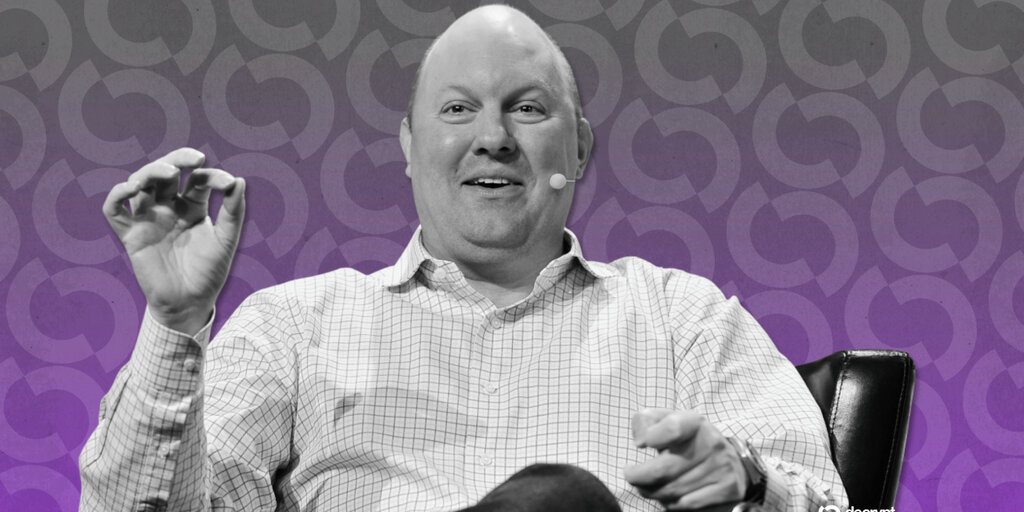
Andreessen Horowitz, the venture capital firm better known as a16z, is renaming its crypto fund “a16z Crypto” to “a16z Frontier” and widening its mandate to artificial intelligence and other emerging technologies, according to an email the firm shared with newsletter subscribers on Thursday.
a16z is among the biggest backers of the crypto industry, and the decision by a firm of that scale to drop “crypto” from the fund’s name offers a sign of where it may expect the next wave of investment to come from. In venture capital, a fund’s name frames the mandate it presents to the startups it courts and the investors it raises money from, so broadening the label effectively lets the same vehicle back companies well beyond crypto. The firm characterized the move as “an expansion” rather than a retreat, writing that it “will continue to invest in crypto and related ventures and advocate for sensible crypto regulation.”
Chris Dixon, the general partner who runs the firm’s crypto team, said the fund’s bets include Coinbase, the blockchain network Solana, and Uniswap, a platform that lets people swap tokens without a middleman.
At the heart of the rebrand is Dixon’s argument that blockchains—shared digital ledgers that record who owns what without a bank in the middle—have receded into the background of products people already use. “Wall Street and fintech companies now regularly launch products built on blockchains. Does that make them crypto companies? The label matters less now,” Dixon wrote, adding that it makes more sense to define companies “by what they do rather than by the technologies they use.”
The rebrand follows a year of large-scale fundraising. In January, a16z said it had raised more than $15 billion across its funds, and co-founder Ben Horowitz wrote in a firm post at the time that the mission “starts with winning the key architectures of the future—AI and crypto.”
Dixon said he expects more “native use cases,” which he defined as “brand-new activities you couldn’t do before,” observing that AI so far has mostly made existing work such as coding “f, better, and cheaper.” Early versions of such products, he said, “will look strange and unserious, like toys and hobbies,” before some grow into mainstream offerings.
The new label is aimed at startups “building new technologies and creating markets that may take years to develop,” a thesis Dixon traces back more than a decade. “When I joined a16z in 2013, I made these kinds of long-horizon investments a focus,” he wrote. “The growth of smartphones made cameras, sensors, and chips better and cheaper, enabling new devices like drones, AR/VR headsets, and wearables. That theme led to investments in Oculus and drone startups like Skydio and Zipline.”
The next wave, according to Dixon, includes “autonomous machines that can perceive, reason, and act in the physical world,” along with advances in biology and medicine. He also envisions a post-AGI society, referring to artificial general intelligence—a still-theoretical form of AI that could match or beat humans at nearly all thinking tasks.
Crypto remains central to that outlook because Dixon sees it giving AI agents—programs that act on their own—a way to pay one another. “Crypto can give new networks native economic capabilities, enable machine-to-machine transactions, and create new ways to bootstrap them,” he wrote.
Dixon made a similar argument in 2022, when the total market value of crypto had fallen about two-thirds from its 2021 peak. “What I look at is not prices,” he said at the time, pointing instead to developer and entrepreneur activity as the core metric.
Dixon will lead the renamed fund alongside a16z founders Marc Andreessen and Ben Horowitz and general partners Eddy Lazzarin and Guy Wuollet. His post did not disclose the size of the renamed fund, leaving the latest figure on record at the $2.2 billion announced in May. How the firm splits the vehicle’s attention between crypto and the broader frontier-tech thesis—and whether it eventually puts a new size on a16z Frontier—will be the details to watch as investments under the new name are announced.

