a16z and DeFi Education Fund Ask SEC to Exempt DEXs Under 'Innovation Exemption' Framework
Key Takeaways
- •On September 22, a16z Crypto General Counsel Miles Jennings and the DeFi Education Fund wrote to the SEC, framing two requests as next steps for the agency's Project Crypto initiative.
- •The first request seeks exemption from Exchange Act registration for decentralized exchange protocols, their apps, and developers, provided the platforms remain fully non-custodial even when handling tokenized securities.
- •The second request proposes a distinct approval pathway for custodial crypto asset trading platforms that take control of user funds.
- •a16z pointed to the SEC's 2024 enforcement action against Uniswap as a key motivation, noting the CFTC's relief for passive software like Phantom does not extend to assets classified as securities.
- •The Securities Industry and Financial Markets Association, representing broker-dealers such as Citadel Securities, has criticized the Innovation Exemption and may support the custodial-platform request while opposing relief for DEXs and apps.
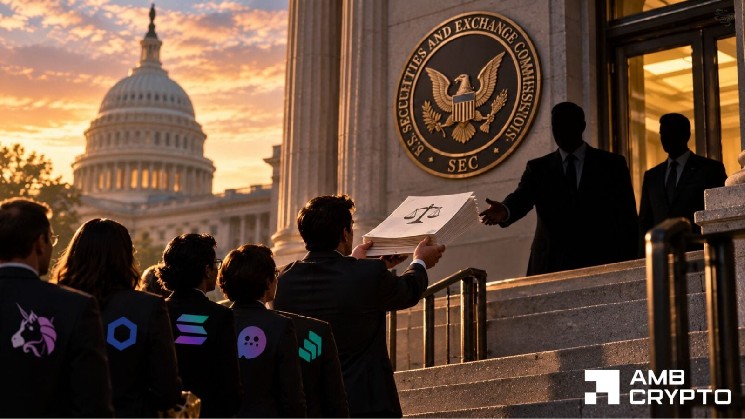
The crypto industry is pressing for additional concessions from the US Securities and Exchange Commission (SEC) within its proposed "Innovation Exemption" framework, which could shape how much of decentralized finance operates outside the agency's exchange-registration rules.
On September 22, Miles Jennings, General Counsel at venture capital firm a16z Crypto, together with lobby group the DeFi Education Fund, wrote to the SEC to lay out two major requests. The letter presents both asks as next steps for the SEC's own Project Crypto initiative.
Relief for DEXs, apps, and developers
The first request seeks regulatory relief for decentralized exchanges (DEXs), the applications that provide access to them, and the developers behind them. The letter stated:
"We recommend, as its next steps in advancing Project Crypto, that the SEC clarify the circumstances in which developers of decentralized exchange protocols (DEXs) and the apps that provide access to them (DEX Apps) fall outside the Exchange Act's exchange registration requirements."
The language echoes developer protections, a key policy priority that was fiercely contested in the stalled CLARITY Act, in which some of the developer protections in the revised draft were watered down.
According to Jennings, such a move would "extend regulatory clarity to truly permissionless systems."
Notably, the industry wants this relief to hold even in cases where a platform handles tokenized securities. As long as the platform is fully non-custodial — meaning it does not control user funds — it should be exempt from the Exchange Act's registration requirements. That control-of-funds line is the fulcrum of the whole letter: it splits permissionless, self-custodied activity from the venues that behave like traditional intermediaries.
In its second request, the venture firm proposed a different approval pathway for crypto asset trading platforms (CTPs) that operate as traditional intermediaries and take control of user funds — a separate track for the custodial side of the market.
Why the industry needs DeFi clarity
For context, the Commodity Futures Trading Commission (CFTC) has offered similar relief to "passive software" such as Phantom, sparing it from classification as an introducing broker under the Commodity Exchange Act. The CFTC, however, only oversees derivatives, including perpetual futures, and its relief does not shield a DEX that handles assets the SEC may classify as securities. For securities-touching DEXs, the registration question therefore lands squarely with the SEC.
Indeed, a16z pointed to the SEC's 2024 enforcement action plan against Uniswap as a key motivation behind its push for DeFi clarity — an action against one of the sector's most prominent DEXs that showed how exchange-registration questions can reach open-source protocols and the frontends built on top of them.
Because the SEC views tokenized stocks as securities, how the regulator responds to the request — and whether it folds the relief into its Innovation Exemption framework — will be closely watched. A non-custodial carve-out that holds even for tokenized securities would effectively settle whether securities can move across DEXs without exchange registration, the central question the letter poses.
Meanwhile, resistance from traditional finance could complicate the push. Traditional broker-dealers, including Citadel Securities, represented by the Securities Industry and Financial Markets Association (SIFMA), had already poked holes in the SEC's Innovation Exemption proposal. The group may back the second a16z request, but not the exemption relief for DEXs and apps — leaving the letter's headline ask facing opposition from incumbent brokers even as its custodial-platform track draws potential support. How the SEC weighs that split, and whether any final Innovation Exemption text adopts the non-custodial standard, will show whether Project Crypto's next steps extend to the truly permissionless systems Jennings described.
This article is based on reporting by AMBCrypto.

