Trump's Religious Base Sends Republicans Two Major Warning Signs After 2026 Midterm Defeat
Key Takeaways
- •Catholic voters, who backed Donald Trump in 2024, narrowly favored Democrats 50-49 in the 2026 midterms, following Republican clashes with Pope Leo XIV and Catholic bishops over the Iran war, mass deportations, and immigration enforcement.
- •Jewish voters continued backing Democrats but by a slimmer 68-31 margin, down from 78-22 in 2024, with the shift especially visible in Michigan precincts with large Jewish populations.
- •Evangelical voters remained strongly Republican at 82-16, but their smaller share of the midterm electorate suggested lower turnout within a group that has long provided considerable influence over the GOP.
- •Protestant Christians appeared to help build the Democrats' winning coalition, while Mormon voters displayed a generational divide between older Republican-leaning and younger Democratic-leaning members.
- •Analysts say the results suggest voters may increasingly prioritize issues and candidates over religious affiliation, leaving unresolved whether 2026 marked a durable realignment or a single-cycle shift.
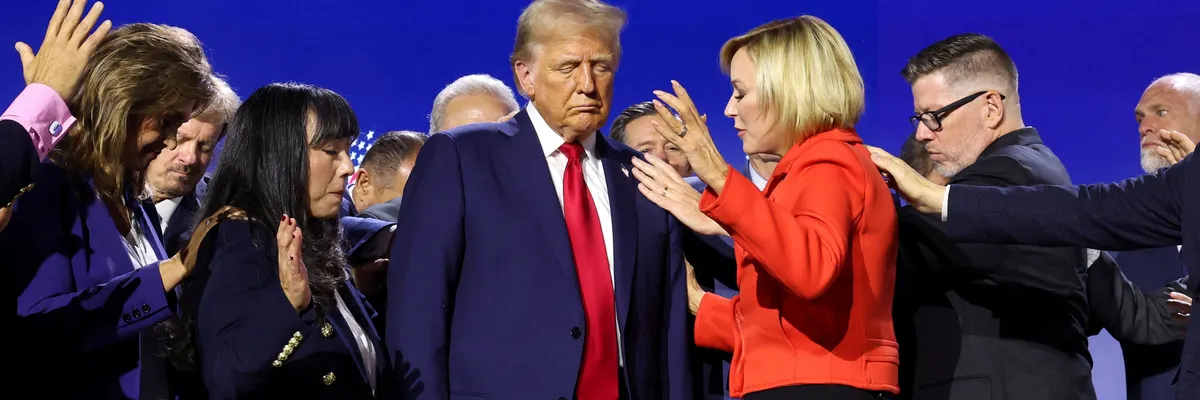
The Republican Party's historic defeat in the 2026 midterm elections has laid bare the reality that the party can no longer depend on the religious vote. For decades, devout Catholics and evangelicals have aligned heavily with Republican policy, but the midterm outcome — along with research from Vox's Christian Paz — indicates that this alignment has shifted significantly. In a country where most voters identify with a religious tradition, movement within these communities can redraw the coalitions each party depends on.
Catholic voters were among the biggest surprises of the 2026 midterms, emerging as major contributors in swing states. Catholics have long been treated as a bellwether constituency in American politics, and their movement is often read as a signal of where the broader electorate is heading. Exit polls in 2024 showed Catholics backing Donald Trump over Kamala Harris. In 2026, however, Catholics narrowly favored Democrats, 50-49.
The reversal stemmed from a range of factors. Trump and Republicans clashed with Pope Leo XIV — the first American-born pope, elected in 2025 — and Catholic bishops over the Iran war, mass deportations, and immigration enforcement. Demographic differences also played a role, with Trump's immigration and deportation policies alienating Latino Catholics in particular, a community that has grown into one of the largest segments of the U.S. Catholic Church.
Jewish Americans remained loyal to Democrats in the midterms, though the numbers suggest the party may be losing some ground. Jewish voters, though a small share of the U.S. electorate, have been among the most consistently Democratic-leaning religious groups in modern elections. Exit polls show Jewish voters backed Democrats 68-31, compared with 78-22 in 2024. The shift varied by state but was especially noticeable in Michigan: despite winning his Senate race, Democratic candidate Abdul El-Sayed underperformed other Democratic candidates in precincts with large Jewish populations.
Still, not all signs point downward. Many Republican Jewish voters voiced concern that their party has grown too accepting of antisemitic rhetoric, and Jewish Democrats expressed similar sentiments. Democrats still retain a strong foundation with Jewish voters, but the slimmer margins this cycle point to potential problems in future competitive elections.
Trump and the GOP's large evangelical following remained supportive, though that support shows signs of wavering. Exit polls show evangelicals backed Republican candidates 82-16, consistent with the 2024 presidential election. But evangelicals represented a smaller share of the electorate in the midterms, hinting at lower turnout. Turnout has historically run well below presidential-year levels in midterms, which makes the composition of the electorate one of the most closely watched variables in these contests. Paz says this matters because support from the evangelical community has provided considerable influence over the GOP throughout the years.
Other religious groups also saw notable shifts, among them Muslim, Mormon, and Protestant voters. Paz notes that data shows Protestant Christians seemingly helped Democrats build their winning coalition this year. Surveys of Mormon communities reveal a generational divide, with older voters steering toward Republicans while younger, more progressive voters align with Democrats — a striking split within a group that has historically leaned Republican in national elections. Muslim voters, meanwhile, have been part of the evolving Democratic Party amid political tensions surrounding Israel, Islamophobia, and the Michigan Senate race involving El-Sayed, a contest watched closely in a state that is home to one of the largest Arab American and Muslim communities in the country.
According to Paz, Republicans need to heed the warning signs: various religious groups either sided with Democrats or remained Republican while their faith in the party diminished, and others abstained from voting or shifted their party allegiance altogether. The results raise questions about how religion will influence politics moving forward — and suggest that voters may increasingly prioritize the issues and candidates before them rather than allowing religious affiliation alone to determine their political choices. How both parties adjust their appeals to religious voters in upcoming campaigns will offer an early measure of whether 2026 marked a durable realignment or a single-cycle shift.

