RAS Korea Lecture to Explore Early 20th-Century Vernacular Korean Humor
Key Takeaways
- •G.S. Hand has finished translating all 72 jokes from the 1916 Korean joke book 'Kkalkkal Useum,' many of which likely date back to the Joseon Dynasty (1392-1910).
- •Vernacular Korean humor of the colonial era has been largely unstudied in English because it falls into a gap between modern and classical Korean literature scholarship.
- •The jokes often mock authority figures and include scatological humor and wordplay on Chinese characters, offering historians a rare bottom-up view of ordinary sensibilities.
- •Jokes from the collection were reworked in Korean newspaper humor columns from the 1950s through the 1970s, showing their lasting influence.
- •Hand will present the translated material at a Royal Asiatic Society Korea lecture on Sept. 8 at Fast Five Tower near Seoul City Hall, with entry costing 10,000 won (5,000 won for students, free for RAS members).
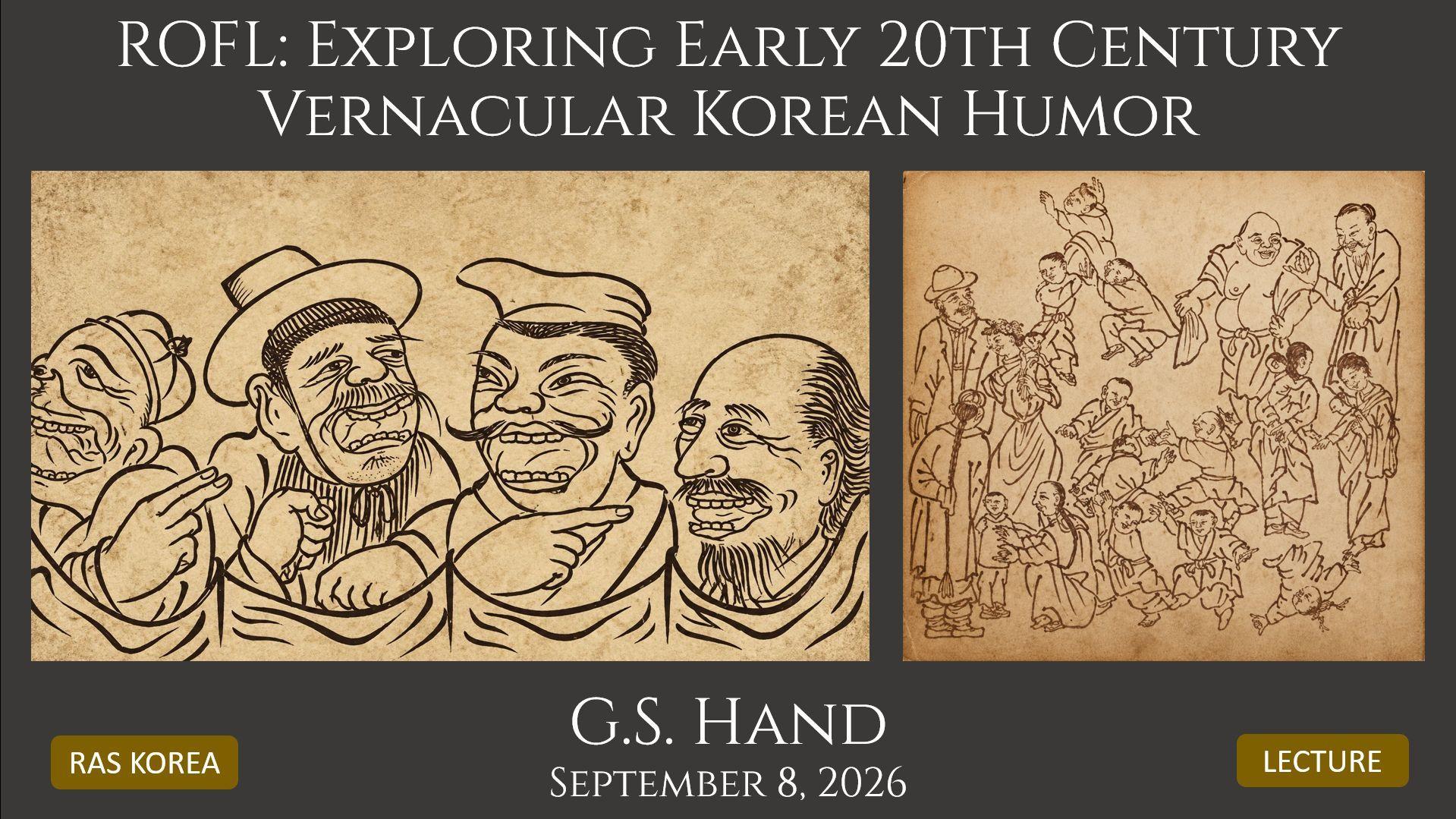
Information about Korean history is abundant, whether through academic study, historical sites or period K-dramas. We know, or believe we know, how society functioned, how people dressed and where they lived. But was Korea ever funny?
The history of humor in Korea has been largely overlooked by historians. When a visiting professor at Korea University introduced a 1916-published joke book to his class, it caught the attention of G.S. Hand, then a graduate student and now a professional literature translator. Published during the colonial period, the collection falls into a gap between scholarly fields: as Hand notes, modern literature scholars rarely look back that far, and classical literature scholars rarely look forward to it, leaving vernacular humor of the era largely unstudied in English.
"I decided to start translating these jokes the moment I saw them because they're hilarious — at least sometimes — and I don't think many people know about them," he said. "Scholars of Korean modern literature usually study things from later than that, classical literature scholars usually study things from earlier, and neither group is all that interested in humor."
"Kkalkkal Useum" contains 72 short humorous texts that were considered funny in 1916, although many are likely much older, with clear indications they date back to the 1392-1910 Joseon Dynasty.
"A lot of the humor is about skewering authority figures, and some of that is very funny. In addition to the anti-authoritarian streak, there's also a lot of poop and fart humor, and a lot of wordplay on Chinese characters, which for me is more interesting than laugh-out-loud funny," said Hand, who won the Fiction Grand Prize from The Korea Times' Modern Korean Literature Translation Awards in 2022 for his translation of Kim Ae-ran's short story "The Beginning of Winter."
He added that many of the jokes in "Kkalkkal Useum" are odd and unexpected, citing one titled "Hearing That Made His Nostrils Flare", in which a Christian illustrates that Confucian rituals are absurd by trying to feed his dead donkey grass.
"It begins with an image of the Christian dragging the donkey's body out into the mountains to discard it, which is a heck of an entrance," Hand said.
Many of the jokes have become outdated, and some are no longer funny — to the point that some come across as anti-humor. But they reveal what people of the time considered normal, acceptable or unacceptable in casual daily life, offering historians a rare bottom-up view of ordinary sensibilities rather than official records. Hand also emphasizes how they puncture stereotypes.
"TV and movies show a version of Joseon Korean in which everything is grand and serious all the time, and the royalty are the only people who matter. Figures in humor are less impressive but more relatable," he said.
Some of the jokes are still funny, and their influence and humor techniques can be found in comedy created closer to the modern day.
"I've seen jokes from 'Kkalkkal Useum' reworked in humor columns in Korean newspapers from the 1950s through the 1970s. These jokes were popular in their era and seemingly had some staying power," he said.
Hand has finished translating all the jokes of "Kkalkkal Useum," almost half of which have been published in The Korea Times, including [LAUGHING THROUGH HISTORY 30] 'Do You Wash Your Face in the Nude?', [LAUGHING THROUGH HISTORY 29] 'She Saw the Mt. Nam Signal Beacon and Shouted Fire!' and [LAUGHING THROUGH HISTORY 28] 'At Least He Got Over His Malaria.'
Hand studied translation at the Literature Translation Institute of Korea and modern Korean literature at Korea University.
He will give a lecture for the Royal Asiatic Society (RAS) Korea — an organization that has hosted lectures on Korean history and culture since its founding in 1900 — during which he will introduce the materials he has translated, examine how they portray different family and social relationships, and offer a few ideas from humor theory as alternative explanations for how the humor functions.
The lecture will be held Sept. 8 at 7:20 p.m. in the fifth-floor conference room of Fast Five Tower near Seoul City Hall. Entry costs 10,000 won, or 5,000 won for students of all ages with valid student ID, and is free for RAS Korea members. More information is available at raskb.com.

