16th Gwangju Biennale Opens, Framing Change as a Slow, Collective Process
Key Takeaways
- •The 16th Gwangju Biennale's main exhibition, titled "You Must Change Your Life," runs for 72 days through Nov. 15 at the Gwangju Biennale Exhibition Hall.
- •Artistic director Ho Tzu Nyen curated the show with Che Kyong-fa, Park Ga-hee and Brian Kuan Wood, featuring 43 artists and groups across five galleries.
- •The exhibition title comes from the final line of Rainer Maria Rilke's poem "Archaic Torso of Apollo" and is presented as an open-ended provocation rather than an instruction.
- •This edition concentrates the entire exhibition in one venue, a deliberate departure from the multi-site, expansionary format of many previous biennales.
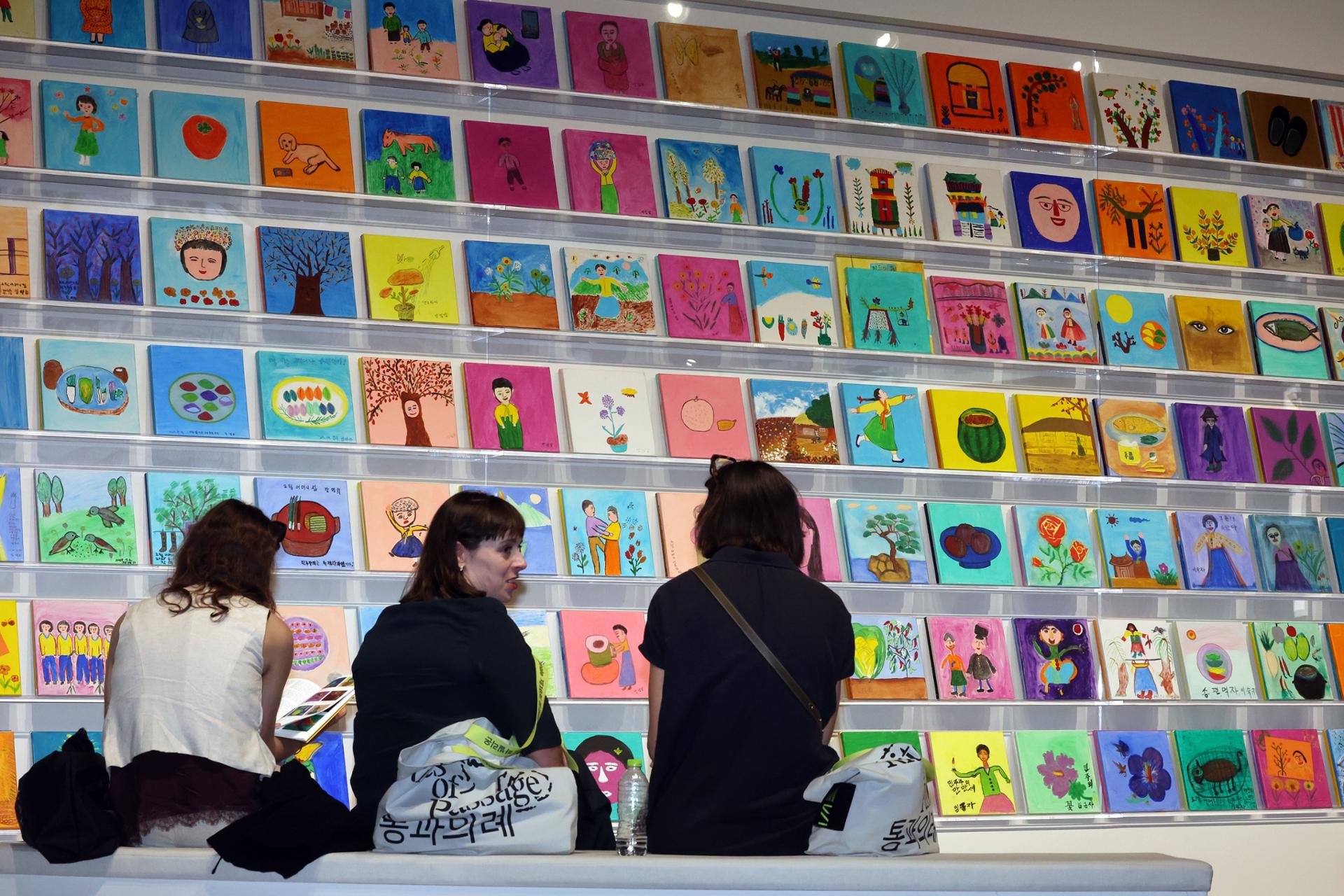
- •The show includes 322 paintings by women affected by the May 18 Democratic Movement, created through workshops at the May Mothers House since 2022, alongside durational works by James T. Hong and Sunik Kim.
Biennale theme connects local democratic memory with global issues of power and care
JEONNAM-GWANGJU — The 16th Gwangju Biennale opened its preview events Friday, ahead of its public opening Saturday, presenting an exhibition that asks visitors to see change not as a sudden rupture but as a gradual process shaping individuals, communities, landscapes and the planet.
Founded in 1995 as Asia's first contemporary art biennale, the Gwangju Biennale has long served as a bridge between the Korean art scene and international contemporary discourse, and each edition is closely watched for how it frames the city's historical memory against global artistic currents.
The main exhibition, titled "You Must Change Your Life," runs through Nov. 15 at the Gwangju Biennale Exhibition Hall in Jeonnam-Gwangju Special Metropolitan City. The biennale will run for 72 days in total. Curated by artistic director Ho Tzu Nyen together with Che Kyong-fa, Park Ga-hee and Brian Kuan Wood, the exhibition brings together 43 artists and groups across five galleries within the venue. Ho, a Singaporean artist known for video and installation works that draw on Southeast Asian history and mythology, brings that layered approach to time and transformation to the exhibition's framing.
The title is drawn from the final line of Rainer Maria Rilke's poem "Archaic Torso of Apollo," and serves less as an instruction than as an open-ended provocation, according to Ho.
"It tells you that something must change, but it does not tell you how, why or what you should become," Ho said during a press conference. "It is a demand without a program."
That ambiguity carries a collective meaning in Gwangju, a city defined by the 1980 pro-democracy movement and its continuing legacy, he explained.
"In Gwangju, the question is no longer how I might change my life," he said. "It also becomes: How do our lives change one another? How does one individual transformation connect to collective transformation?"
Five chambers, from the microscopic to the cosmic
The main exhibition is structured as a passage through five chambers — "Molecules and Me," "Bodies and Bonds," "Landscapes and Learning," "Cosmos and Change" and "Air and Articulations." Each creates a distinct sensory environment while tracing change at different speeds and scales, from the microscopic to the cosmic.
Jeju volcanic rocks, presented throughout the exhibition in collaboration with Jeju Stone Park, embody this approach. Formed through eruptions and pressure accumulated over millennia, the rocks are described by the curatorial team as among the exhibition's "oldest participating artists."
"Change does not exist in one speed," Ho said. "We tend to think of change as rupture, and change can certainly be explosive, but it can also be slow and continuous that we barely perceive it."
This year's edition also marks a notable departure from the sprawling, multi-venue format associated with many previous international biennales. The exhibition is concentrated entirely within the exhibition hall, an approach Ho characterized as a conscious move away from an "inflationary" model of ever more artists, sites and works. The move reflects a broader debate in the biennale world, where large-scale recurring exhibitions have faced growing questions about scale, sustainability and audience fatigue.
"By confining everything to one site," he said, "we are able to have the luxury of time to give everyone the attention it deserves."
Memory, care and works that demand time
Gwangju's own histories of care, learning and democratic struggle are embedded in the exhibition's journey. The May Mothers House presents 322 paintings made by women whose lives were profoundly affected by the May 18 Democratic Movement. Created through ongoing workshops since 2022, the works trace memory, grief, resilience and solidarity across decades.
The biennale also puts its theory of change into practice through works that require time rather than instant consumption. Every night from 7 p.m. to 9 p.m., James T. Hong's "Apologies" (2012-), a nearly 11-hour compilation of public apologies by political leaders, will be projected on the exterior of the Biennale building, prompting viewers to confront the language of power, remorse and accountability.
Meanwhile, Sunik Kim's 496-hour sound work "The Light in the Factory" (2026) unfolds over the exhibition's entire public run, suggesting that transformation is not a singular spectacle but an uneven, ongoing process.
"This biennale invites us to rethink change in our own lives and societies, opening up new perspectives and possibilities for the future," said Youn Bum-mo, president of the Gwangju Biennale Foundation.
