GSMA: 140 Million Nigerians Remain Offline Despite Living Within Mobile Internet Coverage
Key Takeaways
- •Roughly 140 million Nigerians were within mobile broadband coverage but not using mobile internet in 2025, giving Nigeria the largest usage gap among the African countries named in GSMA's report.
- •GSMA attributes the usage gap to barriers including lack of awareness, unaffordable handsets, limited literacy and digital skills, safety concerns, and low perceived relevance rather than missing network coverage.
- •Entry-level internet-enabled devices now cost about 44% of average monthly income, rising to 76% for the poorest 20% of the population in Sub-Saharan Africa.
- •DRAM and NAND flash memory prices rose more than 80% quarter-on-quarter in the first quarter of 2026, prompting manufacturers to reallocate limited chips to premium 5G devices and creating a shortage of entry-level smartphones.
- •In Sub-Saharan Africa, 820 million people sit in the usage gap while only 25% of the population is actively connected, with children aged 5 to 17 showing just 18% connectivity.
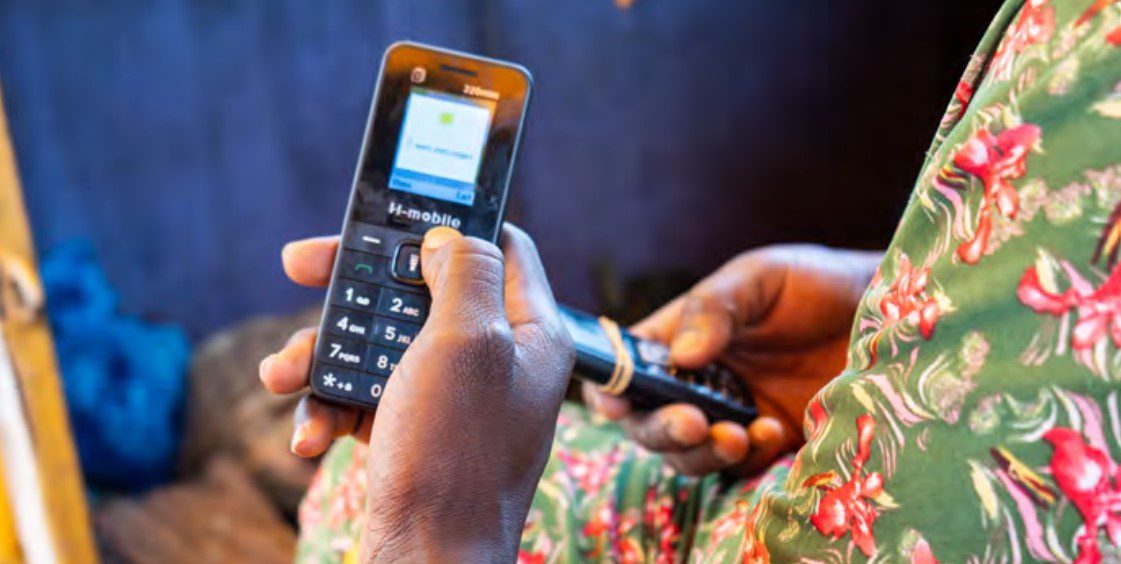
Roughly 140 million Nigerians were living in the mobile internet usage gap as of 2025, meaning they resided within mobile broadband coverage but did not use mobile internet services, according to the State of Mobile Internet Connectivity 2026, a report published by global industry body GSMA in September 2026. The distinction matters: the obstacle for this population is not a missing mobile signal but the barriers that keep them offline even where coverage exists.
The report attributes the gap to a series of compounding barriers. Many people remain unaware of mobile internet and what it offers. Those who do become aware often face a second obstacle: the inability to afford an internet-enabled handset, combined with limited literacy and digital skills. The usage gap also captures existing mobile internet users who have dropped out of active use after encountering difficulties. Beyond the rising cost of smartphones, the GSMA cites safety and security concerns, uncertainty about adapting to digital services, and a lack of perceived relevance as factors that constrain usage.
Nigeria's gap places it among the top 20 countries that together account for 68% of the global usage gap. Others on the list include India (710 million), China (200 million), Ethiopia (100 million), the Democratic Republic of Congo (60 million), Egypt (60 million), and Tanzania (50 million), making Nigeria's total the largest among the African countries named.
GSMA defines the affordability gap as the inability to cover the cost of internet-enabled handsets along with expenses beyond ownership, such as data plans and service fees.
The findings mark a sharp reversal from 2024 and early 2025, when internet penetration accelerated on the back of improved smartphone affordability. In 2026, the conversation has changed as memory chip prices surge, driven by scarcity and a range of macroeconomic conditions. According to the report, entry-level internet-enabled devices now cost the equivalent of 44% of average monthly income, a burden that rises to 76% of average monthly income for the poorest 20% of the population in Sub-Saharan Africa.
Smartphone prices are climbing again, and low-income earners are being left behind under tough market conditions. Average DRAM and NAND flash memory prices rose by more than 80% quarter-on-quarter in the first quarter of 2026, with further hikes expected through the second half of the year.
Facing constrained supply, smartphone manufacturers are increasingly directing their limited microchips and memory toward higher-margin premium devices rather than entry-level handsets. The abrupt shift has produced a shortage of entry-level smartphones, with the expensive and limited chips reallocated to the production of 5G devices.
The effects are already visible in shipment data. An August 2026 report by Counterpoint Research found that shipments of 5G smartphones across the Middle East and Africa (MEA) increased by 8% year-on-year in the second quarter of 2026. The gain stood in contrast to entry-level devices and was driven by a collapse in the sub-$250 budget segment, which fell 26% year-on-year.
Across Sub-Saharan Africa, the GSMA report shows that 820 million people experience usage gaps, while only 25% of the population — 310 million people — are actively connected. There is a positive note for the region: Sub-Saharan Africa is recording its first increase in connected population in three years, with the connection rate edging up from 24% to 25%. It remains to be seen whether that gain can hold as device costs climb.
Connectivity varies sharply by age. In Sub-Saharan Africa, 42% of people aged 18 and above are connected to the internet, a level strongly driven by the region's young population and particularly its Gen Z cohort. At the same time, another 42% of the adult population sits in the usage gap.
Connectivity among children aged 5 to 17 is struggling by comparison. Only 18% of that age group in Sub-Saharan Africa is internet-connected, while 72% remains in the usage gap. The report clarifies that children either use their own device or depend largely on borrowed or shared devices, whereas North America leads with 84% connectivity among children.
The pattern differs in Africa, where device ownership shapes household access. If a household owns an internet-capable phone, it typically belongs to the head of the family, and children are often restricted to brief periods of shared access. Adults use the device for work, communication, or income generation, leaving little time or data allowance for children's learning or entertainment.
The findings underline that device ownership remains a major obstacle to connectivity and the spread of digital access in Nigeria and across Sub-Saharan Africa.
Source: TechNext24

