Cashewmüll kommt in Singapurs Bunker-Mix
Wichtige Erkenntnisse
- •Olam Agri und Vitol Bunkers haben nach eigenen Angaben Singapurs erste Bunkerlieferung von mit Cashewschalenöl mitverarbeitetem VLSFO abgeschlossen und 246.5 Tonnen Kraftstoff an den 82,000-dwt-Kamsarmax Scion Mathilda geliefert, darunter 34.5 Tonnen des mitverarbeiteten Produkts.
- •Der mitverarbeitete Kraftstoff wies eine Treibhausgasintensität von 2.02 gCO2eq/MJ auf und senkte die Emissionen um mindestens 120 Tonnen CO2-Äquivalent gegenüber konventionellem VLSFO; 34.1 Tonnen wurden auf einer Reise von Caofeidian in China nach Rotterdam und weiter nach Barcarena, Brasilien verbraucht.
- •Durch die Mitverarbeitung von CNSL im Raffineriestrom entsteht Kraftstoff der Klasse RMG380 VLSFO mit derselben chemischen Zusammensetzung und Qualität wie konventioneller Kraftstoff, wodurch die zuvor mit direkt beigemischtem CNSL verbundenen Probleme wie Schlamm, verstopfte Filter und Injektorprobleme vermieden werden.
- •Vitol führte sein Angebot für mitverarbeitetes VLSFO 2025 ein und produzierte den Kraftstoff zunächst in der 100,000-barrel-per-day-Raffinerie in Fujairah, wo nachhaltige Rohstoffe während der Raffination und nicht erst im fertigen Bunkerprodukt eingesetzt werden.
- •Singapur, der weltweit größte Bunkering-Hub, verzeichnete 2025 Verkäufe alternativer Schiffskraftstoffe von 1.95m Tonnen nach 1.35m Tonnen im Vorjahr; Vitol Bunkers gehörte zu den fünf größten Biokraftstofflieferanten des Hafens.
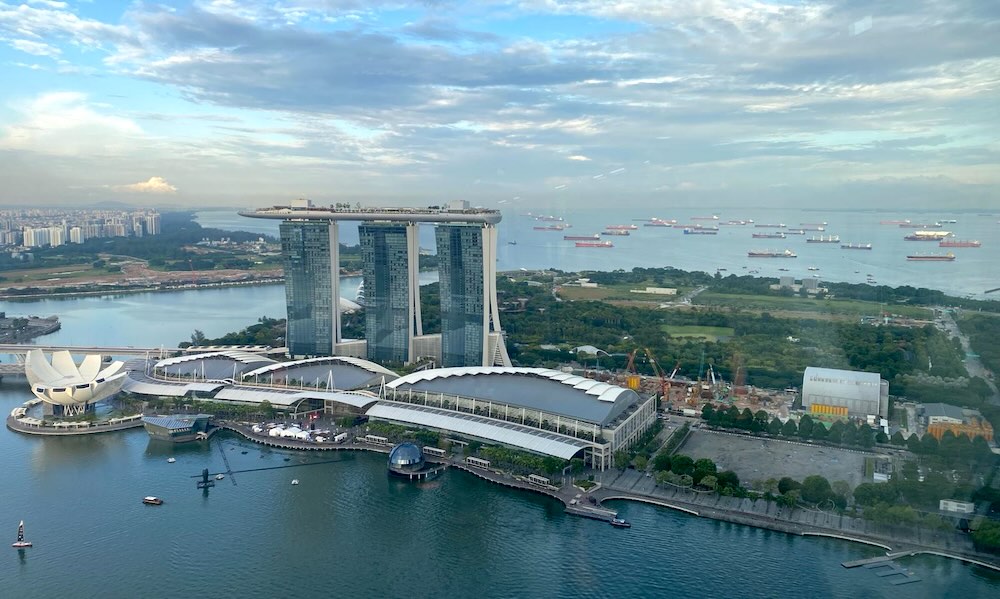
Olam Agri and Vitol Bunkers have carried out what they describe as Singapore’s first bunker supply of VLSFO co-processed with cashew nutshell liquid (CNSL), putting an agricultural waste stream to work as a lower-carbon marine fuel.
Vitol supplied 246.5 tonnes of fuel to the 82,000 dwt kamsarmax Scion Mathilda, comprising 212 tonnes of conventional VLSFO and 34.5 tonnes of co-processed CNSL VLSFO, with the fuel procured by Olam Agri’s ocean freight business.
The companies said 34.1 tonnes of the co-processed fuel was consumed during a voyage from Caofeidian in China to Rotterdam and a subsequent ballast leg to Barcarena, Brazil. The fuel had a greenhouse gas intensity of 2.02 gCO2eq/MJ and delivered savings of at least 120 tonnes of CO2 equivalent compared with conventional VLSFO, without additional onboard handling or treatment.
The use of CNSL is notable after the feedstock came under scrutiny when directly blended into marine fuels. Testing firm CTI-Maritec and marine insurer Skuld previously highlighted cases involving sludging, clogged filters, injector problems and deposits in fuels found to contain high concentrations of CNSL-related phenolic compounds.
Vitol’s approach instead co-processes the cashew by-product within the refinery stream. The resulting fuel conforms to RMG380 VLSFO grade and, according to Olam and Vitol, has the same chemical composition and quality as conventional fuel, removing the need for special onboard treatment or charterparty provisions.
Vitol launched its co-processed VLSFO offering in 2025, initially producing the fuel at the company’s 100,000 barrels-per-day Fujairah refinery. The energy trader said the process allows waste-based and other sustainable feedstocks to be introduced during refining rather than blended into the finished bunker product.
The trial vessel has since changed hands. The 2024-built Scion Mathilda was acquired by Nasdaq-listed Castor Maritime for $41.9m in June and renamed Magic Saturn.
Singapore, the world’s largest bunkering hub, recorded 1.95m tonnes of alternative marine fuel sales in 2025, up from 1.35m tonnes a year earlier. Vitol Bunkers ranked among the port’s five largest biofuel suppliers last year.

