Внутри триллионной цены лжи Трампа
Ключевые выводы
- •The Washington Post's Fact Checker задокументировал более 30,000 ложных или вводящих в заблуждение заявлений Дональда Трампа за четыре года, что превосходит темпы предыдущих администраций.
- •Министерство юстиции сняло обвинения во вандализме с олимпийца Дэвида Хирна после того, как установило, что ущерб отражающим бассейнам Мемориала Линкольна был результатом неудачной покраски, а не преступной деятельности.
- •Исследователи из Harvard Kennedy School's Misinformation Review документировали, как повторяющаяся официальная ложь подрывает институциональное доверие, что наблюдается в нескольких демократиях.
- •Федеральные судьи в нескольких округах временно блокировали действия администрации после того, как установили, что чиновники сделали неверные заявления в судебных материалах.
- •Статья выделяет четыре категории вводящих в заблуждение утверждений: подмена фактов альтернативными версиями, умолчание о контексте, искажение значимости и извращение языка ради политической или юридической выгоды.
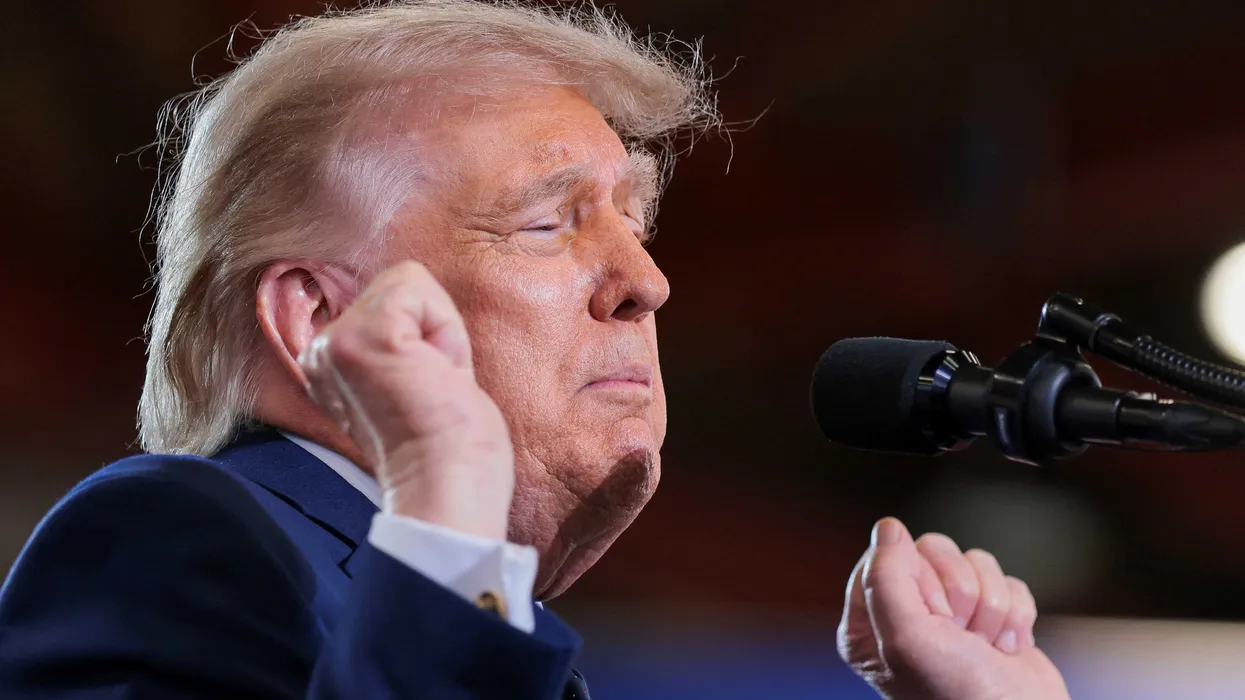
It may be that society is often described as being built on “lies,” a reference to the collective myths, social constructs, and commercial narratives that keep civilization functioning rather than literal malicious deception, as a Quora.com online discussion has considered.
But that is about the cultural lies people tell themselves about the shared American Dream, for example, not the intentional lying seen daily from the Trump administration. Politicians can be expected to offer self-promoting “spin,” whether accepted or not.
The Justice Department’s decision to drop its criminal vandalism charges against Olympian David Hearn, after he noticed the large paint chips floating in the Lincoln Memorial Reflecting Pools, was not only an acknowledgment that the “damage” came from a botched painting job rather than a criminal act. It was another in a long series of public policy lies associated with Donald Trump, who had insisted without evidence on his own version of truth. Trump later criticized U.S. Attorney Jeanine Pirro, his appointee, and again insisted that there had been extensive vandalism at the pool.
The same pattern appears in announcing a roadmap to peace in Gaza without the agreement of the warring parties, repeating never-proven election-rigging claims, or posting that prices are going down when they are going up.
Truth — or the denial of verifiable fact — is the defining product of the Trump era.
Lying, and moral outrage at lying, are human universals. But a society built on public policy lies pays an ever-expanding price across economic, social, and political dimensions. When foundational data, risk assessments, and policy promises are falsified, the consequences can become severe systemic failures. Policy based on lies can lead to trillions of dollars in misspending or cuts to basic services, to unconstitutional abridgment of rights, and to invented new powers for a president whose party majority in Congress refuses to check.
Trump wants people to believe only what he says, and then to accept the next version when he changes the message to fit a new theme for an attention-depressed voter population. The Washington Post and other news organizations have tracked tens of thousands of Trump’s public lies. The Post's Fact Checker column, which catalogued false or misleading claims throughout his presidency, documented more than 30,000 such statements over four years — a pace that dwarfed the tallies maintained for previous administrations.
The result is visible in wars started and widened over purposeful misstatement of fact or the considered omission of what has passed as rigorous intelligence. It appears in the ruination of Head Start over propaganda about diversity and equity concerns among three-year-olds. Head Start, the federal program serving roughly 800,000 low-income children annually, has faced funding uncertainty and program disruption under policy shifts justified by claims critics say misrepresent the program's purpose and outcomes. It also appears in lies about the criminal records of undocumented immigrants, in the claim that transgender athletes are a conspiracy to ruin women’s sports, and in criticism of late-night comedians being amplified to tidal-wave proportions to justify the construction of an authoritarian state.
That Donald Trump lies is not in question. News outlets, lawsuits, court orders, research, and the results of everyday reality show that many of his policy statements — never mind his more personal opinions — are based on nothing but gut instinct and venomous targets of revenge. Call it misstatements, propaganda, or political spin: it rests on the acceptance of public lies.
We should call them what they are — lies, meaning the intentional misstatement of facts for some gain. Researchers who study democratic backsliding, including scholars at the Harvard Kennedy School's Misinformation Review, have documented how repeated official falsehoods erode institutional trust — a pattern observed in democracies from Hungary to Venezuela — making it harder for citizens to hold leaders accountable even when corrective information is available.
All lies are not equal
Naturally, some lies are plainly silly, including crowd-size claims when video of the event is available. Some lies are merely braggadocio and self-promotion, such as declaring polls show adoration rather than rejection. Some lies are whoppers, including claims about supposed fraud or hoped-for criminality in finding seashells captured by an opponent’s phone camera.
Here is a guide to sorting out the misstatement from the mis-fact.
-
Lies that substitute meaning for fact. Whether the 2020 election results, the Capitol riot and attempted insurrection, the cause of the reflecting pool problems, or whether polls are consistently showing American rejection of the war of choice in Iran, Donald Trump has for years insisted on reflecting only his own “alternative” facts. As a nation, people have always agreed to disagree, though the usual place to begin is with whatever just happened. Over more than a decade of Trump in public life, the need for facts has been steadily eroded.
-
Lies that omit context and background. A statement may reflect a specific truth while missing the point. War/Defense Secretary Pete Hegseth is not lying or even incorrect when he says U.S. military strikes mostly hit intended targets in Iran, but he presents that as if it were a proper assessment of the strategic situation. Obviously, doing so is a lie, or conflict would not still exist. Similarly, the entire Epstein Files discussion is more than whether Trump himself spent time partying with Jeffrey Epstein. The same is true of random spending cuts for foreign aid, which have certainly resulted in deaths linked to disease and hunger, despite Elon Musk’s dismissals.
-
Lies that misstate significance or create unbalanced comparisons. There are likely fewer than 100 high school or college trans athletes in the entire country who want to compete in gender-separated sports. Yet Trump speaks as if Democrats — or “Communists” — want “trans for all,” and as if there is an epidemic of gender fluidity among teens that somehow becomes a problem only when a school bathroom or locker room is involved, even though those spaces likely should be supervised in any case. The same distortion applies to the number of undocumented migrants convicted of violent crimes, the number of election-fraud cases overall, and the number of countries allegedly “ripping off” the U.S. by selling goods Americans choose to buy.
-
Lies that twist language, whether legal, diplomatic, or political. Trump’s cutesy, ridiculing names for opponents are hidden tells about his fears of criticism. The gap between what he tells the American public about immigration, education, or tariffs and what his lawyers tell federal courts after someone challenges the truth of the outcomes varies regularly and dramatically. What would you call telling a judge that a deportees’ plane did not leave the country when it had, if not a lie? How can Trump celebrate a directed Justice Department indictment when it cannot even persuade a grand jury — hearing only the government’s side of the case — because the presentation only convinced jurors the allegations were lies?
Add to this Trump’s constant changing of his mind on matters small and large, including apparently calling off renewed strikes against Iran this weekend while citing “progress” in negotiations that no one else can confirm.
Most pundits, critics, and news reporters, as well as authors of recent books about Trump, those who follow the Pentagon, and those who track business developments, say the default assumption has shifted to believing first that what Trump says about the country is wrong, uninformed, propaganda — a lie. Even television voices that support Trump unconditionally often simply omit mention of where he crosses the truth line.
There have been many warnings, from Big Brother critiques to the experiences of real people harmed by Trump’s lies. The question is why Congress, the courts, and the public continue to accept it. Federal judges across multiple districts have issued rulings temporarily blocking administration actions on grounds that officials made misrepresentations in court filings, and inspectors general across agencies have documented discrepancies between public statements and internal findings — institutional pushback whose long-term effectiveness remains uncertain.
Terry H. Schwadron retired as a senior editor at The New York Times, Deputy Managing Editor at The Los Angeles Times, and held leadership roles at The Providence (RI) Journal-Bulletin. He was part of a Pulitzer Gold Medal team in Los Angeles, and his team was part of several Pulitzers in New York.

