Нигерия добавила 78,000 пользователей оптоволокна во 2-м квартале 2026 года на фоне роста внедрения FTTX
Ключевые выводы
- •FTTX subscriptions in Nigeria rose to 319,735 in Q2 2026 from 241,750 in Q1 2026, a 29% increase quarter on quarter.
- •The Nigerian Communications Commission published specific FTTX data for the first time.
- •Internet users in Nigeria consumed 1.53 terabytes of data in June 2026, the highest level recorded in the country.
- •MTN FiberX had 176,468 subscribers and continued expanding across Nigeria’s major cities.
- •FTTX accounted for 76% of Nigeria’s 420,989 active ISP subscribers, but it still represented a small share of the country’s total internet base.
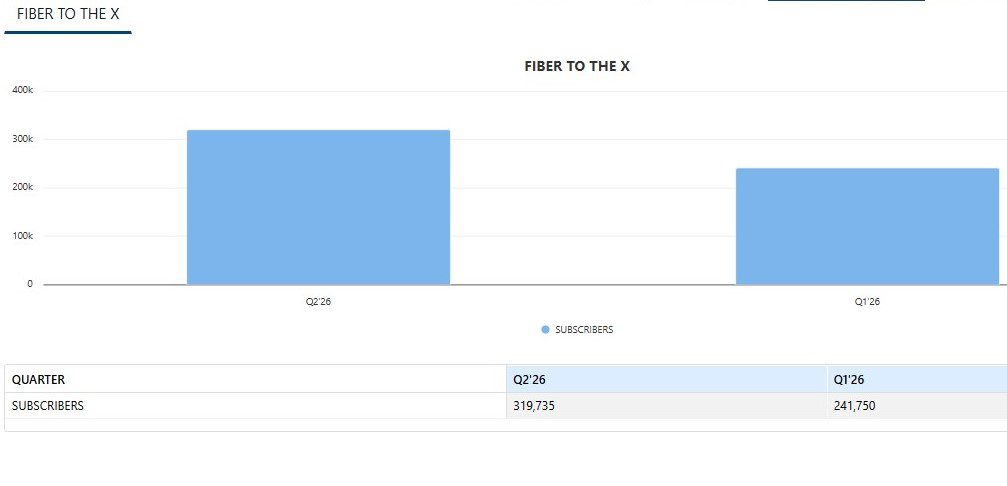
Latest industry data shows that fibre-to-the-X (FTTX) recorded a sharp quarter-on-quarter increase in Nigeria’s fixed-line broadband adoption during the first half of 2026. The subscriber base for Q2 stood at 319,735, representing 29% growth from 241,750 in Q1 2026.
This is the first time the Nigerian Communications Commission (NCC) has highlighted specific data for FTTX, reflecting how internet service operators (ISPs) and fixed operators are expanding last-mile fibre infrastructure to homes, offices, and commercial hubs.
The figures come amid rising data consumption in Nigeria, where reliance on mobile networks such as 4G and 5G has created capacity bottlenecks. As of June 2026, Nigerian internet users consumed 1.53 terabytes of data, the highest level yet recorded in the country’s history.
Expanding the FTTX footprint helps move high-bandwidth residential traffic, including streaming, large file downloads and uploads, 4K video, cloud computing, and heavy remote work, onto dedicated fixed fibre networks. That shift frees up spectrum on mobile networks, which remain the default option for many households and smaller users.
MTN FiberX has been a major driver of the FTTX trend over the past year. Latest data shows the service now has 176,468 subscribers and continues to expand across Nigeria’s top cities.
The growth in fibre networks also aligns with industry initiatives such as Project BRIDGE, which aims to move heavy users off congested mobile networks and onto fixed fibre lines. The Federal Government has said the 90,000km fibre deployment is scheduled to begin implementation by October.
Despite surpassing 319,000 subscribers, FTTX remains a small fraction of Nigeria’s 156 million total internet subscriptions. That gap shows that while fibre adoption is rising quickly, the market remains largely underpenetrated and economically divided.
Many Nigerians still rely on mobile networks for everyday internet use because fibre access remains expensive relative to their internet needs. This contrasts with businesses, high-data users, and enterprises, which depend heavily on the internet for daily operations and are more likely to justify the higher cost of dedicated fixed connectivity.
Although fibre-to-the-X accounts for a small share of total internet users, it represents a large portion of Nigeria’s ISP subscriber base. FTTX refers to fixed fibre connections delivered to locations such as homes, offices, and buildings, while ISP subscriber figures cover customers of licensed internet service providers across multiple technologies, including satellite and fixed wireless services.
Industry data released by the NCC on Tuesday shows that Nigeria’s active ISP subscriber base stood at 420,989 as of June 2026. Spectranet remained the country’s top ISP with 111,384 active subscribers, ahead of Starlink with 98,642 and FiberOne with 56,486.
With 319,735 subscribers, FTTX accounts for 76% of Nigeria’s ISP customer base. The roughly 100,000-subscriber gap consists of customers receiving non-mobile broadband through satellite services such as Starlink or through fixed wireless systems rather than a direct fibre cable run to their premises.
The data underscores fibre’s role as a backbone of Nigeria’s broadband expansion plan and suggests that Project BRIDGE could accelerate that expansion if implemented as planned. Broadband penetration stood at 56.79% in Q2 2026.

