Voters anxious to punish the GOP as the 'Trump hangover effect' takes hold, argues a Democratic strategist
Puntos clave
- •A CNN poll found that nearly half of those surveyed in Maine view their vote in this year's Senate race as an opportunity to oppose Trump's agenda.
- •A national CBS News-YouGov poll published on Sunday showed that 45 percent of respondents said they were voting specifically to oppose Trump.
- •In Kansas, incumbent Republican Sen. Roger Marshall led by just five points in a poll that overrepresented Republican voters by 10 points in a state that Trump won by 16 points in 2024.
- •In Tennessee's redrawn 9th Congressional District, Democrat Justin Pearson trails Republican Brent Taylor by four points despite Trump winning the district by 20 points in 2024.
- •Burns identifies high gasoline prices as the main driver of disapproval, a problem that — he says — is worsened by contradictory statements from Republicans such as Sen. John Kennedy, Fox News host Laura Ingraham, and Trump himself.
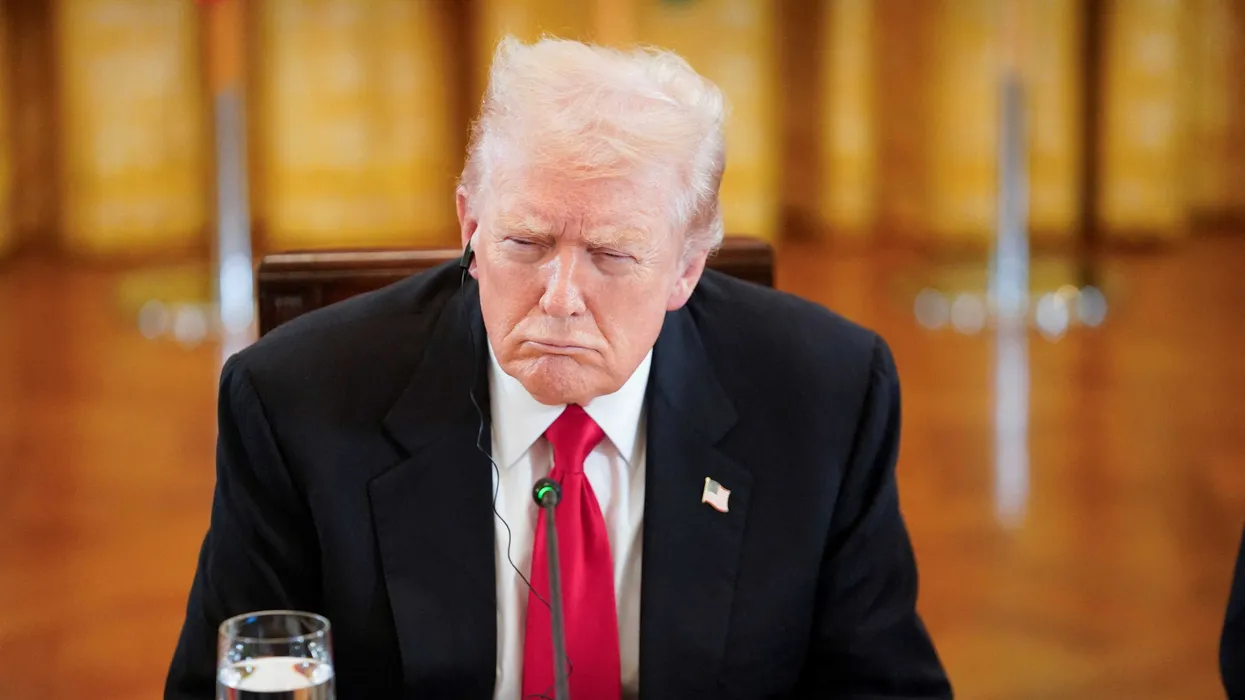
A growing number of American voters are "anxious" about the prospect of punishing Republicans in the November midterm elections, a trend that veteran Democratic strategist Max Burns attributes to a growing "Trump hangover effect" in a new op-ed for The Hill published Wednesday morning.
As the first nationwide electoral test since the 2024 presidential election, the midterm elections will determine the composition of both chambers of Congress — with control of the House and Senate shaping how much of the president's second-term agenda can move forward. Burns writes that the upcoming midterms appear set to continue — and escalate — the "historic electoral wipeout" that Republicans suffered in the 2025 off-year elections, when the Democrats swept all statewide races. Since then, he argues, "Things have only gotten worse for Republicans after a year of inaction in Washington amid skyrocketing gasoline prices and stubborn inflation."
According to Burns, a growing share of voters is eager to use their vote against President Trump even when they are not enthusiastic about supporting the Democrats. Recent polls, he points out, reflect the same pattern.
"In Maine, a CNN poll published last week reveals that nearly half of those surveyed view their vote in this year's Senate race as an opportunity to oppose Trump's agenda," Burns detailed. "A CBS News-YouGov poll published on Sunday found the same trend nationwide, where 45 percent said they were voting specifically to oppose Trump."
He added: "Half of Americans now use the words 'corrupt' and 'extreme' to describe Trump's radicalized Republican Party. Republicans have alienated ordinary people so badly that voters are actually anxious to punish anyone associated with Trump's failed presidency. I call that voter rage the 'Trump hangover effect,' and it is reshaping national races that were once considered reliable Republican strongholds."
That reshaping, Burns argues, is evident in the effort Republicans are now forced to devote to races they might once have taken for granted. In Kansas, incumbent Republican Sen. Roger Marshall led his Democratic rival by just five points in a recent poll — a survey that overrepresented Republican voters by 10 points, in a state that Trump won by 16 points in 2024. As with any individual survey, the poll carries a margin of sampling error, and its partisan overrepresentation reflects pollsters' modeling of the expected electorate — context that shapes how such narrow leads should be weighed as more polls arrive ahead of November.
"If Marshall is really underperforming that badly in Kansas, Democrats could enter the final stretch of the midterm elections with a broader electoral map than even they had predicted," Burns wrote.
He continued: "The Trump hangover effect is also on display in Tennessee, where Democrat Justin Pearson (D) narrowly trails Republican Brent Taylor (R) by 4 points in the state's redrawn 9th Congressional District. Trump won the newly drawn district by 20 points in 2024. Pearson is undoubtedly helped by the fact that Trump's popularity has plummeted to a net rating of minus-3 among Tennesseans, with high gasoline prices and affordability issues driving voters' negative sentiment."
High gasoline prices, according to Burns, remain the main driver of the public's growing disapproval of Trump and the GOP — a problem that, he says, is compounded by the party's "incoherence" when discussing it.
"Last Sunday, Sen. John Kennedy (R-La.) admitted on NBC's 'Meet the Press' that gasoline prices and inflation were 'gutting people like a fish' and that a dysfunctional Republican Congress had the power — but not the political will — to address inflation before the election," Burns wrote. "Two days later, Fox News host Laura Ingraham made the exact opposite argument. She said that gasoline prices were actually decreasing. One day after Ingraham's remarks, Trump acknowledged the high price of gasoline but told voters that high prices were the necessary cost of preventing Iran from obtaining a nuclear bomb."
He concluded: "So, what is the message, guys? Faced with a crisis they created and yet cannot seem to fix, Republicans are saying everything — and as a result voters are hearing nothing."

