Zimbabwe Sets $300 Million Cap on Gold-Buying Support to Limit Price Risk
Key Takeaways
- •Zimbabwe has set a $300 million cap on government-supported gold purchases to limit public financial exposure to potential gold price corrections.
- •Gold represents approximately 40% of Zimbabwe's exports and roughly 10% of gross value added, making it a cornerstone of the national economy.
- •The IMF warned that a significant gold-price reversal could seriously impact Zimbabwe, which has been in debt default and largely cut off from international capital markets for over two decades.
- •In May 2026, Zimbabwe reserved small- and medium-scale gold mining exclusively for citizens, requiring foreign operators to transition to large-scale mining by January 2027.
- •The Zimbabwe Gold (ZiG) currency introduced in April 2024 is backed by precious metals and foreign-exchange reserves, making gold prices directly relevant to the country's monetary stability.
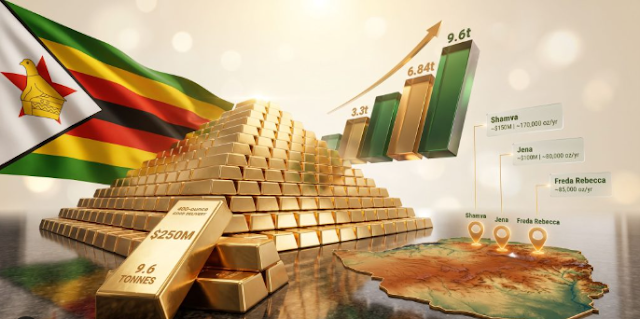
Zimbabwe has imposed a $300 million ceiling on government-backed gold purchasing support for the current year as authorities move to reduce the country's exposure to a potential decline in gold prices.
The decision comes at a time when gold has become increasingly central to Zimbabwe's economy, serving as a key driver of exports, government revenue, and foreign-currency earnings. While elevated gold prices can deliver a significant economic boost, policymakers have expressed concern that a sudden correction could place substantial pressure on public finances.
The development was highlighted by Cointelegraph on X and has drawn attention across financial and cryptocurrency markets, where investors continue to track the relationship between gold prices, government reserves, and broader macroeconomic conditions.
Source: HokaNews
Government Limits Gold-Buying Support
The $300 million ceiling is designed to place tighter boundaries on the government's financial exposure to the gold market. Government-supported gold purchasing — conducted in Zimbabwe primarily through Fidelity Gold Refinery, the Reserve Bank subsidiary that operates as the country's sole authorized gold buyer — offers tangible benefits for the mining industry, helping miners access formal markets, improving the share of gold collected through official channels, and potentially curbing illegal trading.
However, such programs also expose the government to international price fluctuations. When gold prices climb, the value of state-purchased gold rises accordingly. When prices fall, the government may incur losses or see reduced revenue, depending on the structure of its purchasing and financing arrangements. The new cap therefore represents an attempt to balance sector support with prudent fiscal risk management.
Gold's Critical Role in Zimbabwe's Economy
Gold occupies an unusually prominent position in Zimbabwe's economic structure. The International Monetary Fund recently underscored the country's deep dependence on the precious metal, noting that gold accounts for approximately 40% of exports, roughly 10% of gross value added, and about 5% of formal employment. Including spillover effects, gold-related activity contributes an estimated 5% of fiscal revenues.
This degree of exposure means that shifts in gold prices reverberate well beyond the mining sector. A sustained rally can lift export earnings and government revenue, while a significant decline can produce the opposite effect — making gold-price volatility a central concern of Zimbabwe's broader economic policy.
IMF Warns About Gold Price Risk
The IMF's latest assessment adds important context to Zimbabwe's decision. According to the international lender, gold prices reached an all-time high in early 2026 and were expected to remain elevated under its baseline scenario. Nevertheless, the IMF cautioned that a large reversal could have significant economic consequences for Zimbabwe, given the country's heavy reliance on gold-related activity.
The warning highlights why policymakers may seek to constrain the volume of public resources committed to supporting gold purchases. High prices create an attractive environment for miners and exporters, but governments must also prepare for the possibility that commodity markets can reverse sharply.
Gold Prices and Government Revenue
Zimbabwe derives economic benefits from gold through taxes, royalties, foreign-exchange earnings, and other mining-related revenues. When international gold prices rise, mining companies generate greater revenue, potentially boosting government receipts and improving the value of national exports.
The relationship, however, is not one-directional. A significant drop in gold prices could compress mining-company margins, reduce government revenue, and weaken foreign-currency earnings. Gold-price volatility is therefore a critical variable in Zimbabwe's fiscal planning.
Zimbabwe's Gold Sector Strategy
Authorities have been pursuing policies aimed at strengthening oversight of the gold sector and channeling more production through formal pathways. Zimbabwe's gold mining landscape encompasses large commercial producers as well as small- and medium-scale operators, with the smaller segment having become particularly important to overall output.
In May 2026, the government announced a policy reserving small- and medium-scale gold mining exclusively for Zimbabwean citizens and citizen-owned entities. Foreign operators were provided a pathway to transition into large-scale mining. The policy reflects broader efforts to increase local participation in the country's mineral wealth.
Government Seeks Greater Control Over Mineral Resources
Zimbabwe has increasingly framed gold and other minerals as strategic national assets, signaling a desire to retain more economic value domestically. This approach encompasses efforts to improve accountability, reduce mineral leakages, and encourage formal investment. Gold is especially significant because it generates foreign-currency earnings that support the wider economy. The push for tighter oversight follows years in which substantial volumes of Zimbabwean gold have been smuggled out of the country through informal channels — a problem brought to international attention by Al Jazeera's 2023 "Gold Mafia" investigation, which exposed large-scale cross-border smuggling and money-laundering networks operating in southern Africa.
The $300 Million Ceiling as a Fiscal Buffer
By capping government-supported gold purchases at $300 million, authorities aim to reduce the amount of public money vulnerable to gold-price movements. The ceiling does not eliminate gold-price risk; rather, it sets a boundary on the scale of government involvement.
This distinction matters. Commodity markets can prove unpredictable even amid strong global demand. A government that commits too much capital at elevated price levels could face considerable financial strain if conditions shift.
Gold's Strong Global Performance
Gold has drawn significant global attention as investors seek assets that offer protection during periods of economic and geopolitical uncertainty. Central banks have remained important participants in the gold market — global central-bank gold purchases have hovered near multi-decade highs in recent years according to World Gold Council data — and the metal's appeal is tied to its long history as a reserve asset and its perceived role as a store of value.
For countries like Zimbabwe, robust gold prices provide an essential source of foreign exchange. At the same time, prolonged strength in commodity markets can encourage governments and companies to base decisions on assumptions that may not hold indefinitely.
A Delicate Balancing Act
The government now confronts a difficult trade-off. Gold provides indispensable economic support, yet heavy dependence on the commodity leaves the economy exposed to international price movements. The $300 million cap can be seen as part of a wider effort to manage that vulnerability — placing greater emphasis on limiting potential downside exposure rather than assuming elevated prices will persist.
Potential Impact of a Gold Price Decline
A sharp fall in gold prices could affect Zimbabwe through multiple channels: mining companies could see lower revenues, export earnings could weaken, government royalties and tax collections could contract, and mining employment could come under pressure if producers cut investment or output in response to weaker prices.
The IMF has specifically warned that a significant gold-price reversal could have a meaningful impact on Zimbabwe's economic program, underscoring the importance of proactive risk management.
Small-Scale Mining and Sector Formalization
Zimbabwe's gold industry is not driven solely by large mining companies. Small-scale and artisanal miners play a major role in the country's gold economy, and the government has increasingly sought to formalize this segment and strengthen oversight.
The participation rules announced in May 2026 form part of this strategy. Foreign operators engaged in small-scale mining have been instructed to transition into the large-scale category by January 2027 under specified conditions — changes that could reshape the structure of Zimbabwe's gold industry in the years ahead.
Gold and Zimbabwe's Currency
Gold also features in Zimbabwe's monetary strategy. The country introduced the Zimbabwe Gold (ZiG) currency in April 2024, supported by a reserve framework that includes precious metals and foreign-currency assets. This makes gold prices directly relevant to assessments of Zimbabwe's financial stability. The ZiG was introduced after a long history of monetary instability, including the devastating hyperinflation of 2008–2009 that forced Zimbabwe to abandon its national currency and adopt a multi-currency system dominated by the US dollar. Several subsequent attempts to reintroduce local currencies ended in rapid depreciation and erosion of public confidence. Given that record, the credibility of the ZiG is especially sensitive to the value of its gold and foreign-exchange backing.
A stronger gold market can enhance the value of assets tied to the country's reserve framework, while a sharp decline could introduce additional pressure on the currency system.
Broader Commodity Risk and Fiscal Discipline
Zimbabwe's experience reflects a challenge common to resource-dependent economies. Commodity prices can generate substantial revenue during periods of strong demand, but commodity cycles also introduce significant volatility. Governments that build budgets around unusually high prices risk difficulties when markets normalize.
Zimbabwe's fiscal constraints are acute. The IMF's latest assessment notes that the country has been in debt default and largely excluded from international capital markets and official financing for more than two decades. That history limits the government's capacity to absorb large unexpected losses, making commodity-exposure management a crucial element of macroeconomic stability. Without reliable access to external borrowing, the government cannot easily issue debt to bridge revenue shortfalls, making proactive controls such as the gold-purchase cap especially important for fiscal planning.
Implications for Gold Miners
For gold miners, government support remains important because formal purchasing channels provide market access and potentially more predictable payment arrangements. However, the $300 million limit means miners and other market participants may need to monitor international gold prices and private-sector demand more closely. If government purchasing support reaches its ceiling, the market could need to rely more heavily on alternative buyers — a consideration that becomes especially pressing in the event of a major price correction.
What Comes Next
Several factors will shape the outlook in the months ahead. Gold prices remain the most significant variable. Domestic production levels, government revenues, export receipts, and the performance of the ZiG currency will provide additional indicators of the policy's impact.
The government's implementation of its mining reforms — including the local-participation rules and formalization efforts — will also be closely watched. If Zimbabwe can expand formal gold production while keeping fiscal exposure in check, the country stands to strengthen the economic benefits derived from its gold sector.
Outlook
Zimbabwe's decision to cap government gold-buying support at $300 million reflects the difficult balance facing a nation heavily reliant on the precious metal. Gold remains one of the country's most important sources of export revenue and economic activity, yet the same dependence that makes rising prices beneficial also creates vulnerabilities when prices retreat.
The IMF's recent warning about the potential consequences of a major gold-price correction reinforces the importance of limiting that exposure. For Zimbabwe, the new ceiling represents an effort to preserve the advantages of a robust gold industry without allowing government support to become an open-ended financial liability.
The policy coincides with broader reforms aimed at increasing local participation, improving mineral accountability, and strengthening national control over strategic resources. Whether the strategy succeeds will depend on gold prices, production levels, and the government's ability to maintain fiscal discipline. For now, Zimbabwe appears committed to remaining a major gold producer — while exercising greater caution about how much public money it puts behind the metal.

