U.S. Southwest Mining Buildout Meets a Harder Constraint Than Permits: Water
Key Takeaways
- •Several major Southwest mining projects cleared key regulatory hurdles in 2025, including Resolution Copper's final record of decision, final approval for South32's Hermosa, full permitting of Hudbay's Copper World, and a court upholding Ioneer's Rhyolite Ridge permit.
- •About half of Nevada's roughly 250 groundwater basins are over-appropriated, meaning legal commitments exceed estimated annual replenishment.
- •Arizona produced more than 70% of U.S. copper in 2024, but irrigated agriculture consumes about 72% of the state's available water supply.
- •A Northwestern University study of 23 U.S. lithium mines found most subbasins would probably lack enough water to meet new mine demand by mid-century.
- •Companies are adapting by acquiring water rights, as Ivanhoe Electric did for Santa Cruz, and cutting consumption, with Trekor's in-situ Florence Copper process using 78% less water per pound than a conventional Arizona open pit.
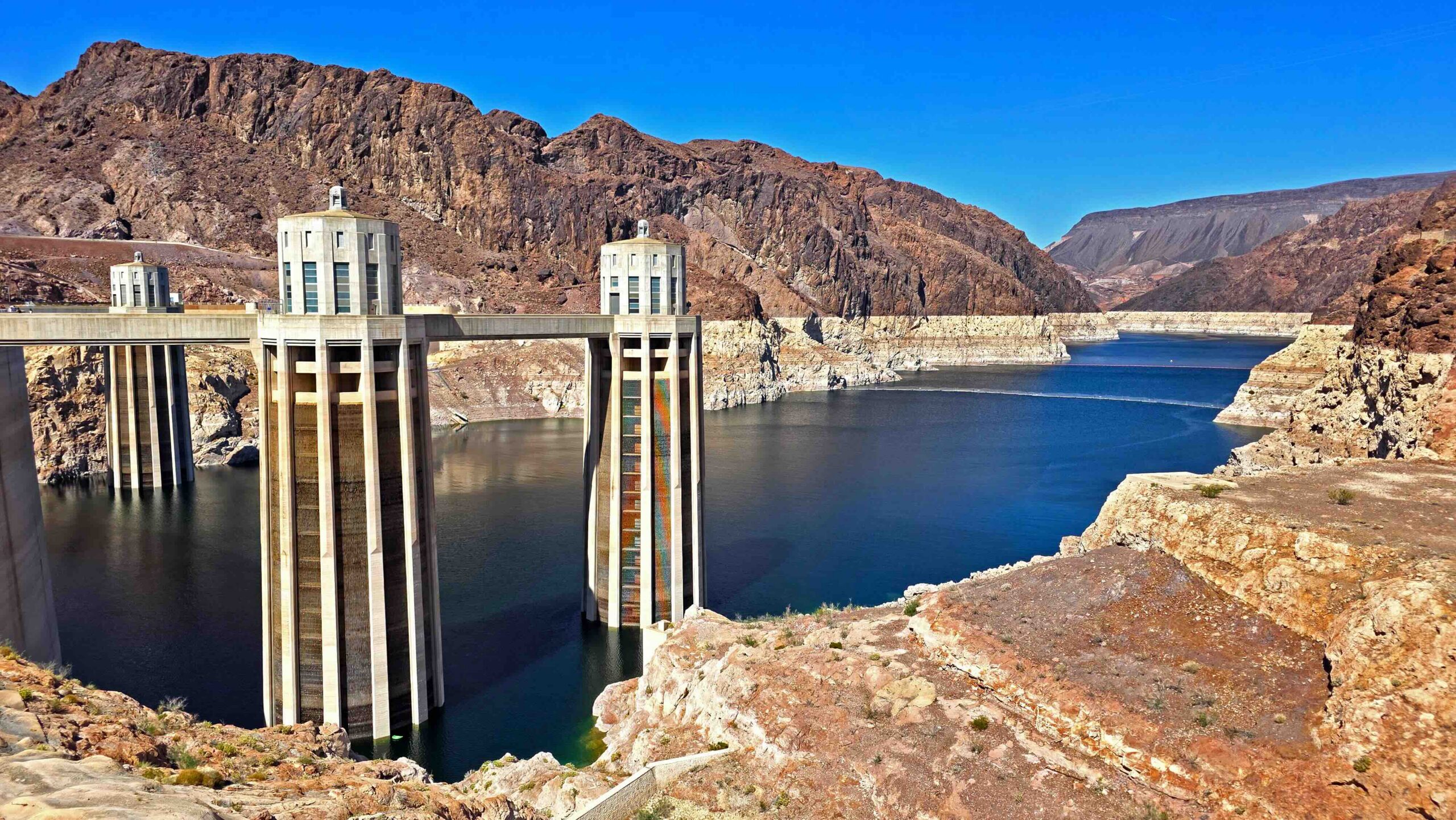
Washington’s drive to expand copper and lithium mining in the U.S. Southwest is colliding with a constraint tougher than permitting: whether projects can secure enough water to operate for decades in some of the driest basins on the continent. The buildout is part of a broader federal push to onshore critical-mineral supply chains, as copper and lithium are central to electrification, grid infrastructure and defence needs — demand that policy in Washington is explicitly trying to meet with domestic production.
The pressure is uneven but unmistakably growing. Nevada has basins where legal groundwater commitments exceed estimated long-term supply, while Arizona’s copper industry depends heavily on groundwater as Colorado River flows shrink. Among the new projects are Lithium Americas’ (TSX, NYSE: LAC) Thacker Pass in Nevada and Ivanhoe Electric’s (TSX, NYSE-A: IE) Santa Cruz, roughly 64 km southeast of Phoenix.
“The regulations for groundwater use are not what will inhibit the use of groundwater for mining,” Sharon Megdal, director of the University of Arizona Water Resources Research Center, said in an August interview. “What’s going to be an inhibiting factor might be how deep is the groundwater, how costly is it to pump it out, whether the quality is what you need for the mining operation.”
As the U.S. accelerates domestic critical-mineral production, the gap between a legal right and a secure physical supply is becoming clearer. Some miners are buying or leasing existing water rights, others are redesigning projects to use less water, and some are engineering around aquifers. The question is no longer simply whether a mine can win a permit, but whether its water plan still holds up 20 or 30 years later.
Advancing projects
Several Southwest projects that spent years stalled at regulatory gates are now moving forward. Resolution Copper, the Rio Tinto (LSE, ASX, NYSE: RIO) and BHP (NYSE, LSE, ASX: BHP) joint venture in Arizona, completed its long-delayed federal land exchange and received a final record of decision in March.
South32 (ASX, LSE, JSE: S32) secured the final federal decision for Hermosa in July, and Hudbay Minerals’ (TSX, NYSE: HBM) Copper World is fully permitted after bringing in Mitsubishi for $600 million.
In Nevada, a federal court upheld Ioneer’s (ASX: INR; Nasdaq: IONR) permit for Rhyolite Ridge in March, while Thacker Pass has entered peak construction.
These breakthroughs are transforming the Southwest’s water question from a permitting consideration into an operating test.
Irrigated agriculture consumes about 72% of Arizona’s available water supply, according to state water authorities, and Arizona supplied more than 70% of U.S. copper in 2024, according to an April U.S. Geological Survey (USGS) report on copper mining and drought in the Southwest. Mining remains a much smaller statewide user, though its reliance on groundwater can create far larger pressures around individual projects. That imbalance matters beyond the region: with Arizona accounting for the bulk of national copper output, local water constraints at individual mines feed directly into national supply questions.
Statewide figures can also obscure local effects. Hydrologic studies around a large operating mine found that groundwater drawdown extended about 0.4 to 6.4 km from the mine workings, USGS scientists Fred Tillman and William Andrews told The Northern Miner by email. Wells beyond that zone should not be notably affected, they said.
Pumping, treatment and disposal add substantial costs as well, giving operators an economic incentive to recycle water or reduce withdrawals. USGS data show the Colorado River Basin endured its driest 21-year stretch in more than a century from 2000 through 2020, and one of its driest periods in 1,200 years.
Climate modelling for the Colorado River Basin projects rising temperatures and declining precipitation in the lower basin, reducing groundwater recharge from historical levels, USGS said. The USGS scientists also cautioned that pumping volumes can overstate a mine’s net water use, because groundwater removed to keep workings dry is often discharged to nearby surface drainages.
Over-pumping
Nevada makes the mismatch between paper rights and physical supply especially explicit. About half of its roughly 250 groundwater basins are over-appropriated, meaning rights exceed the state’s estimate of annual replenishment, and roughly 60 to 65 are also overpumped, according to Richard DeLong, a Nevada assemblyman and senior technical adviser at WestLand Engineering & Environmental Services.
Miners can still acquire water in stressed basins by buying or leasing existing rights, or in some cases obtaining time-limited permits, DeLong told The Northern Miner by phone.
“It generally comes down to money,” he said. “How much are you willing to pay for the water?”
The Big Smoky Valley-Tonopah Flat basin illustrates the incongruity. Nevada water regulators put groundwater commitments in Basin 137A at about 21,940 acre-ft. (27.1 million cubic metres) a year, nearly 3.7 times its estimated perennial yield of 6,000 acre-ft. The basin hosts American Battery Technology’s (Nasdaq: ABAT) Tonopah Flats lithium project and West Vault Mining’s (TSXV: WVM; US-OTC: WVMDF) Three Hills gold deposit.
West Vault leased existing rights after Nevada stopped issuing new ones in the basin and won approval to move water to its nearby Hasbrouck project.
In an overappropriated basin, the State Engineer can limit new rights, require metering and deny applications when no unappropriated water remains, the Nevada Division of Water Resources said in emailed responses.
Farther north, Humboldt River farmers hold some of Nevada’s oldest surface-water rights, senior to mines’ groundwater rights. That seniority reflects the prior-appropriation doctrine that governs Western U.S. water law, under which earlier claims take precedence in times of shortage — a framework that predates modern mining demand by generations. Hydrological modelling can now estimate how pumping reduces river flows, potentially forcing miners to cut pumping, relocate wells or buy senior rights.
“That’s created a new kind of conflict that’s currently being addressed as projects move forward,” DeLong said.
Nevada Gold Mines (NGM), the Barrick Mining (TSX: ABX; NYSE: B) majority-owned joint venture with Newmont (NYSE, ASX: NEM; TSX: NGT), is the region’s biggest mining developer and has opposed proposed broad pumping restrictions.
Lithium warning
The same pressure extends beyond Nevada’s gold camps to a new generation of lithium projects. Northwestern University professor Jennifer Dunn tested water availability around one operating and 22 proposed U.S. lithium mines, including Albemarle’s (NYSE: ALB) Silver Peak operation, Thacker Pass, Rhyolite Ridge and the Tonopah Flats project.
Across four economic and climate scenarios and five climate models, Dunn’s team found that most subbasins would probably lack enough water to meet new mine demand, or even demand from existing users, by mid-century. Agriculture remains the Southwest’s dominant water consumer, she stressed.
Mining did not create the shortage, but new projects add water demand where little spare capacity remains. Dunn said policymakers can no longer afford to ignore the problem.
“It needs to be dealt with, like, now,” she told The Northern Miner by phone.
Her team is running a similar analysis for copper, and she expects some regions to hit the same physical barrier. Recycling could cut consumption, but treating and reusing water may raise costs.
“If water becomes just a super scarce commodity, then it needs to be treated as such,” she said. “Perhaps it will become more expensive to produce copper in water-scarce regions.”
Miners’ response
Copper developers pushing toward construction are already treating water as a design input rather than an afterthought.
Ivanhoe Electric acquired 3,600 acre-ft. of type one water rights along with Santa Cruz’s roughly 24-sq.-km private land package near Casa Grande, Ariz. It is seeking further rights and expects a detailed water balance assessment in September to show supply exceeds the project’s needs.
CEO Taylor Melvin was in Washington on Aug. 7 as President Donald Trump announced more than $2 billion in critical-mining and related investments during a mining-industry roundtable, underlining the federal push behind projects such as Santa Cruz.
Ivanhoe is also in advanced talks with the U.S. Export-Import Bank over project debt that Melvin said could reach or exceed $1 billion.
“We could be in a position to actually return excess water to other users in the area during the project’s life,” Melvin said.
Trekor Metals (TSX, LSE: TKO; NYSE-A: TGB) has attacked the demand side at its Florence Copper operation in Arizona. Its in-situ copper recovery process circulates solution through naturally fractured ore instead of digging an open pit.
Trekor says Florence consumes 78% less water per lb. of copper than a conventional Arizona open pit, while using 65% less energy. The operation harvested its first commercial cathodes and is ramping toward an 85-million-lb. annual design rate over a 22-year life.
Faraday Copper (TSX: FDY; US-OTC: CPPKF) put water into the terms of its San Manuel acquisition from BHP, whose share consideration was worth about $813 million (US$583 million) at Faraday’s Aug. 10 close. The agreement includes a water-supply contract, about 109 sq. km of private land and access to road, rail, gas and power.
“Water is obviously critical to your processing and obviously Arizona being a desert environment, being able to have water rights is key,” CEO Paul Harbidge told The Miner.
Faraday plans to stage the district, beginning with San Manuel oxide material before adding open-pit and underground sulphides. Harbidge sees potential for more than four decades of production at about 150,000 tonnes of copper a year, although that concept still needs drilling and detailed engineering.
Hard limit
So far, the evidence does not show water will stop the Southwest’s mining buildout. It shows water will help sort which projects advance, how they are designed and what they cost.
A permit or water right settles the legal question. It does not determine how far the water table will fall, what pumping and treatment will cost, or whose older claim takes priority when supply tightens. Technology can cut demand and money can buy rights, but neither changes the amount of water in a basin.
As the old Western saying goes: “Whiskey is for drinking; water is for fighting over.”
