Venezuela Emerges as Alternative VLCC Loading Hub as Hormuz Crisis Reshapes Tanker Trade
Key Takeaways
- •Combined VLCC liftings from Saudi Arabia, the UAE, Iraq, and Kuwait fell 40% from 163.3 million tonnes in Q2 2025 to 97.6 million tonnes in Q2 2026 as Strait of Hormuz transit became increasingly difficult to secure.
- •Venezuela's VLCC crude liftings more than doubled from 9 voyages carrying 2.63mt in Q1 2026 to 22 voyages carrying 6.46mt in Q2 2026, with average cargo sizes reaching approximately 294kt per voyage.
- •Trafigura was the largest identifiable operator in Venezuela's Q2 VLCC surge, associated with 9 of 22 voyages totaling 2.60mt, followed by Kyklades Maritime, Reliance Industries, and Mercuria.
- •The Baltic Dirty Tanker Index stood at 2,607 on 29 July, up roughly 9% over the week, with rate gains concentrated in Atlantic routes including a 40% jump on the Black Sea-Med Suezmax route.
- •Strait of Hormuz transit negotiations remain unresolved, with Iran rejecting a Gulf-backed voluntary navigation contribution proposal and continuing to seek a greater supervisory role over the waterway.
Venezuela Emerges as Alternative VLCC Loading Hub as Hormuz Crisis Reshapes Tanker Trade
International Shipping News — 01/08/2026
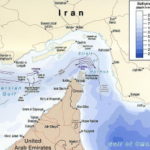
The Strait of Hormuz crisis has fundamentally altered Very Large Crude Carrier (VLCC) trading patterns, with Middle East Gulf loadings contracting sharply while alternative origins — notably Venezuela — have absorbed redirected demand. The Strait of Hormuz normally carries roughly one-fifth of global oil consumption, making any sustained disruption to its traffic a structural event for seaborne crude logistics rather than a regional shipping issue.
Middle East Gulf VLCC Liftings Collapse
The contraction was concentrated in the Middle East Gulf. Combined VLCC liftings from Saudi Arabia, the UAE, Iraq, and Kuwait fell from 163.3 million tonnes in Q2 2025 to 97.6 million tonnes in Q2 2026 — a 40% reduction. Saudi Arabia dropped to 47.9mt from 74.2mt, while the UAE nearly halved to 19.7mt from 37.3mt. Iraqi and Kuwaiti liftings fell to 19.9mt and 10.1mt, respectively, down from 35.8mt and 16.0mt, as reliable Strait of Hormuz passage became increasingly difficult to secure.
Alternative Origins Capture Redirected Demand
Non-Middle East Gulf origins absorbed the redirected demand, increasing their combined share even as total volumes declined. Angola surged to 28.1mt from 7.3mt, while Rest-of-World volumes rose 35% to 66.5mt. Venezuela climbed to 6.5mt from 1.4mt. By contrast, US Gulf and Brazilian VLCC liftings fell sharply to a combined approximately 3mt, down from 38.5mt a year earlier — shifting incremental VLCC demand toward West Africa, Venezuela, and a broader group of alternative loading regions. Venezuela, which holds the world's largest proven oil reserves, produces predominantly heavy and medium-heavy crude grades that can substitute for some Middle East heavy barrels at refineries configured for denser feedstock.
Venezuela's VLCC Surge in Detail
Venezuela recorded a marked increase in VLCC crude liftings during 2026. Volumes rose from 9 voyages (2.63mt) in Q1 to 22 voyages (6.46mt) in Q2, with the number of sailings more than doubling and average cargo size reaching approximately 294kt per voyage.
Identifiable operators accounted for 19 of the 22 Q2 voyages, representing 5.55mt of cargo. Trafigura was associated with 9 voyages (2.60mt), followed by Greece's Kyklades Maritime with 3 voyages. India's Reliance Industries and Mercuria were each linked to 2 voyages. Single voyages were associated with Maran Tankers, Oman Shipping, and Korea's Sinokor. The participation of Reliance — operator of the Jamnagar refining complex, among the world's largest single-location refineries — is consistent with Indian refiners' capacity to process heavy Venezuelan crude.
Strait of Hormuz: Status as of 30 July
Negotiations over the future transit framework for the Strait of Hormuz remain ongoing. Alongside Iran–Oman discussions on the operational management of commercial shipping, Pakistan has confirmed that parallel US–Iran talks under the Islamabad Memorandum of Understanding are continuing.
The principal outstanding issues include the routing of inbound and outbound commercial traffic, the governance of transit corridors, and a Gulf-backed proposal under which vessels would make voluntary contributions to fund navigational, search-and-rescue, and environmental services — modelled on the Strait of Malacca. Iran has not accepted the proposal and continues to advocate a greater supervisory role over the waterway.
For the tanker market, Gulf-loading VLCC volumes remain below pre-conflict levels, while geopolitical and insurance-related costs continue to support elevated freight risk until a more durable transit arrangement is reached.
Status update (29 July): Temporary transit framework still under negotiation — key issues remain routing, corridor governance, and voluntary navigation contributions.
Dirty Freight — BDTI and Benchmark Spot Rates
The Baltic Dirty Tanker Index (BDTI) stood at 2,607 on 29 July, up roughly 9% (207 points) over the week but still below the 3,737 crisis peak of March–April 2026. The 52-week range spans 903–3,737, with an average of 1,842. Rates remain historically elevated, with the 2026 index tracking far above its 2023–2025 profile.
The week's gains were overwhelmingly concentrated in the Atlantic. Among Suezmaxes, the Black Sea–Med route (TD6) jumped 40% week-on-week to WS 430. On the VLCC side, West Africa–China (TD15) rose 27% to WS 149 and US Gulf–China (TD22) gained 25%. The Caribbean Aframax route (TD9) advanced 14% to WS 427.
Middle East benchmarks were comparatively flat. VLCC AG–China (TD3C) firmed just 4.5% to WS 404, and AG–Singapore (TD2) rose 4.9% to WS 397. Suezmax AG–Med (TD23) added under 1% to WS 476, and Aframax Kuwait–Singapore (TD8) slipped 0.3% to WS 305. The one notable Middle East mover was the longer Gulf of Oman–China VLCC route (TD34), which gained 11.8%.
Ballasters — Atlantic vs. Middle East Concentration
On a 7-day moving-average basis, VLCC ballasters remain overwhelmingly concentrated east of Suez: 137 in the Arabian Gulf/India (up 10% week-on-week) and 129 in the Far East (up 9%), against just 49 across the entire Atlantic basin — 28 in the Americas (up 33%), 12 in Europe, and 9 in West Africa. The heavy Middle East Gulf ballaster count reflects large tonnage repositioning empty toward Middle East loading, even as actual liftings there have declined.
The Aframax/LR2 picture is the mirror image: ballasters concentrate in the Atlantic and Europe, with 90 in Europe and 67 in the Americas, versus 65 in the Gulf.
Net Supply — Key Metrics
VLCC net available (spot/relet) supply in the Arabian Gulf stood at 132 vessels, down 17% week-on-week but still above the 12-month average of 113 — an abundant length against subdued Gulf demand. West Africa net supply was thin at 13 vessels (up 44% week-on-week), and the US Gulf at just 9 (down 61% week-on-week), demonstrating how quickly Atlantic tonnage is being absorbed. Gulf congestion eased to 23 vessels, well below its 41-vessel average.
Suezmax availability tightened significantly, consistent with the sharp move in TD6 rates. Arabian Gulf net supply (TD23) dropped 29% week-on-week to 42 vessels, well below its 12-month average of 58. Supply on the Africa Atlantic Coast (TD20) was halved to 16 vessels, while Black Sea (TD6) availability eased to 21.
Within the Arabian Gulf (TD8), Aframax vessel availability declined 4% week-on-week to 52 ships, aligning closely with its 12-month average of 53. The East Med (TD19) experienced a 60% week-on-week surge in supply, reaching 18 vessels, while the US Gulf (TD25) recorded 13 ships. Congestion in the Continent dropped significantly to just 15 vessels, well below the historical average of 38, thereby releasing Atlantic Aframax tonnage back into the active market.
Outlook
Beyond the immediate geopolitical developments, this week's data highlights how quickly VLCC trading patterns can adjust when a major export region is disrupted. Changes in cargo sourcing, vessel positioning, and regional fleet balances have become increasingly interconnected, with freight reflecting not only cargo demand but also where ships are available to load. The durability of these shifts will ultimately depend on the recovery of Gulf export activity and the extent to which replacement Atlantic cargoes remain embedded in the trading pattern. Whether Venezuela's loading volumes can sustain at Q2 levels will depend on its production capacity and any sanctions or licensing frameworks governing its crude exports.
Source: The Signal Group — Weekly Tanker Market Monitor, Week 31, 2026

