Higher Fuel and Fertilizer Costs Pressure 2026 Farm Income, USDA Report Shows
Key Takeaways
- •USDA projects 2026 net farm income at $158.4 billion, down 5.5 percent from last year in inflation-adjusted terms.
- •Total production expenses are forecast to rise 4.5 percent to $492.8 billion, with fuel and fertilizer costs driving much of a roughly $15 billion increase since February.
- •Cash receipts are mixed, with cattle and calves up more than five percent and crops up six percent, while egg receipts fall 66 percent and dairy and hogs drop about four percent.
- •Federal support to farmers is expected to increase nearly 70 percent to $47 billion, making government payments a larger share of farm-sector revenue.
- •Median farm household income from farming is projected at -$467 in 2026, reflecting reliance on off-farm income for most U.S. farm households.
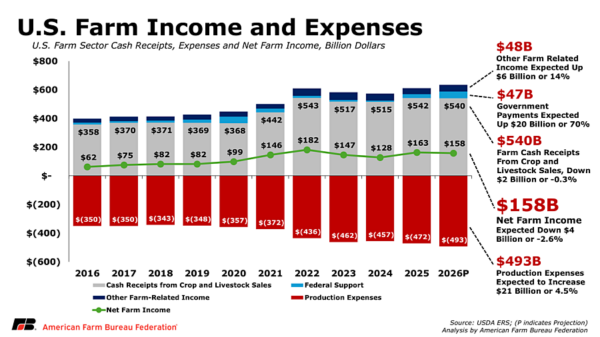
Record production costs in USDA's September Farm Income Report highlight how much net farm income is eroding, according to an agricultural economist with the American Farm Bureau.
"We continue to see a downturn in the farm economy and production expenses continue to increase," Faith Parum tells Brownfield.
The USDA is projecting 2026 net farm income at $158.4 billion, down more than $9 billion (5.5 percent) from last year when adjusting for inflation. Total production expenses are forecast to increase 4.5 percent to $492.8 billion.
Parum says higher fuel and fertilizer prices account for much of the roughly $15 billion increase in production expenses since February. Fuel and fertilizer are two of the largest input categories for crop producers, which is why energy-market shifts tend to flow quickly into farm cost structures.
"As long as there continues to be conflict in the Middle East, we'll see higher fuel and fertilizer prices," she says. "The fertilizer market is already pretty volatile, so it does take a little bit for some of that disruption to come back down."
On the livestock side, cattle and calf cash receipts are forecast to rise by more than five percent, while other categories are projected lower.
"For example, eggs are coming down 66 percent from the previous year on their cash receipts," she says. "A lot of that is due to the really high prices we saw in eggs, but still notable, dairy products and hogs down around 4 percent."
The USDA is calling for crop cash receipts to increase six percent, with gains for corn, soybeans, and cotton offset by decreases in rice and sugar.
The agency estimates federal support will rise nearly 70 percent from last year to $47 billion, making government payments a growing share of farm-sector revenue as commodity receipts diverge across sectors.
Median farm income earned by farm households is expected to total -$467 in 2026, a figure that underscores why most U.S. farm households rely on off-farm income; USDA has long reported that off-farm sources provide the majority of income for the typical farm household.
Source: Brownfield Ag News (September 4, 2026, by Nicole Heslip)
