Washington's Venezuela Oil Deal Reaches Far Beyond Crude
Key Takeaways
- •The agreement covers 65 billion barrels of proven reserves across 17 Venezuelan fields on a 100-year term, roughly 1.5 times the size of current U.S. territorial reserves.
- •NABEP, the private entity operating the deal, became the world's second-largest private oil company by reserves, with the U.S. Department of War holding a 35% equity stake and veto power over its board.
- •Venezuela's constitution requires National Assembly approval for long-term concessions of strategic resources, and the deal was negotiated by an interim government whose legitimacy is contested, creating risks it could be voided.
- •The interim government forecasts the deal will target over 1.5 million bpd of production and generate more than US$100 billion in investment and US$209 billion in tax revenue.
- •Following the deal's announcement, Eni secured operatorship of the Junin 5 field and Chevron agreed to invest over US$7 billion targeting about 600,000 bpd.
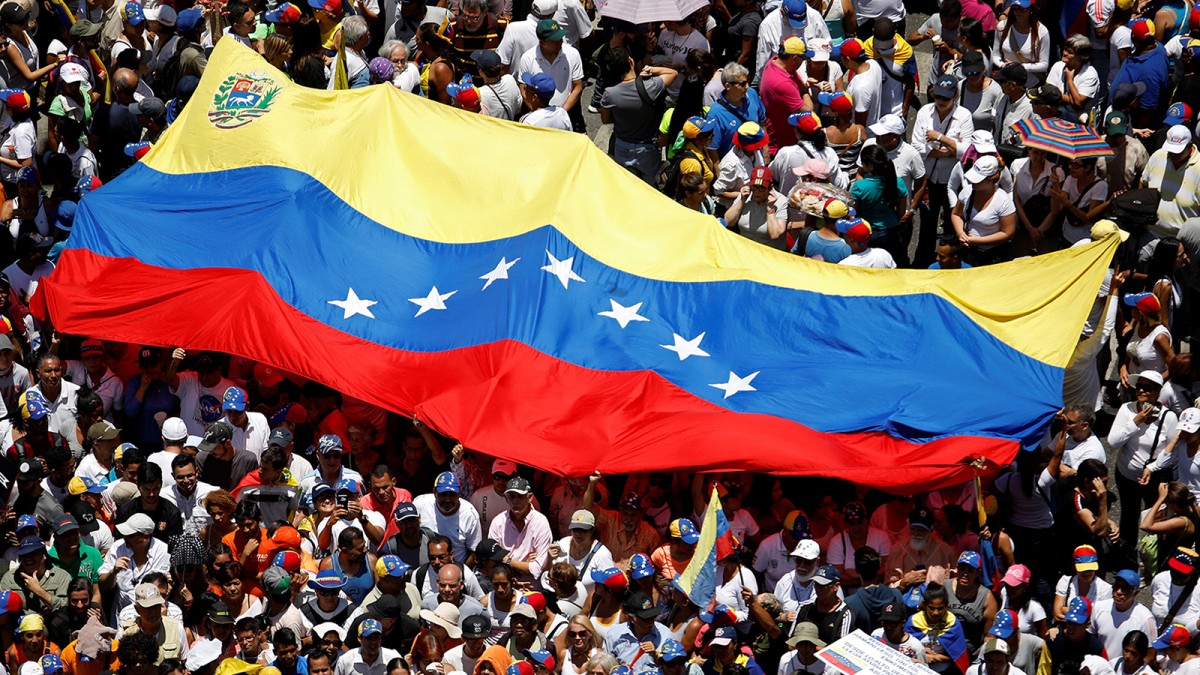
Washington's takeover of more than a fifth of Venezuela's oil reserves, in a deal officially signed by U.S. Energy Secretary Chris Wright on 2 September, was as unexpected as it was dramatic. President Donald Trump's remark a few days earlier that it is "the biggest oil deal in world history" appears justified from several perspectives.
In pure volume terms, the agreement covers 65 billion barrels of proven crude oil reserves -- out of Venezuela's total of 303 billion barrels -- across 17 fields. That is nearly 1.5 times the size of the entire current territorial reserves of the United States, which stand at around 46 billion barrels. The concession's duration is equally striking: its 100-year term dwarfs the typical 20-to-30-year span of modern oil concessions. The private entity driving the deal, North American Blue Energy Partners (NABEP), has also instantly become the world's second-largest private oil company by reserves, after ExxonMobil, with the U.S. Department of War holding a 35% equity stake. Locking in a fifth of the world's largest national oil reserves for a century is unprecedented in the modern era. Even so, key questions remain about the deal's workability and where it fits into Trump's global oil market order.
The 'Trump Corollary' and the New World Order
The U.S. '2025 National Security Strategy' (NSS) put the vision of Trump's second presidency -- and of its energy market -- on paper. It explicitly introduces what it calls 'The Trump Corollary to the Monroe Doctrine', stating: "After years of neglect, the United States will reassert and enforce the Monroe Doctrine to restore American pre-eminence in the Western Hemisphere, and to protect our homeland and our access to key geographies throughout the region." (NSS document)
It adds: "We will deny non-Hemispheric competitors the ability to position forces or other threatening capabilities, or to own or control strategically vital assets, in our Hemisphere. This 'Trump Corollary' to the Monroe Doctrine is a common-sense and potent restoration of American power and priorities, consistent with American security interests." When the original 'Monroe Doctrine' was propounded by U.S. President James Monroe back in 1823, the policy's aim was to keep European colonial powers out of the Americas.
This new iteration -- termed the 'Donroe Doctrine' -- marks a dramatic shift away from the post-Cold War model of global American dominance toward a highly transactional, realpolitik vision of a world carved into three distinct spheres of influence. China would hold the primary role in Asia, while Russia would either dominate or significantly influence Europe, depending on how any future conflict between European NATO members and Moscow unfolds. At the top, the U.S. would maintain overall dominance around the globe while exerting direct influence across the Americas, North and South. As energy underpins the economies -- and thus the politics -- of every country, shifting the centre of dominance in global energy supplies to the Americas is a core part of that aim, while the U.S. simultaneously reserves the right to extend its influence in the Middle East or anywhere else it sees fit.
The practical consequence for global oil flows is that the U.S. aims to orchestrate a dramatic ramp-up of oil production not just domestically but across key countries in its Americas sphere of influence -- most notably Venezuela in the short to medium term, but also Argentina and Brazil -- to compensate for losses from the Middle East. Venezuela offers particular headroom in that respect: its output peaked at well over 3 million bpd in the late 1990s before two decades of underinvestment, mismanagement at state firm PDVSA, and U.S. sanctions progressively squeezed production down, leaving large volumes of the Orinoco Belt's vast heavy-oil resource effectively idle. That history also means much of the reservoir, pipeline, and upgrading infrastructure would need substantial rebuilding before anything close to the deal's production targets could be realised.
The White House Fact Sheet
The broad terms of the deal between the U.S. and Venezuela align with Trump's vision, and the 31 August White House Fact Sheet echoes many of the same key points. Under the sub-heading 'Reasserting The Monroe Doctrine & Expelling Foreign Adversaries From Our Hemisphere', the Fact Sheet states: "The majority of the incremental oil fields to be operated by NABEP were previously controlled or operated by Russian and Chinese firms, or by corrupt cronies of [Nicolás] Maduro and [Hugo] Chavez." (White House Fact Sheet)
It continues: "These malign foreign actors looted Venezuela's resources for the benefit of American adversaries like Cuba, Russia and China and failed to invest in Venezuela's infrastructure or development." The new deal with Venezuela, it adds, is precisely part of the re-establishment of the Monroe Doctrine, focused on "purging malign influence from our backyard and ensuring American dominance in our hemisphere is never again questioned". With an eye, perhaps, on future energy security threats resulting from military actions by China -- as happened after Russia's invasion of Ukraine on 24 February 2022 -- the Fact Sheet concludes: "By working with both and old partners, President Trump's Administration is forging new robust, strategic and defensible supply chains in our hemisphere to support the revitalization of our manufacturing and energy sectors after years of globalist decline."
Legal Pitfalls and Oversight
There are, however, several potential legal pitfalls that could pose problems for the U.S., particularly if a less compliant political leadership emerges in Venezuela. As it stands, there is strict U.S. oversight over every element of the arrangement, including veto power over NABEP's board of directors, and U.S. citizens are legally required to hold a majority of the board seats. The U.S. Pentagon's Office of Strategic Capital retains a 35% equity stake in NABEP. The U.S. government is guaranteed the right to buy 20% of the pumped crude at cost, with a right of first refusal to purchase the remaining 80%. Funds allocated to Venezuela's state energy apparatus will move through a U.S.-managed and audited account to prevent domestic corruption. In reality, none of this is out of line with precedents set by China and Russia in multiple 'co-operation agreements' with several countries over the years -- most notably Iran and Iraq. Even so, there are those who portray the deal in colonialist terms.
Perhaps the major legal problem at present is that Venezuela's constitution requires National Assembly approval for any long-term concessions over strategic national resources. Worse still, the deal was negotiated by an interim government whose constitutional legitimacy is already contested. Consequently, any future government could argue that, as the interim administration lacked authority, the entire agreement should be declared ultra vires -- beyond legal powers -- and void. This could be done even without a change in government, as Venezuela's Supreme Tribunal of Justice (TSJ) possesses the constitutional mechanisms to challenge, freeze, or entirely invalidate the NABEP concession. Such a challenge could rest solely on the transfer of control over Venezuelan oil reserves to a foreign power, which is also strictly prohibited under the country's constitution. For international oil companies weighing involvement, that legal uncertainty matters: any entity financing or operating assets under the concession would carry the risk that its rights could be stripped by a future Venezuelan court or government, a consideration that will shape how quickly the 17 fields can actually be developed regardless of Washington's ambitions.
Venezuela's Position and New Investment
Nonetheless, Venezuela's present interim government, led by President Delcy Rodriguez, appears fully in favour of the deal, highlighting that the U.S. targets production of more than 1.5 million bpd from the 17 strategic fields over a 25-year term. According to her government's forecasts, this would generate more than US$100 billion in investment and US$209 billion in tax revenue for the Venezuelan state.
Venezuela's oil production has risen to around 1.21 million bpd, driven by several new initiatives from U.S. and European firms. Following the announcement of the U.S.-Venezuela megadeal, Italy's Eni signed a strategic contract with Venezuela's state-owned PDVSA for operatorship of the Junin 5 oil field in the onshore heavy-oil Orinoco Basin. Under the terms of the deal, Eni will have full responsibility for the technical, financial, and commercial management of the site, with the field believed to contain around 35 billion barrels of oil in place. Meanwhile, Chevron said it had agreed updated terms for its joint ventures in Venezuela and plans to invest more than US$7 billion over the next five years, targeting production of about 600,000 bpd.
By Simon Watkins for Oilprice.com
