US Heating Oil 44% Above Pre-War Level as Winter Nears, EIA Weekly Data Show
Key Takeaways
- •EIA weekly data through November 23 show U.S. retail prices for regular gasoline, diesel and kerosene-type jet fuel remain well above their levels from before the Middle East war began.
- •No. 2 heating oil is currently 44% higher than on the eve of the conflict, with elevated costs arriving just as the winter heating season gets underway.
- •Sustained premiums in diesel and jet fuel translate directly into higher operating costs for trucking, rail, agriculture and the airline industry.
- •Brent f.o.b. prices fell on Monday, but near-month Brent futures, illustrated by the January contract, have climbed as attacks have intensified.
- •Unlike f.o.b. quotes, c.i.f. prices include freight and insurance costs, a distinction that becomes significant when those premiums rise during periods of conflict.
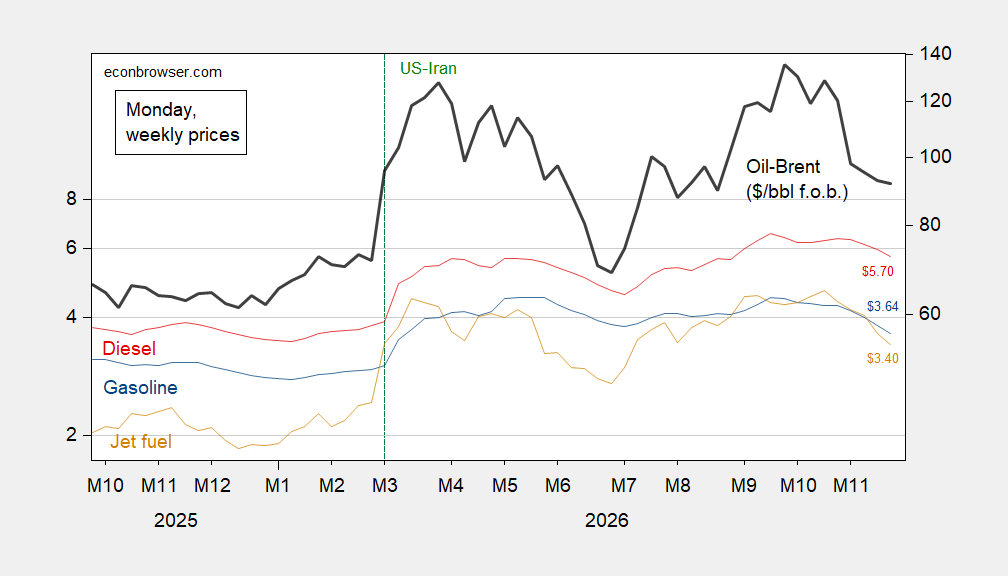
U.S. retail energy prices remain well above the levels recorded before the outbreak of the war in the Middle East, according to weekly data from the U.S. Energy Information Administration (EIA) current through Monday, November 23.
Gasoline, Diesel and Jet Fuel Still Elevated
The latest update on Econbrowser charts regular gasoline, diesel and kerosene-type jet fuel — each priced in dollars per gallon on a logarithmic scale — alongside the Brent crude price, free on board (f.o.b.), quoted in dollars per barrel. All series in the figures are based on Monday observations and sourced to the EIA, which compiles its weekly petroleum price trackers from Monday data. The persistence of these elevated readings reaches beyond the pump: diesel is the primary fuel of trucking, rail and agriculture, and kerosene-type jet fuel is a core airline input, so per-gallon levels of this kind feed directly into operating costs across those sectors.
Heating Costs in Focus as Winter Approaches
A companion chart turns to heating fuels, plotting No. 2 heating oil alongside diesel and kerosene-type jet fuel in dollars per gallon, again against Brent f.o.b. Heating oil No. 2, a distillate fuel closely related to diesel, now stands 44% above its level on the eve of the war — a development that arrives just as the winter heating season gets underway. Because heating oil is used mainly for space and water heating in homes and businesses, its demand is concentrated in the coldest months, meaning households that rely on the fuel face the pre-war premium precisely when their consumption peaks. With the EIA's trackers built from Monday observations, each coming weekly release will show whether retail fuels hold these war-era premiums as the heating season progresses.
Crude Lower on the Day, Futures Firming
The picture at the crude level is more mixed. Brent f.o.b. was down on Monday, though the author cautions that c.i.f. — cost, insurance and freight — pricing is "a different matter." Near-month Brent futures, by contrast, have risen as attacks have increased, a move the post illustrates with January Brent futures.
By market convention, f.o.b. quotes reflect the value of a barrel at the loading port and exclude shipping and insurance costs, whereas c.i.f. quotes include them — a distinction that becomes relevant when freight and insurance premiums move during periods of conflict.
The author closes with a pointed summary of the standoff: "Trump may have finished with Iran, but Iran has not necessarily finished with Trump."

