Where Does the US (and Wisconsin) Get Its Oil From? Overwhelmingly, Canada
Key Takeaways
- •Canada supplied 61% of total US petroleum imports by dollar value in 2025, according to pipeline and trade data compiled by Oilsandsmagazine.com.
- •The International Trade Administration reports that 100% of Wisconsin's petroleum imports come from Canada.
- •Canada has been the single largest source of US crude oil imports for roughly two decades, with most volumes carried by cross-border pipelines such as Enbridge's Mainline and Keystone to refineries that are especially dependent on Canadian supply in the Midwest.
- •The energy relationship extends beyond petroleum, as Canada is a net exporter of electricity to the United States and Maine obtains about 30% of its electricity from Canada.
- •Much of the Canadian electricity delivered across the border is generated by hydroelectric facilities in provinces such as Quebec, Manitoba, British Columbia, and Ontario, purchased by northern US utilities through interconnections and long-term supply arrangements.
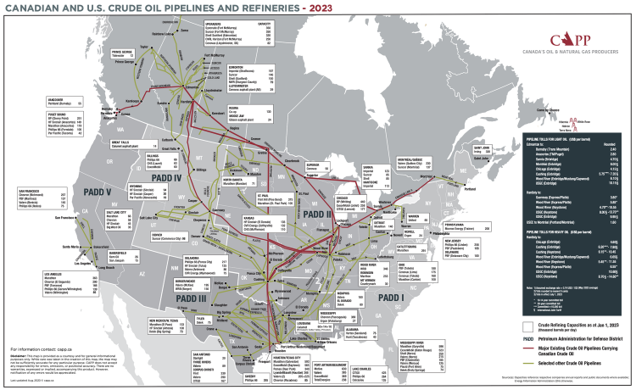
The answer to the question of where the United States — and Wisconsin in particular — gets its oil is, overwhelmingly, Canada.
In 2025, 61% of total US petroleum imports came from Canada by dollar value, according to pipeline and trade data compiled by Oilsandsmagazine.com.
The reliance is even more pronounced at the state level. According to the International Trade Administration (ITA), 100% of Wisconsin's petroleum imports come from Canada.
Canada's position as the dominant supplier of US crude oil is long-standing. The country has been the single largest source of US crude oil imports for roughly two decades, according to the US Energy Information Administration. The bulk of those volumes move through cross-border pipeline networks — such as Enbridge's Mainline system and the Keystone pipeline — that carry crude oil, much of it produced from Alberta's oil sands, to US refineries, with facilities in the Midwest particularly dependent on Canadian supply.
That pipeline-and-refinery link helps explain why the Canada-US oil trade matters beyond headline import totals: it is part of the everyday fuel and feedstock system for large parts of the Midwest, where refineries are configured around steady cross-border flows rather than a single domestic source.
The energy relationship extends beyond petroleum. Several states, including Wisconsin, also get electricity from Canada. Maine obtains about 30% of its electricity from Canada, as reported by WMTW.
Canada is a net exporter of electricity to the United States, and much of the power delivered across the border is generated by hydroelectric facilities in provinces such as Quebec, Manitoba, British Columbia, and Ontario. Utilities in northern US states purchase this power through cross-border interconnections and long-term supply arrangements, making the relationship relevant not only to fuel markets but also to regional electricity planning.
The ITA, an agency within the US Department of Commerce, publishes state-level trade statistics, including data on state trade partners, through its TradeStats Express data visualization platform — the source cited for Wisconsin's import figures.
Full disclosure: The author of the original post drives an internal combustion engine vehicle.

