New US LPG Export Capacity Could Reduce Volatility in Terminal Fees
Key Takeaways
- •The US could add more than one million barrels per day of new LPG export capacity, with expansion projects expected to continue through at least 2028.
- •Enterprise Products has contracted approximately 90% of its LPG exports, which the company says limits its exposure to potential excess terminal capacity.
- •Middle East conflict and the closure of the Strait of Hormuz disrupted LPG shipments to Asia, pushing prices to record levels during the first half of the year.
- •The US share of China's LPG imports rose from roughly 20% before the conflict to 56.5% by June, making the US the primary alternative supplier to Asia.
- •The EIA expects the US propane surplus to continue growing through at least 2027 as production outpaces domestic demand.
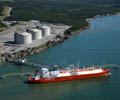
The United States could add more than a million barrels per day of new liquefied petroleum gas (LPG) export capacity over the next few years, a development that may reduce volatility in terminal fees while giving Asian importers greater supply security for chemical feedstocks.
The US is already the world's largest LPG exporter, and the planned additions build on that position as the country continues to produce more propane and butane than its domestic market can absorb.
Beyond its role as a fuel, LPG is used to produce ethylene in steam crackers and propylene in propane dehydrogenation (PDH) units. China, which has built a large fleet of PDH plants, is expected to see those facilities remain the primary driver of its LPG demand through the second half of 2026.
In Asia, disruptions to LPG exports caused by conflicts in the Middle East pushed prices to record levels during the first half of the year. The prospect of additional LPG exports from US terminals could offer some relief from future supply disruptions. However, within the US, the expansion has also raised concerns that companies may be adding too much export capacity.
US LPG Terminal Expansions Continue
The US has maintained a steady pace of projects to expand LPG export capacity, a trend expected to continue through at least 2028.
Enterprise Products recently completed an expansion in May at its Neches River Terminal in Orange County, Texas. The project added a flexible refrigeration train capable of handling 180,000 bbl/day of ethane or 360,000 bbl/day of propane.
The midstream company also remains on track to begin operations at its expanded Enterprise Hydrocarbons Terminal (EHT) by the end of 2026, according to the company. That project will increase the terminal's LPG export capacity by 300,000 bbl/day.
Including the Neches River expansion, ICIS estimates that Enterprise and other midstream companies will add more than 1 million bbl/day of LPG export capacity.
"There's a fair amount of export capacity that's come online and will be coming online," said Tyler Cott, Enterprise Senior Vice President of Hydrocarbon Marketing, speaking during an earnings conference call. "Obviously it'll take the market a little bit of time to absorb that capacity. So, we may see a period of time where we have less volatility in terminal fees and just overall lower rates than we've seen the last couple years."
However, Enterprise has contracted approximately 90% of its LPG exports, which Cott said should limit the company's exposure to any excess terminal capacity. "We feel good about where we're at given how things look the next couple of years," he added.
US Propane Supplies Outpace Demand
Throughout the current decade, US propane production has grown faster than domestic demand, and the country has relied on exports to balance the market. At times, US LPG terminals have operated at full capacity to clear excess propane from the market.
The US Energy Information Administration (EIA) expects the national propane surplus to continue growing at least through 2027. On the supply side, propane is frequently a byproduct of shale oil production, meaning wells will continue producing it as long as crude prices remain high enough to justify oil output. On the demand side, the US has few new petrochemical plants planned, and heating demand fluctuates with weather conditions.
Middle East Conflict Disrupts LPG Shipments
This year, US LPG exports found strong demand in Asia, where the war in the Middle East and the subsequent closure of the Strait of Hormuz disrupted LPG shipments. The strait is a critical chokepoint for seaborne LPG moving from major Middle East producers such as Saudi Arabia, the UAE, and Qatar to Asian buyers.
China's LPG imports fell by nearly 40% month on month to 1.56 million tonnes in April before recovering to 2.03 million tonnes in May, according to customs data. Imports remained well below the first-quarter average of 2.46 million tonnes per month.
Following the decline in Middle East supply, the US became the primary alternative LPG supplier to Asia. Before the conflict, US cargoes accounted for roughly 20% of China's LPG imports. Since then, that share has risen steadily, reaching 56.5% in June.
If disruptions in the Middle East persist, the expanded export capacity from the US should provide chemical producers in China and other Asian nations with some relief from constrained supplies. Market participants are watching the timing of new terminal start-ups, the pace of China's PDH plant utilization, and the availability of shipping routes — including the Panama Canal, which affects transit costs for US Gulf Coast cargoes bound for Asia — as factors that will shape the LPG trade balance in the coming months.
Source: ICIS by Al Greenwood

