US and Japan Coordinate Unprecedented Effort to Reverse Yen's Decline
Key Takeaways
- •The US and Japan launched a coordinated intervention effort that drove the yen to 157.40 against the dollar, its strongest level since early May.
- •Japan spent approximately ¥8.45 trillion ($52.8 billion) on Thursday's market intervention, representing Tokyo's largest single-day operation on record.
- •US Treasury Secretary Scott Bessent publicly signaled that the yen was undervalued and reportedly instructed the purchase of up to $10 billion in Japanese currency.
- •The Federal Reserve Bank of New York participated in the effort by selling euros to purchase yen on behalf of the US Treasury Department.
- •Despite the coordinated intervention, analysts warn that the persistent interest rate differential between the US and Japan may limit the longevity of the yen's rebound.
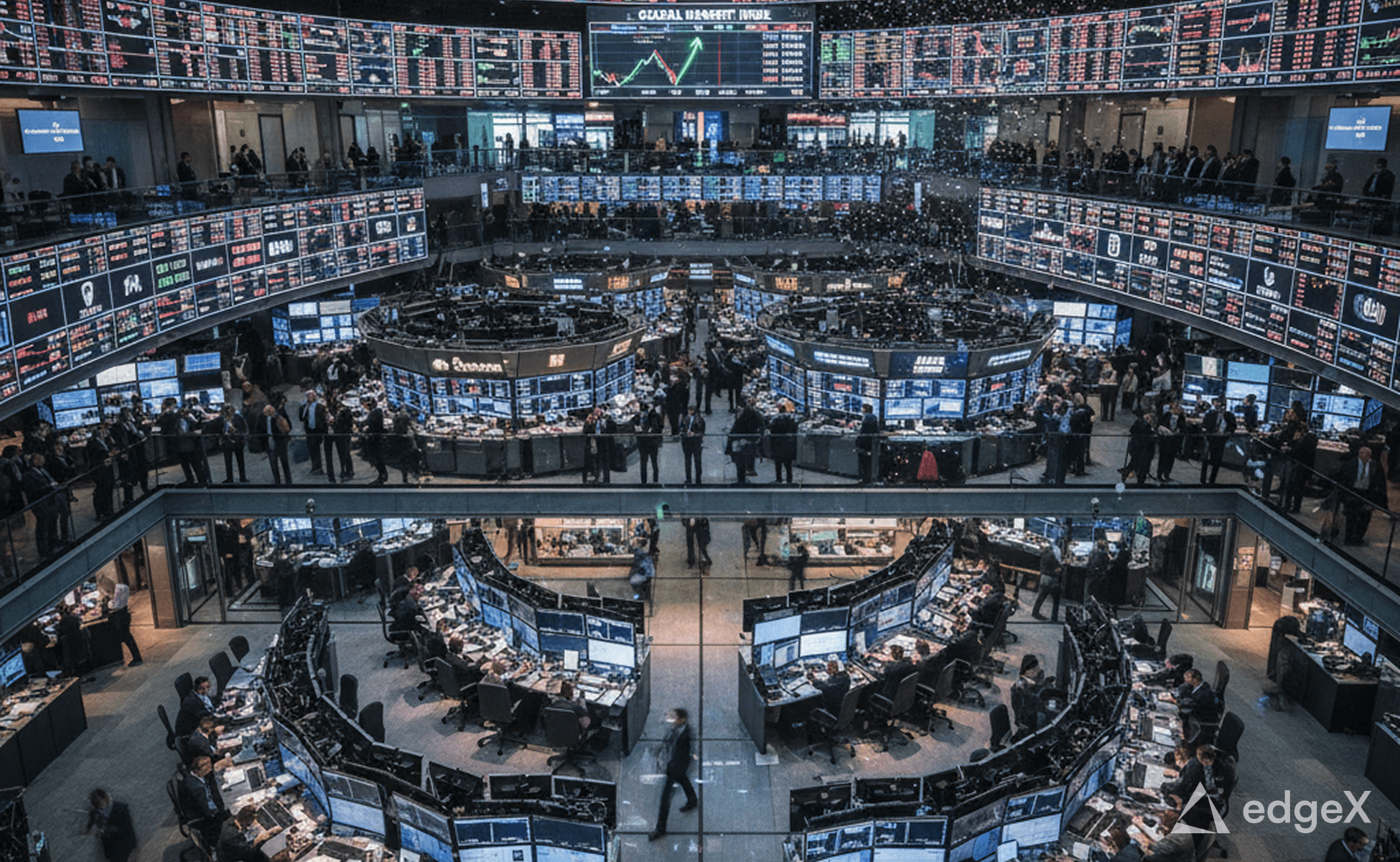
The United States and Japan have jointly engineered one of the most significant yen rebounds in recent memory, arresting a years-long depreciation that has fueled inflation across the Asian nation and sent ripples through global financial markets.
At the close of New York trading on Friday, the yen was quoted at 157.40 against the dollar — its strongest level since early May. Just 48 hours earlier, the currency had been hovering near its weakest point since 1986, setting off alarm bells in Tokyo as surging import costs squeezed both businesses and consumers.
Coordinated Intervention Drive
The yen's sharp gains were driven by a combination of direct currency purchases, official phone calls to trading desks, and public jawboning from US Treasury Secretary Scott Bessent and Japanese Finance Minister Satsuki Katayama. Bessent, whose hedge fund career gave him extensive insight into Japan's role in global markets, signaled that he views the yen as undervalued.
The yen's prolonged weakness has been reinforced by a massive carry trade, in which investors borrow in low-yielding Japanese currency to fund purchases of higher-returning assets elsewhere. That trade has drawn tens of billions of dollars in speculative bets against the yen, making any sustained reversal heavily dependent on whether traders believe the cost of those positions is about to rise sharply.
While past episodes of direct intervention and verbal support have triggered temporary rallies that faded within days or weeks, the level of coordination between Washington and Tokyo now appears to be the tightest in decades, significantly raising the stakes for speculators positioned against the yen.
The strength of Bessent's commitment was on vivid display when Reuters published a photograph of a notepad placed in front of him at a cabinet meeting at Camp David on Friday. Under a heading that read "To Do," the notepad stated: "Buy Japanese Yen (JPY) $5–10 bil."
"The market had underestimated the authorities," said Michiyoshi Kato, a senior adviser in the currency and rates client team at Sumitomo Mitsui Trust Bank in Tokyo. "It has likely become more difficult for speculators to sell the yen. If there is another intervention, the dollar-yen exchange rate will likely fall below 155 yen."
Details of the Market Action
Japanese authorities purchased yen and sold dollars during New York trading hours on Friday, according to a person with knowledge of the matter. The Nikkei reported that the Japanese government and the Bank of Japan intervened to buy yen for a second consecutive day, while the Financial Times reported separately that the Federal Reserve Bank of New York sold euros to purchase yen on behalf of the US Treasury Department.
At least two major US banks were asked by the New York Fed to provide rate checks on the yen against the euro during the day, two people familiar with the matter told Bloomberg.
The yen gained more than 1% against both the dollar and the euro on Friday. On Thursday, it recorded an intraday surge exceeding 3% against the greenback. Japan spent approximately ¥8.45 trillion ($52.8 billion) on that day's intervention, according to Bloomberg-compiled data based on comparisons of BOJ accounts and money broker forecasts — which would mark the largest single-day intervention ever conducted by Tokyo.
Bessent first drew headlines during a Fox Business interview on Thursday, in which he described the yen as "very undervalued" and said that "excess volatility" is not healthy for markets.
The Treasury Department did not immediately respond to a request for comment late Friday during US hours. Officials at Japan's Ministry of Finance were not immediately available for comment on Saturday in Tokyo.
Broader Economic Pressures
The yen has been weighed down by rising oil prices, Japan's persistent budget deficits, and a wide interest-rate gap with the United States and other major economies.
Failure to halt the currency's slide would carry consequences well beyond Japan's borders. Turmoil in the nation's financial markets has historically tended to spill globally. Volatility in Japan's government bond market this year has already transmitted into US Treasuries, drawing Bessent's ire. Moreover, the more the yen's depreciation grants Japan a competitive trade advantage with the US, the more it is likely to frustrate President Donald Trump.
Yet the dilemma for the Trump administration is that if Japan is left to defend the yen alone, Tokyo may have little option but to sell down a portion of its Treasury holdings — which exceed $1 trillion, making Japan the largest foreign holder of US government debt — to finance further currency intervention, a move that would push up US borrowing costs.
Atsushi Mimura, the Finance Ministry's top currency official, said Friday that Japan is receiving more than "moral support" from Washington. Katayama praised Bessent, calling him "one of the most knowledgeable experts in markets."
"Bessent's influence is significant," said Nobuyasu Atago, chief economist at Rakuten Securities Economic Research Institute and a former BOJ official. "The US is now becoming more cooperative with Japan's interventions."
BOJ Policy Meeting
The market intervention on Thursday and Friday coincided with a BOJ board meeting to set monetary policy. The board voted 8–1 to hold interest rates unchanged, having raised them to 1% in June — the highest level since 1995, though still far below the 3.75% upper bound of the US policy rate.
At a post-decision briefing, Governor Kazuo Ueda offered limited fresh support for the currency. He left the door open to possible rate hikes at upcoming meetings without indicating that such a move was imminent.
Bessent said in a social media post that he looks forward to meeting with Ueda at a Group of 20 gathering in Asheville, North Carolina, in August. He stated that the BOJ "has demonstrated a strong commitment to monetary and financial stability," and added, "We continue to enjoy a strong relationship and close coordination."
Rate Differials Remain a Challenge
For some investors, the persistent interest rate gap between Japan and the US remains a major obstacle to sustained yen strength. Japan last intervened in currency markets in 2024, spending roughly ¥13.5 trillion across several rounds of dollar selling, only for the yen to resume its slide within months as the rate differential continued to draw capital toward higher-yielding US assets.
"Without backing from rate differentials, the impact of FX interventions is likely to be relatively short-lived," Evercore ISI strategists Marco Casiraghi and Gang Lyu wrote Friday. "While flagging the exchange rate as a source of risk to inflation, the BOJ has so far refused to get pulled into a more active role in supporting the yen."

