U.S. Commercial Crude Oil Inventories Rise 2.0 Million Barrels, EIA Weekly Petroleum Status Report Shows
Key Takeaways
- •U.S. commercial crude oil inventories increased by 2.0 million barrels to 411.7 million barrels for the week ending July 17, 2026, remaining approximately 6% below the five-year average.
- •Gasoline stockpiles rose by 0.8 million barrels and sat about 7% below the five-year average during the peak summer driving season.
- •Distillate fuel inventories, which include diesel and heating oil, grew by 1.4 million barrels while remaining 10% below the five-year average.
- •Propane and propylene inventories posted the largest weekly build at 6.3 million barrels, placing them 34% above the five-year average.
- •Total commercial petroleum inventories rose by 11.6 million barrels, encompassing both crude oil and major refined products for the reporting period.
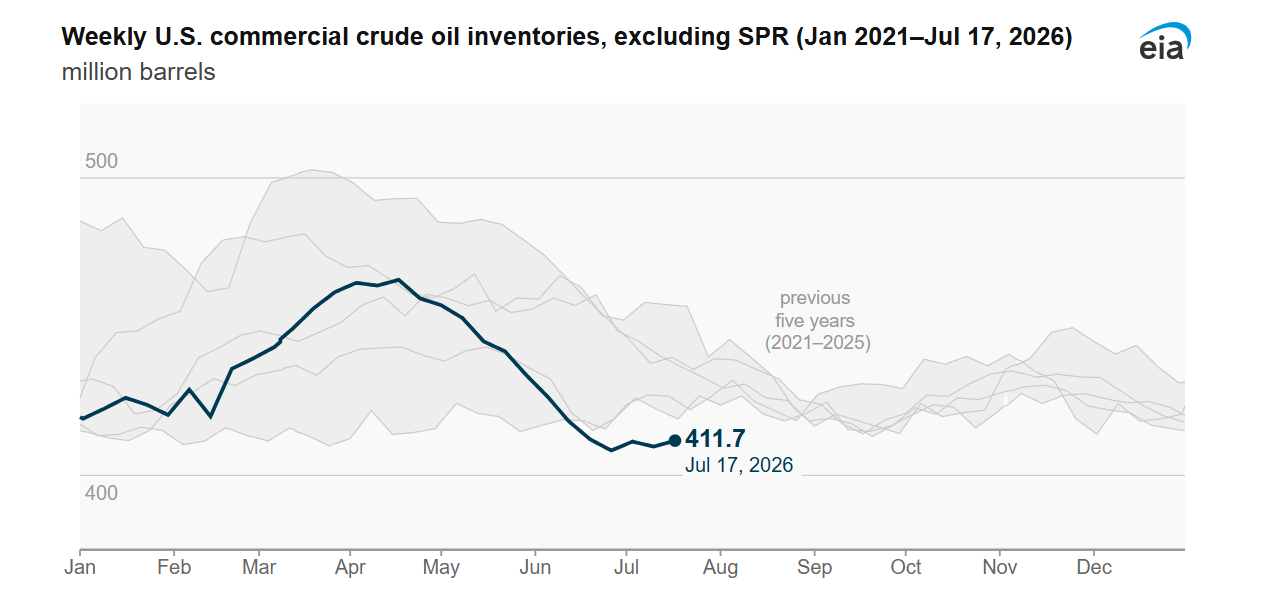
For the week ending July 17, 2026, U.S. commercial crude oil inventories (excluding the Strategic Petroleum Reserve) increased by 2.0 million barrels, reaching 411.7 million barrels, according to the U.S. Energy Information Administration's (EIA) Weekly Petroleum Status Report. This level sits approximately 6% below the previous five-year (2021–2025) average for the same period.
The EIA, an independent statistical and analytical agency within the U.S. Department of Energy, publishes the Weekly Petroleum Status Report every Wednesday to provide timely data on U.S. petroleum supplies, including crude oil and refined product stockpiles. The report is one of the most widely followed weekly benchmarks among energy market participants, as inventory shifts offer a near-real-time read on the balance between domestic production, refining activity, imports, and end-user demand.
Refined Product Inventories
Gasoline inventories rose by 0.8 million barrels during the reporting week, remaining about 7% below the five-year average. Gasoline stockpiles are closely tracked during the U.S. summer driving season (Memorial Day through Labor Day), when motor fuel consumption typically peaks. Inventories running below the five-year norm during this period are a common reference point analysts use to gauge whether supply is keeping pace with seasonal demand.
Distillate fuel inventories — which include diesel fuel and heating oil — increased by 1.4 million barrels, sitting 10% below the five-year average. Distillate demand reflects a mix of transportation (notably freight and trucking), industrial use, and, in colder months, residential heating.
Propane/propylene inventories saw a larger build of 6.3 million barrels, placing them 34% above the five-year average. Propane inventories are typically drawn down during the winter heating season and replenished during the spring and summer, which aligns with the mid-July timing of this build.
Total Commercial Petroleum Inventories
Overall, total commercial petroleum inventories increased by 11.6 million barrels for the week. This aggregate figure encompasses crude oil and major refined products, providing a consolidated view of the U.S. petroleum supply picture beyond the headline crude number alone.
The data was released on July 22, 2026, as part of the EIA's regular petroleum reporting schedule.
Source: EIA, Weekly Petroleum Status Report. For more information, visit the EIA Press Room.

