Ukraine Agrees to Spare Certain Non-Russian Tankers and Black Sea Oil Export Infrastructure
Key Takeaways
- •Ukraine has committed to sparing CPC infrastructure and non-Russian vessels from attack if they are not sanctioned, do not carry Russian cargo, and are not Russian-owned.
- •The CPC pipeline terminal near Novorossiysk handles approximately 2% of global crude supplies and serves as Kazakhstan's primary export route.
- •CPC Blend exports are expected to decline by roughly one-third in August following drone attacks that disrupted loading operations near the terminal.
- •Tanker earnings for CPC crude shipments to the Mediterranean surpassed $400,000 per day, the highest level recorded for the route by the Baltic Exchange.
- •Ukraine has established contact points enabling commercial shipping companies to share vessel information and coordinate safe passage through the Black Sea.
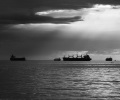
Ukraine has agreed not to target certain non-Russian oil tankers or infrastructure used to export Kazakhstan's crude through the Black Sea, Bloomberg reported, citing a U.S. official familiar with the private agreement.
The commitment followed talks between senior U.S. and Ukrainian officials and could help restore oil flows through the Caspian Pipeline Consortium (CPC) terminal near Novorossiysk, Russia. The CPC pipeline originates in western Kazakhstan and transits southern Russia before reaching the Black Sea, making it the primary outlet for Kazakh crude despite the country's efforts to develop alternative export routes that bypass Russian territory.
Ukraine has established contact points through which commercial shipping companies can share vessel information and arrange safe passage, the official said.
Under the agreement, Kyiv will refrain from attacking CPC infrastructure and vessels traveling to the terminal if they are not sanctioned by Ukraine, do not carry Russian cargo, and are not owned by Russian individuals or entities. Ukrainian authorities are also guiding shippers on which vessels could be targeted. The arrangement reflects the practical difficulty of applying pressure on Russian energy infrastructure without disrupting the exports of Kazakhstan, a non-belligerent state whose crude flows are co-mingled with Russian transit infrastructure.
The CPC route normally handles around 2% of global crude supplies and is Kazakhstan's main oil export channel. European refiners depend heavily on crude shipped from the terminal.
Recent drone attacks near Novorossiysk disrupted loadings and caused some shipowners to avoid the facility. CPC Blend exports are expected to fall by roughly one-third in August, though delayed July cargoes create uncertainty around that estimate.
Commercial vessels chartered by U.S. companies stopped loading during a wave of attacks in the week of July 20. Operations resumed on July 27, but ships at the terminal were struck again two days later.
It remains unclear whether the new safeguards will fully reassure tanker operators. Earlier arrangements intended to protect commercial vessels failed to prevent some ships included on no-target lists from being attacked.
The security risks have driven tanker costs sharply higher. Earnings for vessels carrying CPC crude to the Mediterranean exceeded $400,000 a day on Friday, the highest level recorded for the route by the Baltic Exchange.
Any recovery in Kazakhstan's exports could ease global supply concerns as the Iran war and restricted traffic through the Strait of Hormuz keep other barrels off the market.
Source: Investing.com

