Trump blamed Democrats for high energy prices. Now 67% of Americans blame him
Key Takeaways
- •The main driver of the current refined-fuel shortage and high prices is the war in Iran, which has closed the Strait of Hormuz and destroyed refineries and oil fields, squeezing supplies of gasoline and diesel.
- •Energy Department emergency orders have kept aging coal plants from retiring, with Michigan's J.H. Campbell plant alone costing Midwest ratepayers nearly $300 million on net while producing less electricity than before.
- •In September, an appellate court blocked the Department of Energy's Campbell order, rejecting the administration's interpretation of federal law and calling the claimed grid emergency unpersuasive.
- •The emergency declaration has fast-tracked fossil fuel projects, including BP's Kaskida deepwater rig in the Gulf of Mexico and roughly 600 infrastructure projects flagged by the Army Corps, but none will quickly reduce consumer prices.
- •Gasoline remains above $4 a gallon and diesel above $6, and with U.S. refineries already running near maximum capacity and little economic case for new ones, high prices are expected to persist through the year absent a breakthrough in Iran.
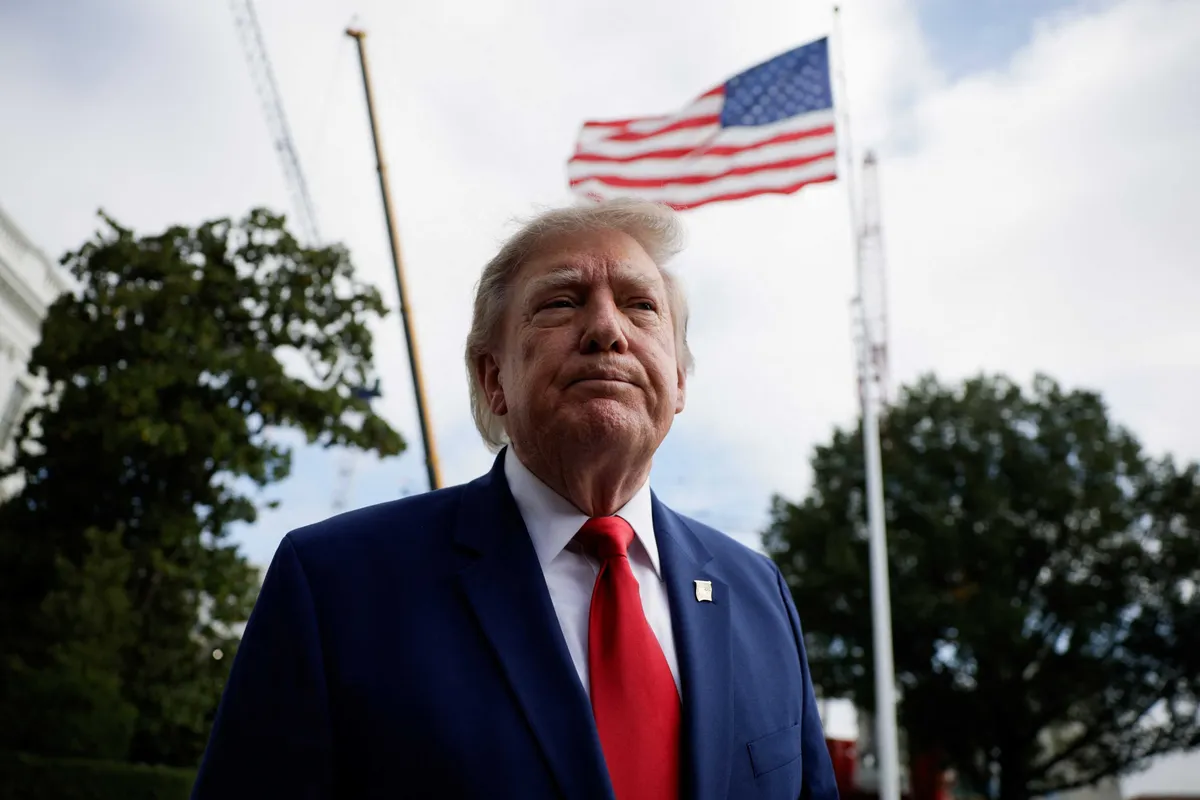
On the first day of his second term, President Donald Trump declared that the United States was facing a “national energy emergency.” In an executive order, he wrote that the “harmful and shortsighted policies of the previous administration” had left the nation’s energy resources “far too inadequate,” causing and worsening the “high energy prices that devastate Americans.”
Since then, Trump has used the emergency declaration to accelerate permits for fossil fuel projects and add more fossil fuel resources to the nation’s power grid. Such declarations matter because they unlock federal authorities that are unavailable in ordinary times — the legal basis for the interventions described below. Almost two years later, with the president facing a midterm election in which household costs are already weighing on voters, that declaration has taken on an ironic meaning. The United States is experiencing an energy crisis marked by high fuel prices, but it is not the one Trump described when he took office.
The emergency powers activated by his order have also done little to address the current crisis or reduce the prices he criticized. “The genesis of the problem is the war in Iran,” said Gbenga Ajilore, chief economist at the nonpartisan Center on Budget and Policy Priorities, who has analyzed Trump’s energy policy.
Trump’s attack on Iran has led to the closure of the Strait of Hormuz and the destruction of refineries and oil fields, reducing the global supply of refined fuels such as gasoline and diesel. The resulting supply crunch has been more severe for refined fuels than for crude oil, and has had a greater impact on consumers’ wallets.
The situation highlights a basic feature of the fossil fuel system: even with the powers available to the executive branch, Trump has not been able to reduce prices for petroleum fuels or electricity. His administration has pushed through specific oil projects and kept certain power plants operating, but oil and electricity markets are so large and complex that those interventions have not changed consumer prices.
Whether high prices qualify as an emergency or not, there is little the president can do to address them short of ending the war in Iran. “If you reverse that, it may not drop like a rock, but it’s going to start going down,” Ajilore said. “Outside of that, there really isn’t much to do.”
Electricity: Keeping coal plants running
The practical effects of Trump’s emergency declaration have been concentrated in two parts of the energy system where he most directly disagreed with the Biden administration. The first is the power grid. Former President Joe Biden sought to add large amounts of solar and wind generation while data centers — the energy-hungry facilities that power artificial intelligence and cloud computing — increased electricity demand, according to a Department of Energy report. Trump campaigned on a promise to cut energy bills in half, and he directed federal agencies to “identify and exercise any lawful emergency authorities available to them” to facilitate power generation.
The Energy Department acted on that directive. Secretary Chris Wright, a prominent fossil fuel advocate, issued several emergency orders intended to prevent coal plants around the country from retiring The orders argued that strained grid conditions made it necessary to preserve all available generation capacity, even when the utilities operating the facilities sought to close them.
Rather than lowering energy prices, the orders have imposed significant costs. In Michigan, keeping the J.H. Campbell plant open has cost ratepayers in the Midwest almost $300 million on net, even though the plant is generating much less electricity than it did before the order. In Colorado, a utility has had to continue operating a coal plant it was preparing to retire, despite the facility’s poor condition and need for extensive maintenance.
Many of the plants scheduled for retirement are among the oldest and least efficient in their regions. Keeping them open does not necessarily save consumers money, even if the facilities add electricity to the grid.
The courts have begun to challenge the administration’s interventions. In September, after Michigan sued over the Campbell coal plant mandate, an appellate court blocked the Department of Energy’s order in a ruling that rejected the administration’s interpretation of federal law.
The judge also questioned the administration’s assertion that the region’s grid faced an energy emergency. Wright’s claim was described as “unpersuasive,” while his policy was said to “invite frequent federal interventions that … threaten the stability of the energy market.”
“We saw in the Michigan case that the facts just don’t match up with the claims and with the law, and I suspect that in some of these other cases, if not all of them, we’ll see similar decisions,” said Melissa Birchard, mitigation program director at the Georgetown Climate Center, a research institute based at Georgetown Law School.
Michigan’s utility commission and the regional grid operator both rejected the idea that the area around the Campbell plant was experiencing an energy shortage.
Crude oil: “Drill, baby, drill”
The administration has also used the emergency declaration to reverse Biden-era policies in the oil and gas sector. Here, too, the United States was not facing a critical supply shortage: domestic oil and natural gas production were both near all-time highs.
Biden approved major drilling projects such as the Willow project in Alaska, but he sought to block oil leases in the Gulf of Mexico and canceled the Keystone XL oil pipeline. Trump’s executive order directed agencies to use “all relevant lawful emergency and other authorities” to “expedite” the construction of oil wells, pipelines and other energy facilities. It also sought to waive the Clean Water Act and the Endangered Species Act wherever possible.
The order has delivered several notable victories for the fossil fuel industry. Earlier this year, the Trump administration convened the so-called “God Squad,” a committee of Cabinet secretaries with authority to override the Endangered Species Act. During a meeting that lasted only a few minutes, the committee waived all species protections for oil and gas drilling in the Gulf of Mexico. The measure will allow BP to pursue a deepwater rig project known as Kaskida.
The order also instructed the U.S. Army Corps of Engineers to accelerate Clean Water Act permits for pipelines and other infrastructure. The Corps last year identified roughly 600 projects that could qualify for fast-tracking. It later withdrew the list, but projects in its permitting database still carry an “energy emergency” designation. They include Enbridge’s Line 5 oil pipeline replacement, a mineral sands mine owned by Chemours and a natural gas pipeline in Florida.
It is unclear whether or when these projects would have advanced without the order. But accelerating them will not lower the high prices cited in Trump’s emergency declaration. Kaskida, the largest of the projects, is years away from producing oil and would generate only a small fraction of the oil that normally passes through the Strait of Hormuz in a month.
In addition to Michigan’s Campbell lawsuit, about a dozen states have sued the Trump administration over the original executive order, arguing that the United States is not experiencing an energy emergency. Oral arguments in that case are scheduled for October 20, putting the legal premise of the declaration itself before the courts. Birchard expects the courts to view the declaration with the same skepticism shown in the Campbell case.
“We see this accumulated effort to declare emergencies,” Birchard said. The question, she added, is “whether the courts are going to start saying, ‘Hey, one emergency we might have believed, two emergencies we might’ve believed, but now we’re seeing a pattern of many, many emergencies. How do we set up, you know, a set of facts that really supports that many emergencies?’”
Refineries: The weak link
A separate crisis has emerged in a part of the energy system that Trump’s order has barely affected. The United States and other countries are facing a shortage of refined fuels, including gasoline and diesel. The shortage has raised prices at gas stations and increased the cost of goods transported by diesel trucks.
Gasoline remains well above $4 a gallon, while diesel has reached a historic high of more than $6 a gallon. The “crack spread,” or the difference between the price of refined fuel and crude oil, also reached a multiyear high over the summer.
The main cause of the shortage is the war in Iran, which has closed the Strait of Hormuz and destroyed numerous Middle Eastern refineries. Ukraine’s attacks on Russia have also destroyed several oil refineries.
Crude oil flows through the Strait of Hormuz have recovered during the eight months of the war, partly because of American military escorts for tankers. Countries such as Saudi Arabia have also been able to export oil through other channels, preventing a global crude shortage.
But consumers do not buy crude oil. They buy gasoline and diesel, which are produced at large refineries. There is little Trump can do to offset the increase in prices. U.S. refineries are already operating near maximum capacity to take advantage of high profit margins, and many large facilities have postponed scheduled maintenance to keep producing as much fuel as possible while prices remain high.
“Refiners are running close to flat out,” said Abhi Rajendran, head of research at Energy Intelligence, a firm that analyzes the oil and gas sector. “They’re making money, but there’s not really any kind of slack to ramp things up.”
The only way to reduce prices substantially would be to produce more gasoline and diesel, but the refinery system cannot quickly expand output. The United States has only a few dozen major refineries, compared with many thousands of oil wells, and each refinery can produce only so much fuel before requiring maintenance.
Refineries cost many billions of dollars to build, experience frequent breakdowns and shutdowns, and companies such as Marathon and Chevron have little reason to construct new facilities in the United States. Overall demand for refined products has declined in recent years as vehicles become more fuel-efficient and consumers adopt electric vehicles.
“Refined product demand has actually been in decline for a long time,” Rajendran said. “In normal times, [refinery capacity] is more than adequate. There’s no real economic case for new refineries, because if these wars end, then it’s just wasted money.”
Trump’s original executive order mentions refining, but it did not expand refinery capacity, leaving the president with few effective options. He considered a diesel export ban that would have prevented companies from selling American diesel overseas, but withdrew the proposal after opposition from the oil and gas industry. Even if enacted, ban would likely have produced only a marginal price reduction and could have caused prices to rise if refiners reduced production.
Other measures, including buying Russian diesel and encouraging states to expand diesel subsidies, are likely to have an even smaller effect. The amount of diesel Russia has promised to deliver “immediately” under Trump’s recent deal is equivalent to less than one day of U.S. diesel consumption.
Absent a breakthrough in Iran, high fuel prices are expected to continue through the year. The states challenging Trump’s emergency order argue that high energy prices alone do not constitute an emergency, but many Americans say gasoline and electricity bills are placing them under strain.
A recent Fox News poll found that more than eight in 10 Americans were concerned about gas prices. The University of Michigan’s consumer sentiment index fell this summer to its lowest level on record. Another poll by the Associated Press found that two-thirds of Americans blamed Trump for high costs, while one-third blamed “factors outside Trump’s control.”
Grist is a nonprofit, independent media organization dedicated to reporting on climate change. The original article appeared on Alternet.

