Trip to Origin Returns to Melbourne International Coffee Expo 2027 After Successful 2026 Debut
Key Takeaways
- •Trip to Origin was introduced at MICE 2026 as a dedicated space linking coffee producers with café operators and roasters, and will become a permanent fixture at the 2027 edition based on positive attendee feedback.
- •Coffee industry representatives from ten nations—including Kenya, Uganda, Brazil, India, Papua New Guinea, Indonesia, Samoa, Vanuatu, El Salvador, and Fiji—participated in the inaugural Trip to Origin section.
- •Uganda, ranked among the world's top ten coffee-producing countries with roughly 80 per cent of its exports being Robusta, sent a high-level delegation led by its High Commissioner to Australia to showcase its coffee at the event.
- •Ugandan coffee exports to Australia more than doubled year-over-year, rising from 1,500 kilograms in the first quarter of 2025 to 3,500 kilograms in the same period of 2026.
- •The Trip to Origin area offered dedicated cupping sessions and educational presentations, enabling attendees to sample coffees from multiple regions and learn about production methods and flavour profiles directly from producers.
Trip to Origin, a feature introduced at the Melbourne International Coffee Expo (MICE) 2026, is set to return with expanded scope in 2027 after establishing itself as a celebrated new component of the event.
MICE is the largest coffee trade event in the Southern Hemisphere and has become a key meeting point for the Asia-Pacific coffee industry since its launch in 2012. The Melbourne International Coffee Expo continues to introduce new elements with each edition. In 2026, the standout addition was Trip to Origin, a dedicated space designed to connect coffee producers directly with café operators, roasters, and industry decision-makers.
According to International Trade Centre metrics, global coffee consumption is growing at 2.2 per cent annually, with global coffee exports valued at approximately US$38 billion per year. Against this backdrop, facilitating direct connections between coffee business decision-makers and producers has become increasingly important for strengthening the industry's value chain. The trend reflects a broader shift across the global coffee sector toward greater supply-chain transparency, as roasters and café operators face growing consumer demand for traceable, ethically sourced coffee.
At the 2026 event, an entire section of the Melbourne Convention and Exhibition Centre was dedicated to fostering these relationships. Coffee importers, producers, and regulatory boards from around the world gathered to present their coffees to Australian and international café owners, roasters, and coffee enthusiasts.
Representatives attended from Kenya, Uganda, Brazil, India, Papua New Guinea, Indonesia, Samoa, Vanuatu, El Salvador, and Fiji. Importers present included Ahaana Coffee, Kaffebonor, and Southland Merchants. Regulatory bodies such as the Australia PNG Economic Partnership and the Coffee Board of India participated, alongside individual businesses including Fijian family-owned social enterprise South Pacific Coffee Company and Samoa's Aleisa Coffee.
MICE Education Moderator and Show Lead Sarah Baker says that, like other signature MICE components such as the Roasters Playground and the Global Coffee Report Leaders Symposium, high-quality networking is central to evaluating the success of Trip to Origin.
"Trip to Origin exists to strengthen the connection between producers and café operators," Baker says. "When you're walking the show floor and you suddenly find yourself in a cupping session with representatives from Brazil or Uganda and get to meet the very people that helped produce that coffee — that's a pretty special moment."
Uganda, one of the world's top ten coffee-producing nations, was prominently represented. Approximately 80 per cent of Uganda's coffee exports are Robusta. The country is actively working to increase production and leverage coffee as a means of improving livelihoods for its farmers, while also exploring new export markets.
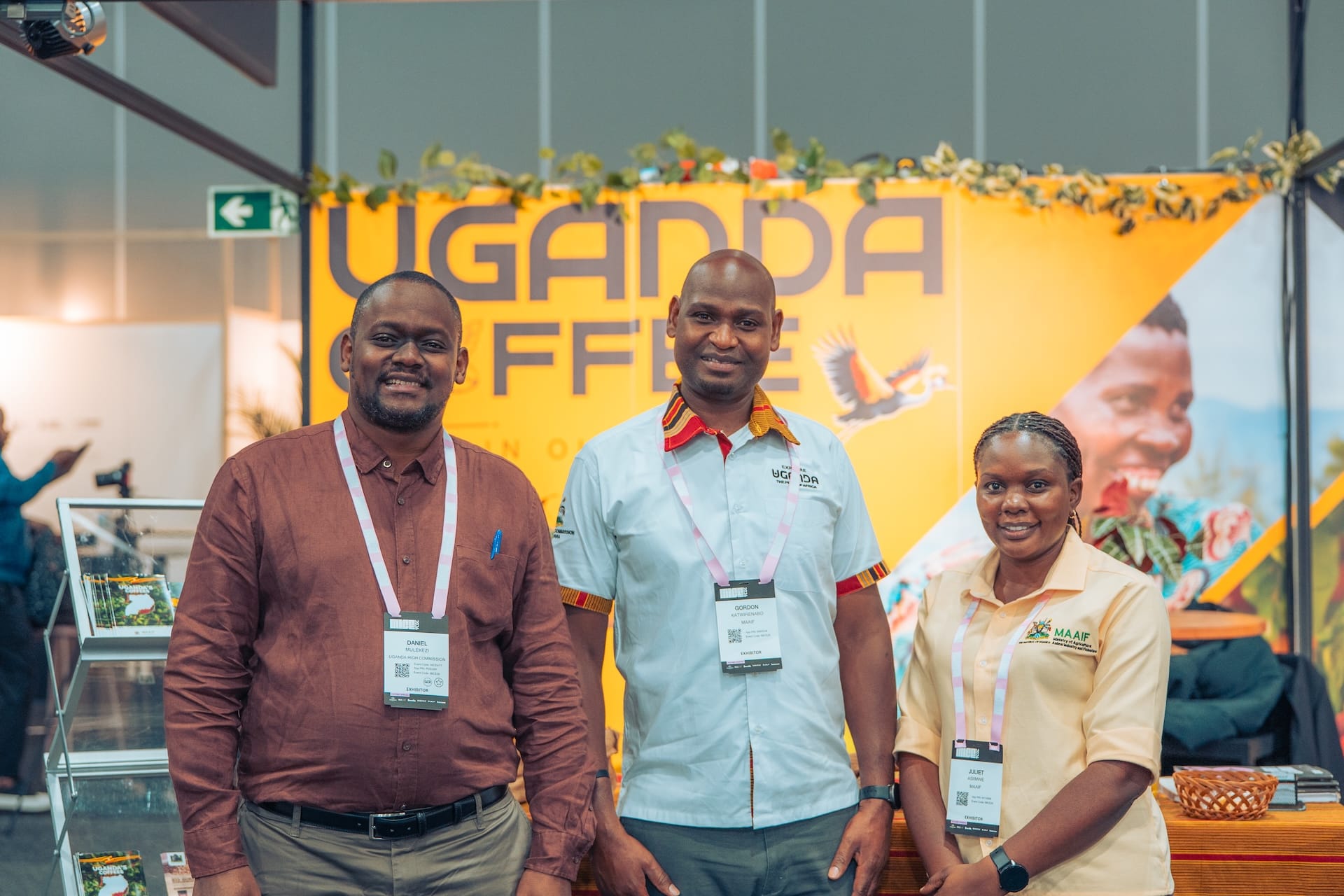
Uganda's delegation at the show included Her Excellency Ms Dorothy Samalie Hyuha, Uganda's High Commissioner in Australia, who travelled from Canberra to participate. She was joined by Gordon Katwirenabo, Assistant Commissioner for the Division of Quality Assurance and Value Addition, along with additional coffee producers who flew from Uganda to Melbourne.
The Ugandan stand featured a range of Natural and Washed Arabica and Robusta coffees, all served in filter form so attendees could experience the flavour profiles of some of the East African nation's coffees.
Samalie Hyuha says events like MICE provide a distinctive opportunity to engage with roasters and decision-makers across Australia and the broader Pacific region.
"I'm so very happy the Uganda High Mission could participate at MICE," she says. "It has been wonderful because previously we have come to observe, but we didn't have the opportunity to join the exhibition. We have had an opportunity to tell the success story of coffee from Uganda. Our goal is to enter the Australian market to trade coffee and open ourselves to the Pacific region and the entire world."
Assistant Commissioner Katwirenabo emphasises the value of the exposure MICE provides to what has traditionally been a modest market for Ugandan exporters.
"We want Australians to test our coffee, because we see it as a very strategic and niche market," he says. "We feel participating in events such as MICE will go a long way to expose coffee lovers and coffee drinkers to the unique flavours in Ugandan coffee."
The Trip to Origin section also included a dedicated cupping space, allowing MICE attendees to sample and learn about coffees from different regions.
"We had the opportunity to hold a coffee cupping so people could test the coffee of Uganda but also learn that Uganda is one of the leading producers of coffee in the world, and we have different volumes of coffee available to export to different parts of the world," says Samalie Hyuha.
In addition to the cupping sessions, Katwirenabo delivered a sideline presentation in which he discussed Ugandan coffee with attendees, highlighting production volumes and the case for sourcing from the country.
Samalie Hyuha praised the dedicated tradeshow space for relationship-building, noting that the expo floorplan gave each exhibitor the opportunity to succeed.
"What I enjoyed about this show is the layout of it, and how different café players have been in a position to participate," she says. "You find the exhibitors who export and produce coffee are here at Trip to Origin, but the roasters are here, the baristas are here, those who manufacture packaging and machinery are here."
Looking ahead to MICE 2027, Trip to Origin is expected to become a permanent fixture, based on attendee feedback from the 2026 show.
"The response from the industry spoke for itself. People were genuinely moved by having direct access to the producing countries and being able to ask questions about the origin of their coffee," says Baker. "The education piece is everything. Now that Trip to Origin is embedded on the show floor, talks on different processing methods, regional flavour profiles and the realities of production are reaching a much wider audience."
Baker adds: "Attendees can come learn about the first part in the value chain they may not have had any prior knowledge in and leave an educational talk or cupping session with a completely different understanding of what's in their cup. Bridging that gap and creating greater education across the value chain is so important."
As preparations build toward the 2027 show, Baker anticipates welcoming an even larger contingent of producers.
"It was such a privilege to have producers from so many incredible growing regions — Brazil, Papua New Guinea, Uganda, Kenya, and so many more — all under one roof sharing their stories and their coffees," she says.
Katwirenabo notes that Australian interest in Ugandan coffee had been growing prior to MICE, and he views the expo as a powerful platform for strengthening the relationship between the two nations.
"In the first quarter of 2025, we imported about 1500 kilograms of coffee to Australia. This year, in the first quarter, that number rose to 3500 kilograms," he says. "I am looking forward to sustaining that kind of increase in the Australian market and building bridges of friendship through coffee. I think it will be exciting to see what we can achieve together as far as sustainable development is concerned."
This article was first published in the July/August 2026 edition of Global Coffee Report. For more information about Melbourne International Coffee Expo, visit internationalcoffeeexpo.com.

