Tanker Tracking Data Contradicts U.S. Claim That Middle East Oil Flows Have Normalized
Key Takeaways
- •U.S. Energy Secretary Chris Wright claimed that the seven-day average for oil leaving the Strait of Hormuz has reached nearly 9 million barrels per day, with total regional flows averaging approximately 15 million barrels per day.
- •Tanker tracking data from Kpler shows vessel traffic through the Strait of Hormuz continues to decline, with only six commodity vessels transiting on Monday compared to a recent 10-day average of eleven ships.
- •The U.S. Energy Information Administration stated in its latest monthly outlook that severe constraints on Strait of Hormuz transits are expected to persist through August, prompting increased estimates of Middle East shut-in crude production.
- •Kpler's director of commodity research Matt Smith stated that the disparity between available shipping data and Secretary Wright's quoted figures cannot be reconciled.
- •The Strait of Hormuz routinely carries approximately one-fifth of global oil consumption, making any sustained disruption consequential for international supply and pricing benchmarks.
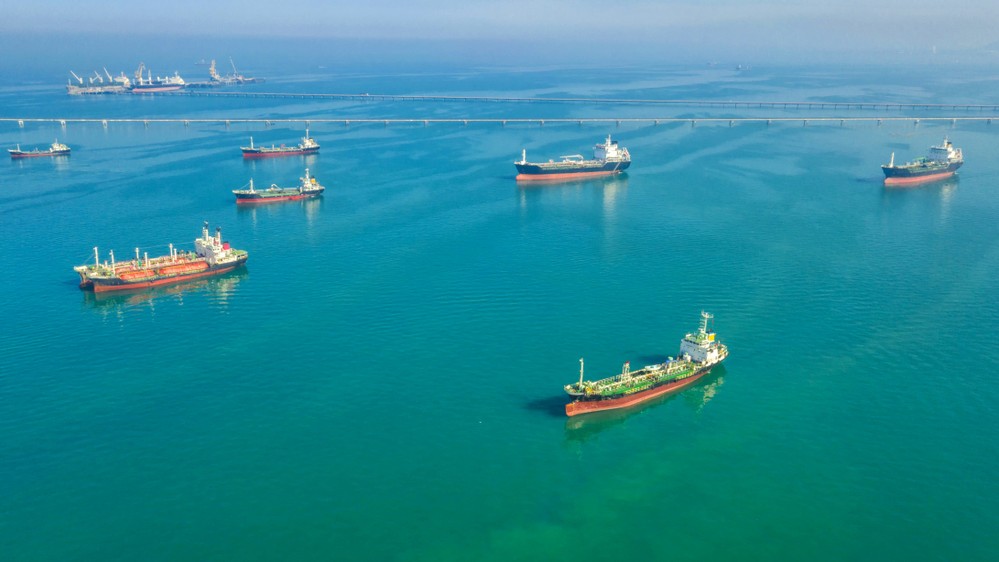
U.S. Secretary of Energy Chris Wright stated on Tuesday that oil flows from the Middle East have normalized, asserting that Sunday traffic alone exceeded pre-conflict averages — a claim that ship-tracking data and analyst assessments do not appear to support.
The Strait of Hormuz is one of the world's most critical energy chokepoints, routinely carrying roughly a fifth of global oil consumption, meaning any sustained disruption has immediate implications for international supply and pricing benchmarks.
In a post on X, Secretary Wright said: "Thanks to the coordinated efforts of the U.S. military and our gulf allies, the seven-day average for oil leaving the Strait of Hormuz is currently up to almost 9 million barrels per day."
He added: "When combined with the additional 5-7 million barrels per day leaving the region via newly upgraded pipelines and export facilities, total oil flows are currently averaging approximately 15 million barrels per day."
According to the top U.S. energy official, "On Sunday alone, over 20 million barrels left the Arabian gulf region, which is above the pre-conflict average."
However, tanker traffic monitoring services and industry analysts have been unable to reconcile these figures with available shipping data, which indicates that traffic through the Strait of Hormuz remains severely constrained — even according to the U.S. Energy Information Administration (EIA).
"We have increased our estimates of Middle East shut-in crude oil production in the coming months compared with our July forecast due to continued severe constraints on Strait of Hormuz transits, which we assume persist through August," the EIA said on Tuesday in its latest monthly Short-Term Energy Outlook (STEO).
The EIA's STEO is widely used by traders, policymakers, and industry analysts as a baseline forecast for U.S. and global energy supply and demand, making the gap between the agency's assessment and the Secretary's public statements especially consequential for market participants gauging near-term supply risks.
"It is not possible to reconcile the disparity between what we see and what he is quoting," Matt Smith, director of commodity research at Kpler, told CNN, commenting on Wright's claim.
Kpler data showed earlier this week that vessel traffic through the Strait of Hormuz continues to decline, as hopes for a U.S.-Iran negotiated deal faded once again.
On Monday, only six commodity vessels transited the Strait of Hormuz in either direction, down from 11 ships in the latest 10-day average, according to shipping data from Kpler cited by Reuters.
By Tsvetana Paraskova for Oilprice.com

