Friedland-Backed Scandium Project Secures $400-Million U.S. Defense Department Loan Commitment
Key Takeaways
- •Sunrise Energy Metals obtained a conditional US$400 million loan commitment from the U.S. Department of Defense to advance the Syerston scandium project in New South Wales.
- •The company aims to make a final investment decision by year-end and could begin producing about 60 tonnes of scandium per year from around 2028, serving a global market the USGS estimates at 40-70 tonnes annually.
- •August capital cost estimates of A$450-475 million are nearly four times the March feasibility figure, reflecting planned U.S. processing capacity and the ability to triple output to 180 tonnes.
- •The Defense Department financing gives the U.S. government a right of first offer on Sunrise's output, and Friedland indicated the company may eventually be domiciled in the United States.
- •China produces 100% of the world's scandium metal, and the U.S. has not actively mined the critical mineral in decades, underscoring supply-chain concerns highlighted by a recent Hunterbrook Capital report on Bloom Energy.
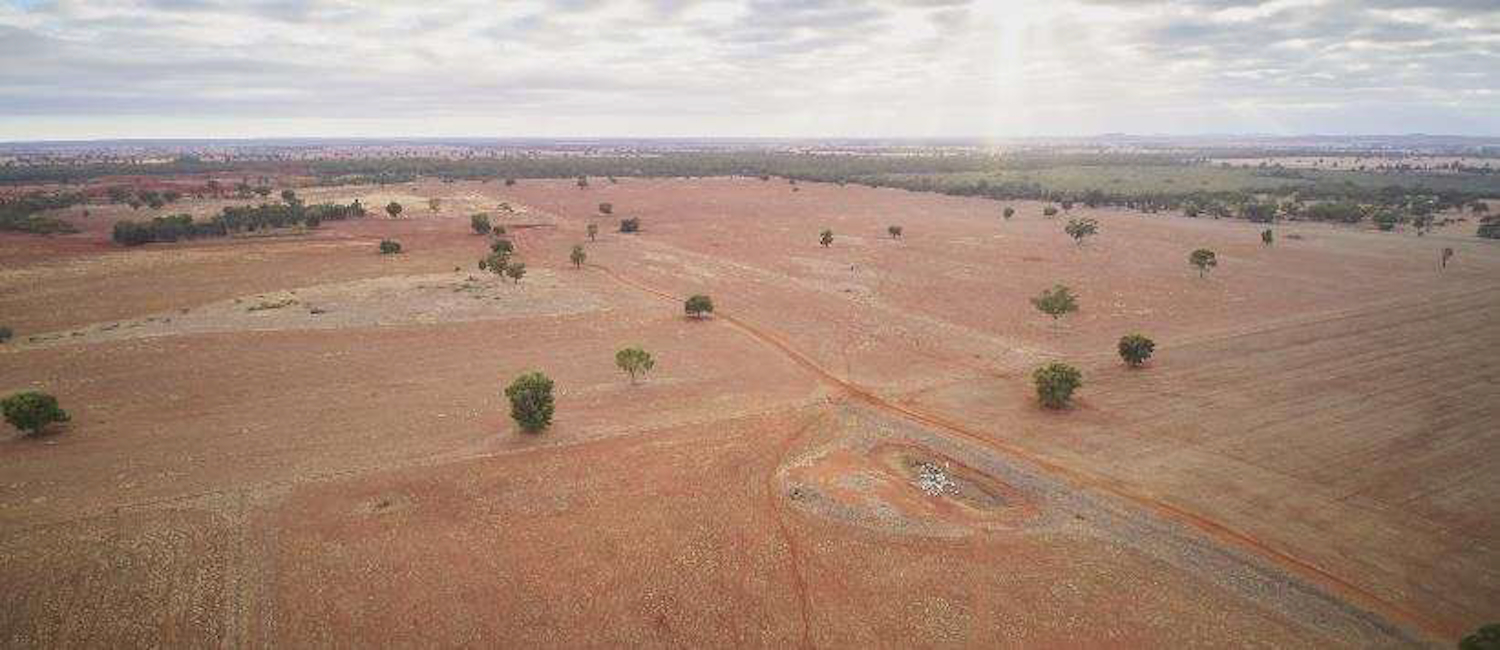
After more than two decades, billionaire Robert Friedland's plan to develop a scandium mine in New South Wales appears to be finally coming to fruition.
Sunrise Energy Metals (ASX: SRL) — where the Ivanhoe Mines (TSX: IVN; US-OTC: IVPAF) founder serves as non-executive chairman — last week secured a $400-million (C$556-million) conditional loan commitment from the U.S. Department of Defense for the Syerston scandium project. The company also said on Aug. 10 that it wants to list on a U.S. securities exchange.
Syerston hosts one of the largest and highest-grade mineable scandium deposits within a Western jurisdiction, according to the company. Scandium itself is a rare, lightweight metal: alloyed with aluminium, it yields stronger, more weldable materials for aerospace and defence manufacturing, while scandium oxide is a key ingredient in the electrolytes at the heart of solid oxide fuel cells. Sunrise plans to make a final investment decision by year-end, and early works are already under way.
CEO Sam Riggall told The Northern Miner that the project was delayed first by an initial interest in nickel at the site, and later by a lack of demand for scandium beyond solid oxide fuel cells.
"Fast forward a decade, and suddenly scandium has found its way into a range of different applications, like semiconductors and 3D printing for defence components," he said in an interview, noting that fuel cells have moved beyond being a niche green technology.
"They're now really at the heart and centre of how you deploy AI and data centres effectively across the U.S.," he said. "When you are so heavily constrained by the lack of gas generation capacity at the moment, fuel cells are providing a really interesting filler for that niche, and that probably won't go unnoticed by China either."
Nickel came first
Sunrise initially advanced the project's large nickel-cobalt resource to shovel-ready status, but pivoted back to scandium after Indonesian supply flooded the nickel market several years ago.
New company estimates issued in August peg capital expenditures at A$450-475 million ($315-333 million) — nearly four times the $120-million feasibility study figure from March. The increase reflects plans for a processing plant in the U.S. and the ability to triple output to 180 tonnes.
Once in production, perhaps in 2028, Syerston is expected to produce 60 tonnes of scandium a year for a global market the U.S. Geological Survey estimates at 40 to 70 tonnes annually. Riggall said annual demand could reach 300 tonnes by 2030 because of fuel cells.
Scandium is essential for defence, advanced manufacturing, artificial intelligence infrastructure and wireless spectrum technologies. The U.S. has not actively mined scandium in decades, leaving the market heavily dependent on China. The metal appears on the U.S. government's list of critical minerals, which guides federal efforts to secure materials deemed essential to the economy and national security, and it has traditionally been recovered only in small volumes as a by-product of processing other ores — including the nickel that first drew attention to Syerston — rather than from dedicated mines.
The metal "is already heavily embedded in our wireless technologies," Riggall said. "There is no 5G or 6G wireless without scandium, so the utility of the metal in industrial processes and technologies has come along in leaps and bounds, and it really sits at the heart of a lot of defence-centred technologies that are really critical, particularly in the United States, which is the largest manufacturer of them."
Resource and financing terms
According to a resource statement issued in September, Syerston hosts 45.9 million measured and indicated tonnes grading 414 parts per million (ppm) scandium for 19,007 tonnes of contained scandium. It also holds 5.7 million inferred tonnes grading 364 ppm scandium for 2,082 tonnes of contained scandium.
The Defense Department financing provides the U.S. government with a right of first offer on Sunrise's output, which would support demand from U.S. companies, including defence contractors. The commitment also reflects the Pentagon's growing use of direct financing, alongside traditional procurement, to shore up supplies of minerals it views as vital to defence supply chains.
Friedland said the financing could be a landmark moment for Sunrise.
"The world has entered an era in which access to critical minerals will shape industrial strength, technology leadership and national security. Scandium is one of the clearest examples, supporting the technologies, industries and defense capabilities that will shape the coming decades," he said in a statement dated Aug. 10.
Sunrise "may become an American company," Friedland told Bloomberg TV after the deal was announced. "Uncle Sam likes these companies to be domiciled in the United States."
Supply doubts
Scandium made headlines earlier this year when activist investor Hunterbrook Capital released a report expressing doubts about U.S.-listed fuel cell company Bloom Energy's growth plans due to a lack of scandium supply.
On July 8, New York-based Hunterbrook alleged that Chinese scandium oxide was still reaching Bloom through Thailand, Japan and South Korea. Bloom subsequently described the report's financial claims as false and misleading and rejected its conclusions about the company's scandium sourcing in a regulatory filing.
Riggall said the Hunterbrook report highlighted just how dependent scandium supply chains are on China.
"You're starting now to see certainly an urgency within government to address this problem, though I think there'll be somewhat of a lag effect for industry to jump on board and work out how they're actually going to deliver this," he said.
"Within the defence sector, in particular, there's an acute awareness of this issue, given they already are required by law to try and address these issues around vulnerabilities in the supply chain."
"What's really interesting to us is where we're seeing scandium start to be used, particularly in the alloy market and semiconductors," Riggall said. "While fuel cells are still the largest volume driver, the chips are really strategic, and again, China produces 100% of the world's scandium metal. There's not one other source of metal anywhere, so we know from our engagement with the industry, supplies have been extremely tight, and it's very difficult at the moment."
Revised scope
As part of Sunrise's engagement with Washington, Syerston's scope has been broadened to cover not only the development of the mine and refinery, but also the construction of scandium metal refining capacity in the U.S., along with increased investments in power and water infrastructure.
"Robert Friedland and I have done some of the largest copper projects in the world, like Oyu Tolgoi in Mongolia and the Ivanhoe developments in the Congo," Riggall said. "This is a tiny project."
Still, he says what has taken China 20 years to build can be done at one mine in central New South Wales "without having to move too much dirt. The quicker we can bring this on, the better," Riggall said.
"There's enormous potential, and for us, it's just about making sure customers feel like there is a safe, secure, reliable supply that can be scaled as their demand grows, and that's what we're trying to build in New South Wales."
— With files from Frédéric Tomesco and Colin McClelland
Source: The Northern Miner

