Sumitomo Acquires 33.3% Stake in Gwynt Glas Floating Offshore Wind Farm in Celtic Sea
Key Takeaways
- •Sumitomo Corporation has acquired a 33.3% equity interest in the Gwynt Glas floating offshore wind project, representing its first participation in floating wind technology.
- •The Gwynt Glas project is jointly developed by EDF and ESB with a planned generation capacity of up to 1.5 GW, located roughly 40 km off the UK coastline in the Celtic Sea.
- •The investment implements a 2025 memorandum of understanding between Sumitomo and the UK's Department for Business, Innovation, Science, and Trade to promote business investment in the United Kingdom.
- •Floating offshore wind technology allows turbines to be deployed in deeper waters where conventional fixed-bottom turbines are impractical, though it remains at an early stage of commercial deployment.
- •The UK government has identified offshore wind as a critical large-scale power source for achieving its Net Zero 2050 emissions target, with the Celtic Sea recognized as a high-potential zone for floating wind development.
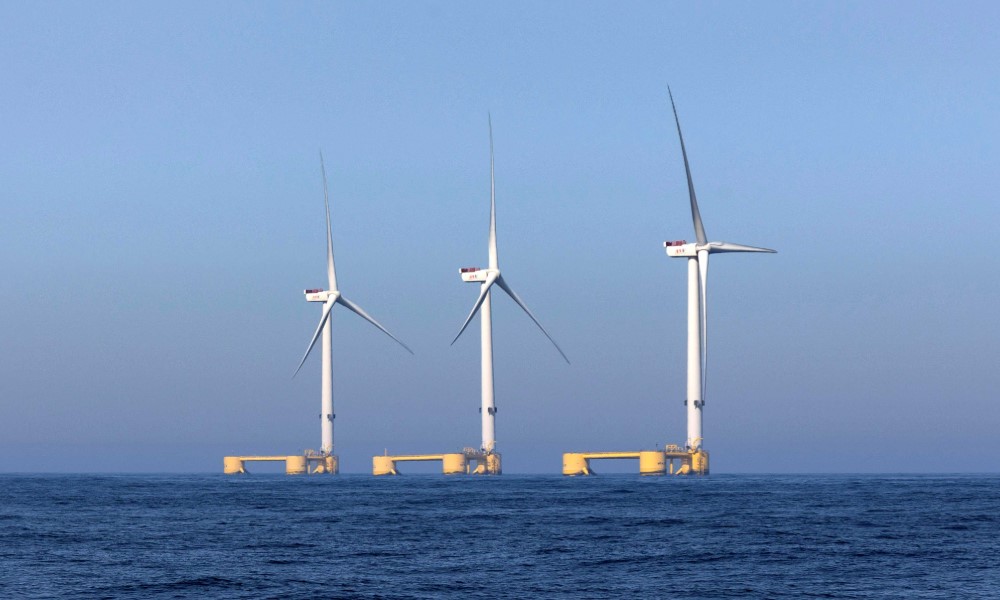
Japan's Sumitomo Corporation has acquired a 33.3% equity interest in the Gwynt Glas offshore wind farm, a floating wind project under development by EDF and Ireland's Electricity Supply Board (ESB) in the Celtic Sea. The acquisition represents Sumitomo's first participation in a floating offshore wind initiative, and positions the Japanese trading house — which has been expanding its overseas renewable energy portfolio — in one of Europe's emerging deep-water wind zones.
The Gwynt Glas project encompasses the development, construction, and operation of a floating offshore wind farm with a planned generation capacity of up to 1.5 GW. The site is located approximately 40 km off the UK coastline. EDF, France's state-owned electric utility, and ESB, Ireland's state-owned energy company, are jointly developing the project as part of broader efforts to harness deep-water wind resources in the Celtic Sea, an area the UK's Crown Estate has advanced through dedicated seabed leasing rounds for floating wind.
Floating offshore wind technology enables turbines to be mounted on floating platforms anchored to the seabed, making it feasible to deploy wind farms in deeper waters where conventional fixed-bottom turbines are not practical. While fixed-bottom offshore wind is a mature industry with tens of gigawatts installed globally, floating wind remains at an earlier stage of commercial deployment, with only a small fraction of that capacity currently operational. The technology is considered a potential driver for expanding offshore wind capacity in regions with steep continental shelves or deep coastal waters.
The UK government has identified offshore wind as a key large-scale power source in its strategy to achieve the Net Zero 2050 emissions target. The Celtic Sea, situated between southern Ireland and southwestern England, has been identified as an area with significant floating wind potential, with project pipelines there representing a meaningful share of Europe's early floating wind development activity.
In 2025, Sumitomo signed a comprehensive memorandum of understanding with the UK's Department for Business, Innovation, Science, and Trade to promote business investment in the United Kingdom. The company stated that the Gwynt Glas investment represents one of the concrete initiatives undertaken under that framework.
"We are delighted to join the Gwynt Glas project. As a large-scale floating offshore wind development, the project represents an important opportunity to contribute to the energy transition," said Jun Minase, general manager for overseas energy solutions at Sumitomo.
Source: Splash247

