Tanker Traffic Through Strait of Hormuz Drops to Two-Month Low Amid Middle East Tensions and Oil Near $100
Key Takeaways
- •Oil tanker transits through the Strait of Hormuz dropped to their lowest level in more than two months amid rising Middle East tensions and crude prices approaching $100 per barrel.
- •The Strait of Hormuz serves as a critical conduit for approximately one-fifth of daily global oil consumption and a major portion of the world's liquefied natural gas trade.
- •Shipping companies and marine insurers have adopted a more conservative approach, with higher perceived security risks contributing to elevated premiums and operating costs.
- •Analysts view the reduced tanker traffic as a barometer of market caution rather than evidence of an immediate disruption in oil exports.
- •Sustained declines in shipping activity through the Strait could influence inflation, monetary policy decisions, financial markets, and global trade beyond the energy sector.
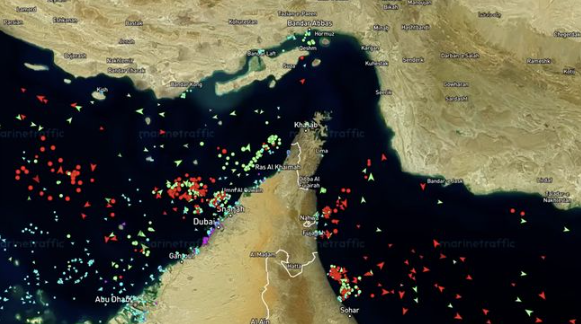
Oil tanker transits through the Strait of Hormuz — one of the world's most strategically critical maritime corridors — have declined to their lowest level in more than two months, as escalating geopolitical tensions across the Middle East and crude oil prices hovering near $100 per barrel weigh on global shipping activity.
Shipping analysts attribute the downturn to mounting caution among vessel operators and energy companies, with regional security concerns increasingly shaping maritime decision-making. As the primary export gateway for several major Persian Gulf producers, any disruption to traffic through the Strait is treated as a significant signal by global energy markets.
The shipping data drew additional attention from financial and cryptocurrency communities after Cointelegraph covered the development on its X account (https://x.com/Cointelegraph/status/2080558709013414087). While the post focused on the drop in tanker movements, the implications extend well beyond digital assets — touching oil markets, inflation expectations, global supply chains, and the broader world economy.
Commercial navigation through the Strait has not been suspended. However, the reduced traffic underscores how swiftly geopolitical uncertainty can affect one of the planet's busiest energy transportation routes.
Why the Strait of Hormuz Matters
The Strait of Hormuz connects the Persian Gulf to the Gulf of Oman and the Arabian Sea, granting several of the world's largest oil-producing nations access to international shipping lanes. At its narrowest point, the waterway spans only about 33 kilometers (21 miles), making it both physically constricted and geopolitically contested. Roughly one-fifth of global daily oil consumption passes through this corridor, along with a significant share of the world's liquefied natural gas trade — cementing its status as one of the most strategically significant maritime chokepoints in the global economy.
Saudi Arabia, Iraq, Kuwait, the United Arab Emirates, Qatar, and Iran all rely heavily on the route to move energy products to international buyers. Qatar, in particular, channels nearly all of its LNG exports through the Strait, making it a critical artery not only for crude oil but also for global gas markets. Given its importance, even modest fluctuations in shipping activity draw scrutiny from governments, commodity traders, insurers, and financial markets.
Rising Geopolitical Risks Shape Shipping Decisions
Shipping companies continually assess operational risks before dispatching vessels through regions affected by elevated geopolitical tensions. When security risks climb, operators may postpone voyages, revise schedules, expand insurance coverage, or — where feasible — seek alternative logistical arrangements.
While the Strait of Hormuz remains open to commercial traffic, heightened tensions have led many shipping firms to adopt a more conservative posture. Marine insurers also track geopolitical developments closely, as changes in perceived risk can drive up premiums and operating costs for vessels transiting sensitive regions. Those higher insurance costs ultimately ripple through global energy supply chains.
Oil Prices Near $100 Intensify Market Scrutiny
Crude oil's approach toward the $100-per-barrel threshold has added another layer of pressure on global markets. Elevated oil prices affect transportation costs, manufacturing expenses, aviation, logistics, and consumer prices across virtually every major economy.
Energy markets tend to react quickly to developments that could affect supply expectations — particularly when they involve critical export routes like the Strait of Hormuz. Even absent a physical supply disruption, uncertainty alone can fuel greater market volatility. Commodity traders therefore continue to monitor shipping activity in tandem with geopolitical developments and production decisions by major oil-producing nations.
Shipping Industry Confronts Mounting Challenges
Global shipping companies are already navigating a range of operational headwinds, including fluctuating fuel costs, regulatory requirements, supply chain adjustments, labor availability, and evolving geopolitical risks. The latest decline in tanker traffic introduces yet another variable into an already complex operational landscape.
Firms responsible for transporting crude oil must balance commercial efficiency against crew safety, insurance requirements, and operational risk management. Large shipping operators frequently coordinate with governments, naval authorities, and international maritime organizations when operating in strategically sensitive regions. These precautionary measures are designed to mitigate risk while preserving continuity in global energy transportation.
Implications for Global Energy Markets
The drop in tanker movements does not necessarily point to an immediate disruption in oil exports. Analysts, however, regard shipping activity as an important barometer of market confidence. Reduced vessel traffic may signal heightened caution among exporters, shipping operators, and commodity traders adjusting to shifting geopolitical conditions.
Should lower traffic persist over an extended period, markets could begin to recalibrate global supply expectations. Such a reassessment could contribute to sustained volatility in crude oil prices — especially if coupled with additional geopolitical events or changes in production levels.
Inflation Concerns Resurface
Higher energy prices routinely influence inflation across the global economy. Fuel costs directly affect transportation expenses while indirectly raising production and distribution costs for goods and services. Central banks keep a close watch on oil prices because sustained increases can complicate monetary policy decisions.
If energy-driven inflation accelerates, policymakers may face added difficulty in balancing price stability with economic growth. As a result, developments affecting oil transportation routes command close attention from investors, economists, and government officials worldwide.
Financial Markets Respond to Energy Uncertainty
Equity, bond, commodity, and foreign exchange markets frequently react to shifts in energy prices. Investors assess whether higher oil prices could dampen corporate earnings, consumer spending, and economic growth. Industries such as airlines, logistics providers, manufacturers, and transportation companies typically exhibit greater sensitivity to fuel price swings. Conversely, energy producers may benefit from stronger crude prices if production and exports hold steady. These divergent effects contribute to shifting sector performance across financial markets.
Cryptocurrency Investors Track Macro Developments
Although the most immediate impact is concentrated in energy markets, cryptocurrency investors increasingly follow macroeconomic developments. Digital assets have become more correlated with broader financial conditions as institutional participation continues to grow. Inflation expectations, interest rates, geopolitical uncertainty, and commodity markets all shape investor sentiment toward risk assets.
Periods of heightened geopolitical tension sometimes drive defensive positioning across multiple asset classes, including equities and cryptocurrencies. Consequently, developments in global energy markets are drawing growing interest from digital asset investors as well.
Global Trade Hinges on Maritime Stability
International commerce depends heavily on secure maritime transportation. Millions of barrels of crude oil move through global shipping networks each day, underpinning manufacturing, transportation, electricity generation, and industrial production. Maintaining safe passage through critical waterways is fundamental to economic stability.
Governments, international organizations, shipping companies, and naval forces continue efforts to ensure that commercial vessels can transit key maritime corridors safely, despite regional security challenges. Within that global network, the Strait of Hormuz remains one of the most closely watched locations.
Looking Ahead
The decline in tanker traffic through the Strait of Hormuz to a more-than-two-month low underscores how geopolitical uncertainty continues to shape global shipping activity. While commercial navigation remains operational, elevated regional tensions and oil prices approaching $100 per barrel have driven greater caution among shipping companies and energy market participants.
Investors will continue to track tanker movements, insurance costs, crude oil prices, and diplomatic developments for signals as to whether conditions stabilize or deteriorate. Because the Strait of Hormuz remains one of the world's most critical energy corridors, any sustained shift in shipping activity could carry implications extending far beyond the Middle East — influencing inflation, global trade, financial markets, and economic growth worldwide.

