Strait of Hormuz Remains Closed as U.S. Moves George Washington Carrier Group Away From Pacific
Key Takeaways
- •The Strait of Hormuz remained closed as of August 17, 2026, with no agreement to reopen it apparent.
- •The United States is shifting the nuclear-powered Nimitz-class carrier George Washington and its strike group away from the Pacific to the Middle East amid Iran war strain, complicating the long-standing U.S. strategic reorientation toward the Indo-Pacific.
- •The strait normally handles roughly one-fifth of globally traded petroleum liquids, about 20 million barrels per day, plus about one-fifth of worldwide LNG trade that is mostly Qatari, and overland pipelines lack the capacity to replace those volumes.
- •Kalshi's prediction market on August 17, 2026, implied only a 33% probability of the strait reopening by year-end and just 8% by the beginning of October.
- •Brent October futures stayed elevated near $90 per barrel, while gasoline futures held near the all-time highs recorded in June.
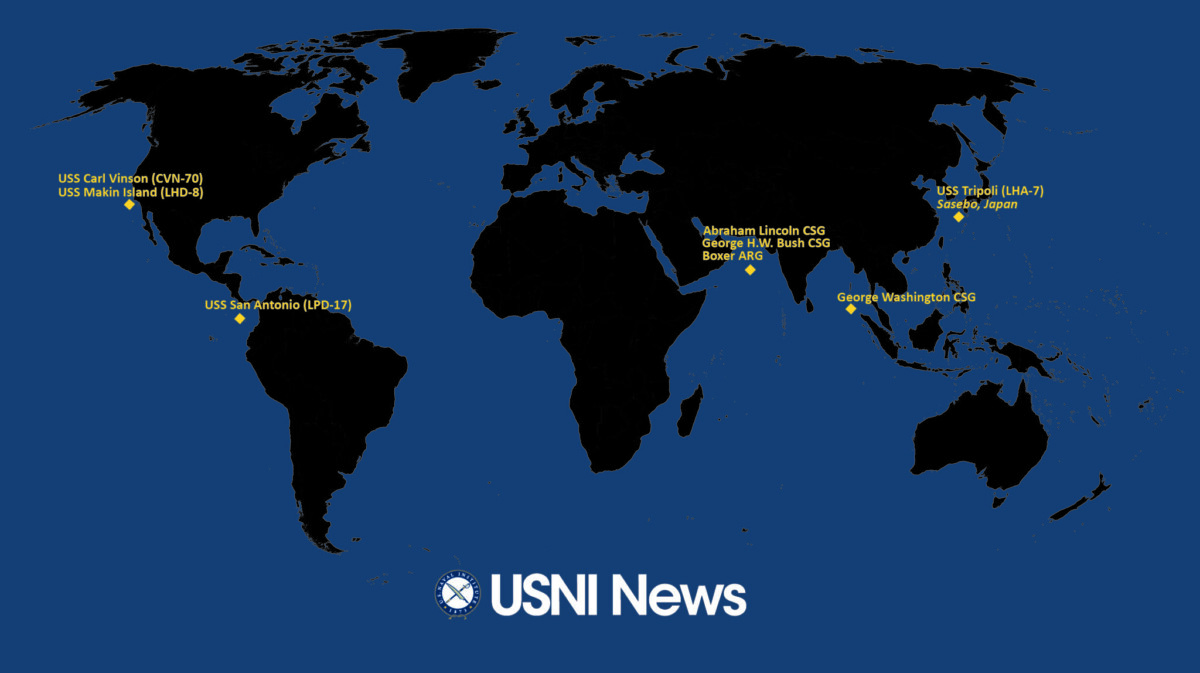
The Strait of Hormuz remained closed as of August 17, 2026, with no deal apparent, and the United States is moving the George Washington Carrier Strike Group (CSG) away from the Pacific, according to the economics blog Econbrowser. The fleet disposition is documented in the USNI News Fleet and Marine Tracker, August 17, 2026, accessed August 17, 2026. A related Wall Street Journal report is headlined "U.S. Sending Fresh Aircraft Carrier to Middle East Amid Iran War Strain."
"So much for the pivot to the Pacific," Econbrowser wrote, in a reference to the long-standing U.S. strategic reorientation of forces toward the Indo-Pacific. That reorientation dates to the Obama administration's 2011 "pivot to Asia" and has been reaffirmed in strategy documents by successive administrations. Carrier deployments to the Middle East have repeatedly drawn on the same finite force: the Navy is required by law to maintain 11 commissioned aircraft carriers, which cycle through deployment, training, and shipyard maintenance, so each carrier committed to the Central Command area is one unavailable for Indo-Pacific presence.
The Strait of Hormuz, the narrow waterway between Iran and Oman that connects the Persian Gulf with the Gulf of Oman and the Arabian Sea, is widely regarded as the world's most important oil transit chokepoint. The U.S. Energy Information Administration has for years reported that roughly one-fifth of globally traded petroleum liquids—around 20 million barrels per day in recent estimates—passes through the strait, along with roughly one-fifth of the world's liquefied natural gas trade, most of it Qatari. The waterway is about 21 miles wide at its narrowest point, with shipping lanes roughly two miles wide in each direction, and the EIA has noted that overland alternatives such as the Saudi East-West and Abu Dhabi crude pipelines have nowhere near the capacity to replace Hormuz volumes. The George Washington is a Nimitz-class, nuclear-powered aircraft carrier.
On Kalshi, a CFTC-regulated prediction market, data accessed August 17, 2026, at noon CT put the implied probability of the Strait of Hormuz reopening by year's end at only 33%, and at just 8% for the beginning of October.
In energy markets, Brent October futures remained elevated near $90 per barrel, while gasoline futures stood near the all-time levels recorded in June, according to NYMEX data via Barchart, accessed August 17, 2026, at noon CT. Supply interruptions of this kind are the reason the United States and other member governments of the International Energy Agency hold strategic petroleum reserves, which have been drawn down in coordinated releases during past disruptions, including after Russia's 2022 invasion of Ukraine. For readers tracking the situation, the indicators cited here update on different schedules: the USNI fleet tracker is published weekly, NYMEX futures settle daily, and the Kalshi market reprices continuously.
Source: Econbrowser

