Mother Nature Proves ‘Giant Force’ as Weekly Natural Gas Cash Prices Soar
Key Takeaways
- •Colder weather patterns increased heating demand and lifted spot natural gas prices across regional markets during the latest weekly survey period.
- •Feedgas deliveries to LNG export facilities held near record levels while production estimates remained lean, reinforcing upward pressure on cash prices.
- •Natural gas futures fell on Monday, Nov. 16, as recovering production and forecasts of a midweek Eastern warmup outweighed record LNG feedgas demand.
- •Despite healthy storage levels and a mild El Niño-shaped outlook, physical gas traders are pricing a hefty and growing winter risk premium into New England markets.
- •NGI projects a double-digit storage build in the EIA's Thursday inventory report, though last week's cold snap slowed injections across the eastern half of the country.
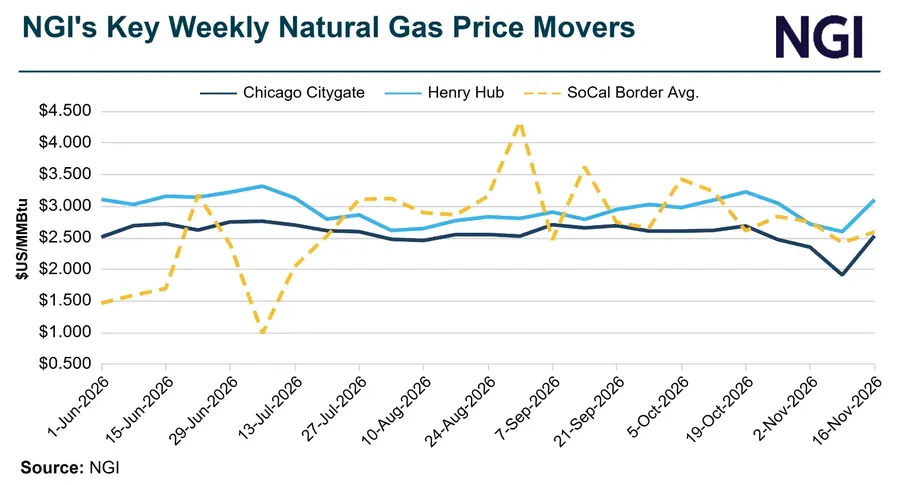
Spot natural gas prices surged in the latest weekly survey period, bolstered by a colder shift in weather patterns, robust liquefied natural gas (LNG) activity and leaner production estimates, according to Natural Gas Intelligence's (NGI) weekly cash-price report.
At a Glance
- Weather-driven heating demand is up
- LNG demand is running near all-time highs
- Production remains lower
NGI's report singled out the weather as the decisive driver, with its headline describing Mother Nature as a "giant force" behind the weekly jump in physical gas prices. The colder pattern lifted heating demand across key consuming regions just as feedgas deliveries to LNG export facilities held near record levels and output estimates stayed lean — a combination that supported cash prices across the board. Feedgas refers to the natural gas piped into export terminals, where it is chilled into LNG for shipment overseas — a demand stream layered on top of seasonal heating load that ties U.S. consumption to buyers abroad.
Regional markets tracked by NGI — including Algonquin Citygate in the Northeast, Chicago Citygate in the Midwest, Texas Eastern M-2, Cheyenne Hub in the Rockies and the SoCal Border average in the West — respond quickly to shifts in weather-driven consumption. Spot, or cash, prices reflect physical deliveries at specific pipeline points, while Henry Hub in Louisiana serves as the benchmark pricing point for the U.S. natural gas market. During the heating season, which spans roughly November through March, weather is typically the largest swing factor for U.S. gas demand as residential and commercial heating loads rise and fall with temperature swings.
Same-Day Daily Coverage: A Market at a Turning Point
The weekly survey arrived alongside NGI's daily coverage published Monday, Nov. 16, which detailed sharp moves across markets:
- East-West split: Physical natural gas prices tumbled across the East ahead of a midweek warmup expected to sharply reduce heating demand, while Pacific storms lifted prices across the West.
- Futures slip: Natural gas futures fell Monday as recovering production and forecasts for the warmup outweighed record LNG feedgas demand.
- Northeast premium: Despite healthy regional storage levels and a mild outlook shaped by El Niño — the periodic warming of equatorial Pacific waters that shifts weather patterns worldwide — physical gas traders are pricing in a hefty and growing winter risk premium for New England.
- Global easing: Global gas prices continued to fall as the risk premium that had propped up benchmarks in recent weeks diminished, with mild outlooks in Europe and North Asia weighing on the curve.
- Storage outlook: NGI is projecting a double-digit storage build when the U.S. Energy Information Administration (EIA) publishes its weekly inventory report on Thursday, although the brief cold snap slowed injections as cold air finally moved across the eastern half of the country last week. Weekly EIA figures tally working gas in underground storage — the inventory cushion drawn on during the heating season — making Thursday's report the next scheduled checkpoint for the supply-demand balance.
The weekly report was written by Kevin Dobbs, who joined NGI in April 2020 after working as a financial reporter and editor for S&P Global Market Intelligence and, earlier in his career, as an enterprise reporter for the Des Moines Register.
Original report: Mother Nature Proves 'Giant Force' to Send Weekly Natural Gas Cash Prices Soaring — Natural Gas Intelligence

