Southeast Natural Gas Cash Vaults Past $7 as Western Price Spike Deflates
Key Takeaways
- •Southeast natural gas cash prices vaulted past $7 as the heat dome shifted east and cooling demand spiked.
- •El Paso S. Mainline unwound its recent price spike as the Desert Southwest cooled after last week's heat- and disruption-driven surge.
- •Recovering LNG exports are pulling feedgas toward Gulf Coast terminals, competing with domestic demand as Europe's bid for cargoes firms.
- •A tropical disturbance nearing the Texas coast threatens Gulf Coast production and export infrastructure, which is historically sensitive to storm shut-ins.
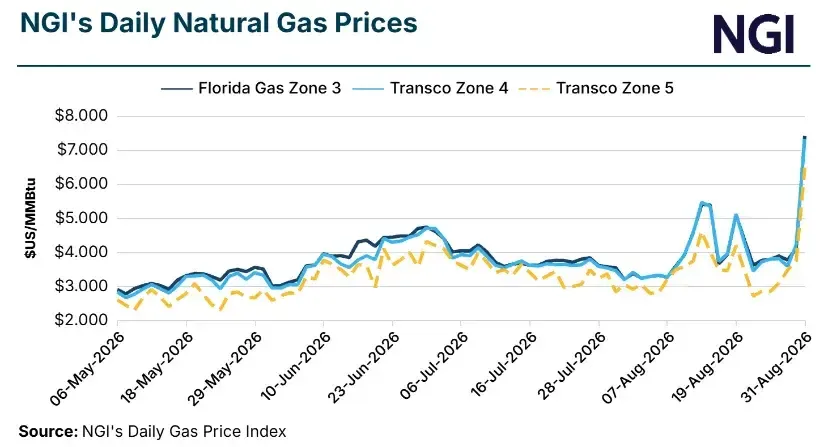
Physical natural gas prices surged across the Gulf Coast and Southeast on Monday, as air conditioning demand under an entrenched heat dome combined with recovering LNG exports to bid up hubs from Louisiana to Florida. The move marked a geographic rotation in the physical market: cash strength that had been concentrated in the Desert Southwest and Southern California last week — driven by heat and supply disruptions — deflated as the heat dome shifted east, redirecting the premium toward Gulf Coast delivery points.
At a glance:
- Hubs from Louisiana to Florida led the gains
- El Paso S. Mainline unwound its recent spike
- A tropical disturbance neared the Texas coast
The eastward shift of the heat dome lifted Louisiana and Southeast hubs, according to Natural Gas Intelligence. Cash prices vaulting past $7 at Southeast hubs reflect how sharply regional basis can swing when cooling demand spikes in heavily populated markets where gas remains a primary fuel for power generation. For context, spot moves of this kind are shaped by daily deliverability — pipeline capacity and storage draw capability — rather than the fundamentals that drive futures, which traded on a separate set of factors Monday. Related coverage from NGI published August 31, 2026:
-
Natural Gas Futures Edge Higher as September Reloads With More Heat: Natural gas futures moved higher Monday as forecasts put September among the hottest on record, with recovering LNG demand and shrinking storage surpluses stacked against production running near record highs.
-
Europe's Fight for LNG Puts TTF Back on the Upswing: European natural gas prices spiked Monday as competition with Asia for LNG cargoes intensified amid renewed clashes between the United States and Iran.
-
Weekly Natural Gas Spot Prices Advance as Southwest Heat, Supply Disruptions Fuel Competition: The physical natural gas market advanced in the final full week of August, bolstered by scorching heat across the southern reaches of the country and supply interruptions that temporarily stalled flows to the Southwest and Southern California.
-
Is the Cheap Natural Gas Advantage for Ammonia Producers Shrinking?: Regional natural gas basis advantages for US ammonia producers are tightening heading into the fall, tightening production margins in key markets.
-
Heat, LNG Counter Supply as Natural Gas Futures Launch Trading Week: Natural gas futures hovered on both sides of even early Monday as market participants contrasted elevated cooling demand and solid LNG volumes against healthy levels of supply.
The recovering LNG exports cited as a driver of the cash rally tie the Gulf Coast cash market directly to the international competition for cargoes: feedgas pulled toward Gulf Coast export terminals competes with domestic demand, and Europe's bid for LNG has been firming in parallel. The tropical disturbance nearing the Texas coast is a watch item for the coming sessions, as Gulf Coast production and export infrastructure are historically sensitive to storm-related shut-ins.
NGI also reported August 28, 2026, that Arizona Natural Gas Cash Plunged $4 as the West Cooled and Heat Shifted East: Physical natural gas prices fell at most hubs Friday for delivery through Monday as cooler weather unwound the Desert Southwest's late-week price spike, while the eastward-shifting heat dome lifted Louisiana and Southeast hubs.
This report was authored by Chris Newman, who joined NGI in October 2023. He worked 18 years at Argus Media, starting in 2004 in Washington, D.C., where he covered U.S. thermal/coking coal markets and rail transportation. In 2014, he moved to Singapore to help lead Argus' coverage of steel and its raw material feedstocks. A graduate of the University of Virginia, he returned to his native Virginia in 2021.
