South Korea Extends Fuel Price Caps for Another Four Weeks as Middle East Tensions Lift Oil Prices
Key Takeaways
- •The wholesale price caps for gasoline, diesel and kerosene will remain unchanged for four more weeks from Saturday.
- •South Korea said it has secured crude oil and naphtha supplies at about 100 percent of last year’s level.
- •Brent crude has risen back to the $90-per-barrel range as Middle East tensions have intensified.
- •South Korea’s July consumer price index rose 2.8 percent from a year earlier, above the central bank’s inflation target.
- •The government is still processing compensation claims for refiners’ losses under the fuel cap system.
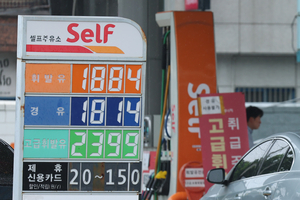
South Korea will keep its fuel price ceilings unchanged for another four weeks, the Ministry of Trade, Industry and Resources said Friday, as renewed tensions in the Middle East push global oil prices higher.
Under the extension, which begins Saturday, the maximum prices that local refiners may charge gas stations for gasoline, diesel and kerosene will stay at the same levels as the previous four-week period: 1,784 won ($1.29) per liter for gasoline, 1,773 won for diesel and 1,380 won for kerosene.
The decision reflects a renewed climb in global crude oil prices driven by uncertainty in the Middle East, though the government stressed that domestic oil supplies remain stable. The stakes are high for Asia's fourth-largest economy: South Korea imports nearly all of its crude oil, with the Middle East supplying the bulk of those shipments, so price swings in the region feed quickly into domestic fuel costs. Brent crude, which had fallen to the $70-per-barrel range earlier this month on hopes of easing tensions, rebounded to the $90 range as of Thursday. Global prices for refined petroleum products have also resumed their upward trend.
Despite the renewed volatility, the ministry said South Korea has secured crude oil and naphtha supplies at levels equivalent to about 100 percent of the amount recorded a year earlier. Domestic fuel prices have likewise remained relatively stable. The nationwide average retail price of gasoline stood at 1,862 won per liter on Friday, down slightly from 1,867 won at the beginning of the month, while diesel slipped to 1,845 won from 1,850 won over the same period. Because the ceilings bind at the wholesale level — what refiners charge stations — pump prices are not fixed outright, which is why the government tracks nationwide retail averages alongside the caps.
Inflation concerns were a key reason for leaving the caps in place. South Korea's consumer price index rose 2.8 percent in July from a year earlier, above the Bank of Korea's 2 percent inflation target, and the government estimated that inflation could have reached 3.6 percent without the fuel price cap system.
"We decided to maintain the maximum prices after closely monitoring international oil prices and taking into account the recent burden on household living costs," the ministry said, citing additional pressure on households from extreme weather, including recent heat waves and heavy rainfall.
The government said it will keep the price ceiling system in place while closely monitoring developments in the Middle East, the domestic petroleum supply situation, inflation and household costs. With the wholesale caps unchanged, retail gasoline prices are expected to remain around the 1,800-won-per-liter level.
South Korea implemented the price ceiling system in March amid concerns over fuel supplies stemming from tensions in the Middle East. The caps have remained in place since then and are subject to review every four weeks, making the expiry of the latest extension the next scheduled checkpoint for whether the ceilings stay unchanged or are adjusted.
Meanwhile, the task of determining compensation for refiners' losses stemming from the price cap system is expected to take longer than initially anticipated. The ministry completed the formation of a settlement committee last month to review compensation claims and is processing reimbursements for losses incurred between March 13 and June 30. The reimbursements are designed to offset the margin squeeze refiners absorb when import costs run above the capped selling prices — the trade-off at the heart of a system that holds down wholesale prices for gas stations and households while the refining sector absorbs the difference.
Source: Korea Herald Business

