SK Innovation E&S Imports First Australian Crude From Barossa Field
Key Takeaways
- •SK Innovation E&S plans to import 300,000 barrels of ultra-light crude oil from the Barossa gas field to Incheon Port in early August.
- •The shipment is the first batch from the field’s annual allocation of 1.1 million barrels tied to the company’s stake.
- •SK Innovation E&S holds a 37.5% stake in the Barossa gas field and has pursued the project since 2012.
- •The company has secured rights to import 1.3 million tons of LNG from the field into South Korea each year for 20 years.
- •The imported crude will be processed at SK Incheon Petrochem and is expected to reduce external procurement costs and improve competitiveness.
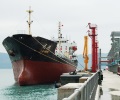
SK Innovation E&S has taken a step toward energy self-reliance by bringing ultra-light crude oil produced at Australia’s Barossa gas field to South Korea.
SK Innovation E&S said on July 27 that 300,000 barrels of ultra-light crude oil, also known as condensate, secured from the Barossa gas field are scheduled to arrive at Incheon Port in early August. The shipment is the first imported batch from the field’s annual production allocation of 1.1 million barrels secured according to the company’s stake.
Ultra-light crude oil is a light liquid crude obtained as a byproduct during natural gas extraction. It contains a large amount of naphtha, a key raw material for petrochemical products.
The import marks the tangible result of the Barossa gas field project, which SK Innovation E&S has pursued for 14 years since 2012. The company holds a 37.5% stake in the field and has played a leading role in the development process, from reserve evaluation to facility construction. Through the project, it has secured the right to bring 1.1 million barrels of ultra-light crude oil and 1.3 million tons of LNG into South Korea every year for the next 20 years.
The imported ultra-light crude oil will be delivered to the dedicated facilities of SK Incheon Petrochem and used in production. The naphtha extracted in the process becomes a raw material for high value-added chemical products such as paraxylene (PX), as well as gasoline and aviation fuel. By feeding those facilities with internally secured raw materials, the company expects to reduce external procurement costs and improve overall cost competitiveness.
Industry observers view the introduction of Australian resources as a way to reduce South Korea’s dependence on the Middle East, which has long been a vulnerability in the country’s energy supply chain. South Korea currently relies on the Middle East for most of its crude oil and petrochemical raw materials, leaving it exposed to supply disruption risks and higher transportation costs in the event of conflicts in areas such as the Strait of Hormuz. Securing Australia, a market with a stable trade environment, as a new supply base has made practical risk diversification possible.
The 1.3 million tons of LNG that SK Innovation E&S will import each year is equivalent to about 3% of South Korea’s annual domestic import volume, contributing to the stability of national natural gas supply and demand. As South Korea’s industrial users and utilities continue to depend heavily on imported energy, long-term resource projects like Barossa are notable not just for volume, but for adding a non-Middle Eastern supply channel that can be brought directly into domestic use. The model of a private company making long-term overseas resource investments, achieving commercial production, and importing the output domestically is expected to become an important reference point for future energy policy.
Since the introduction of North Yemen crude oil in 1988, SK Innovation has continued to focus on overseas resource development and expand its resource footprint. The company currently secures about 20 million barrels of crude oil and natural gas annually from 11 countries, and its secured LNG resources amount to about 6 million tons.
An official from SK Innovation E&S said, “Overseas resource development involves high risks, but it is a path that must be taken for energy self-reliance,” adding, “We will utilize the resources produced at the Barossa gas field to lower external dependence and support the supply and demand stability of domestic industries.”
Source: Business Korea

