Silver Opens Above $69 for First Time Since June 16 as Month-over-Month Gain Reaches 18.2%
Key Takeaways
- •Silver September futures opened at $69.34 per ounce on August 24, 2026, down 0.3% from the previous close and marking the first trade above $69 since June 16.
- •The U.S. Treasury doubled its long-term bond buyback program to $4 billion per session, triggering aggressive short-covering and speculative buying across precious metals markets.
- •Silver's outperformance versus gold reflects an acute physical supply deficit and structural industrial demand from AI data center infrastructure, grid modernization, and advanced electronics.
- •Silver's opening price was up 6.3% from one week earlier, 18.2% from one month earlier, and 77.8% from one year earlier.
- •Silver's year-over-year growth has roughly halved from the 173.3% recorded on May 14, and the metal historically trades with more volatility than gold.
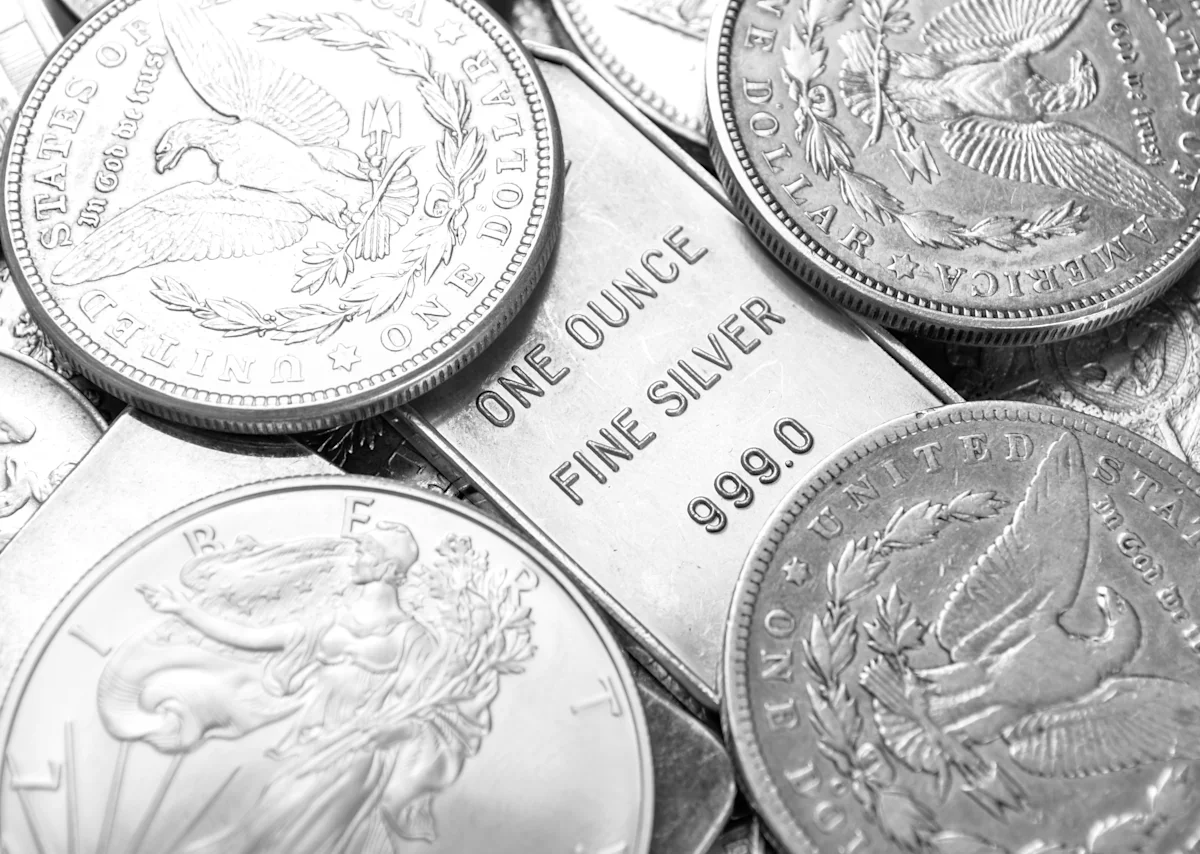
Silver (SI=F) September futures opened at $69.34 per ounce on Monday, August 24, 2026, down 0.3% from Friday's closing price. The metal slipped slightly in early trading, easing to $69.29 as of 8:40 a.m. ET.
The opening above $69 marked the first time silver has traded above that level since June 16, bringing its month-over-month gain to 18.2%.
What is driving precious metals prices
Yahoo Finance Executive Editor Brian Sozzi published an analysis Monday morning detailing what is behind the recent price growth of precious metals:
Gold and silver prices are being fueled by a potent combination of monetary policy interventions, escalating geopolitical friction in the Middle East, and persistent global inflation. A major catalyst for the late-August breakout has been the U.S. Treasury's unexpected decision to double its long-term bond buyback program to $4 billion per session. In turn, this has triggered an aggressive wave of short-covering and speculative buying across precious metals markets. At the same time, a never-ending war with Iran — which has pushed up energy prices once again — has reinforced gold's status as the primary global safe-haven asset.
Beyond shared macroeconomic factors, silver's dramatic outperformance also reflects an acute physical supply deficit and compounding industrial demand. Long-term structural consumption from AI data center infrastructure, electrical grid modernizations, and advanced electronics continues to absorb physical inventory faster than global mine production can keep pace.
The Treasury's buyback program repurchases outstanding government securities through scheduled operations, a tool used to support market liquidity; expanding the long-term program to $4 billion per session marks a notable escalation of that effort. The analysis also underscores why the same macro backdrop plays out differently for silver than for gold: silver draws the same safe-haven flows but carries far heavier industrial exposure, which is why the physical supply deficit and structural consumption described above bear so directly on its price.
Current price of silver
The opening price of silver futures on Monday, August 24, 2026, was 0.3% lower than Friday's closing price. Here is how Monday's opening silver price has changed versus last week, last month, and last year:
- One week ago: +6.3%
- One month ago: +18.2%
- One year ago: +77.8%
For context, silver's year-over-year growth was 173.3% on May 14, meaning the pace of annual gains has roughly halved over the past three months even as silver pushes back above $69 for the first time since mid-June. Silver has also historically traded with more volatility than gold, a pattern that tends to magnify its swings in both directions.
The current price of silver can be monitored on Yahoo Finance 24 hours a day, seven days a week. Investors can also explore a list of the top-performing companies in the silver industry using the Yahoo Finance Screener, which allows users to build their own screeners with more than 150 different screening criteria.
How beginners can invest in silver
There are several ways to invest in silver, from buying the metal itself to choosing financial products tied to its price. Here is how each option works.
Physical silver
The most direct way to invest in silver is to buy it in physical form, either as bullion bars or government-minted coins. This gives investors direct ownership of the metal, with no counterparty risk from an exchange or financial institution.
The trade-off is logistics. Buyers need to think about storage, security, and potentially insurance. Dealers also charge a markup — known as a premium — above the spot price, the benchmark at which the metal changes hands for immediate delivery and which can differ from quoted futures prices. That means prices need to rise enough to cover the premium before an investment is in profit. Still, for investors who want tangible ownership of their assets, physical silver is a straightforward option.
Silver ETFs
Silver exchange-traded funds (ETFs) trade on stock exchanges the same way individual stocks do. Some ETFs hold physical silver directly, giving shareholders fractional ownership of real metal. Others invest in silver mining companies rather than the commodity itself.
ETFs are generally the most accessible and liquid way to get silver exposure. They can be bought and sold through any standard brokerage account, and there is no storage or insurance to worry about.
Keep in mind, though, that some silver funds are taxed as collectibles rather than investments, which can mean a higher tax rate: in the United States, collectibles held longer than one year face a top long-term federal capital gains rate of 28%, above the top rate that applies to most other long-term investments. It is worth confirming the tax treatment with a professional before investing. Investors will also have to keep an eye on expense ratios — the annual fees funds charge as a percentage of assets.

