Silver Surges 107% Since 2025 as Crypto Market Falls 58%, Highlighting a Sharp Shift in Investor Sentiment
Key Takeaways
- •Silver has reportedly gained 107% since 2025, more than doubling in value over the period.
- •The broader cryptocurrency market is reported to have declined 58% over the same timeframe.
- •Silver’s demand is supported by industrial uses in electronics, solar panels, and other technologies, as well as investment demand during uncertainty.
- •Cryptocurrency prices are driven by liquidity, regulation, technology trends, and investor risk appetite, making them more volatile than silver.
- •The performance gap highlights that physical commodities and digital assets can respond very differently to the same macroeconomic conditions.
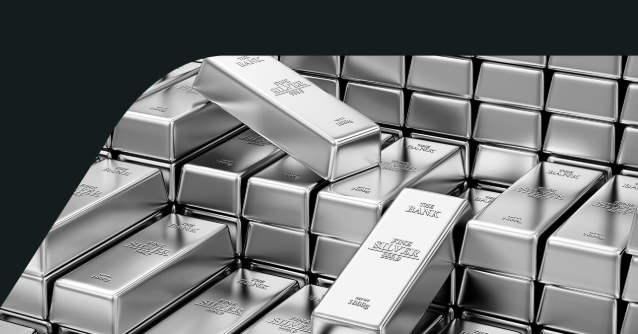
Silver has dramatically outperformed the broader cryptocurrency market since 2025, with the precious metal reportedly gaining 107% while the crypto market has declined by 58%. The striking performance gap highlights a major shift in investor sentiment and raises fresh questions about how markets are positioning themselves amid changing expectations for inflation, interest rates, economic growth, and risk.
The comparison comes at a time when investors are increasingly looking beyond traditional growth assets and reassessing the role of scarce physical commodities in their portfolios. Silver has historically occupied a unique position in financial markets because it combines characteristics of both a precious metal and an industrial commodity. Cryptocurrency, by contrast, remains a relatively young asset class whose performance can be heavily influenced by liquidity conditions, technology trends, regulation, and investor appetite for risk.
The latest performance figures show just how differently those two markets can behave during the same period.
Source: XPost
Silver's Remarkable Rise
A 107% gain represents more than a doubling in the value of silver compared with its starting point in 2025. Such a move would normally be considered significant for a major global commodity, particularly one with a long history as a monetary and industrial asset. Silver has experienced large price swings before—notably during the 1980 Hunt brothers squeeze, the 2011 run toward nearly $50 per ounce, and the 2020 surge off pandemic lows—but a doubling over a compressed timeframe remains noteworthy even by the metal's own volatile historical standards.
Silver has benefited from several factors that can influence demand. The metal is used in electronics, solar panels, industrial equipment, and other technologies. At the same time, investors can purchase silver as a traditional precious-metal asset during periods of economic uncertainty. This combination gives silver two distinct demand drivers: industrial demand can support prices when global manufacturing and technology investment remain strong, while investment demand can increase when investors become concerned about inflation, currency depreciation, or financial-market volatility.
Crypto Market Moves in the Opposite Direction
The cryptocurrency market's reported 58% decline presents a very different picture. Crypto assets have historically been among the most volatile investments in global financial markets. During periods of strong liquidity and rising risk appetite, cryptocurrencies can experience rapid gains. But when investors become more cautious, digital assets can also experience significant declines. Previous crypto bear markets—including the roughly 80% drawdown in 2018 and the 2022 downturn that saw several major exchanges and lending platforms collapse—demonstrate how sharply sentiment can reverse.
The reported 58% drop illustrates the sensitivity of the cryptocurrency market to broader financial conditions. The contrast with silver is particularly notable because both are often discussed as alternatives to traditional financial assets, yet they behave very differently in practice.
Why Investors Compare Silver and Crypto
Silver and cryptocurrency are frequently compared because both can be viewed as scarce assets. Silver exists in limited quantities in the Earth's crust and requires mining and refining to enter the market. Bitcoin, meanwhile, has a predetermined maximum supply of 21 million coins.
Supporters of cryptocurrency have argued that digital assets can offer some of the scarcity characteristics historically associated with precious metals. The difference is that silver has centuries of history as a monetary and industrial commodity, while cryptocurrencies remain a relatively new asset class. That difference can become especially important during periods of market stress.
Silver Benefits From Physical Demand
One of silver's strongest characteristics is its physical utility. The metal is an important component in a wide range of industrial applications. Solar technology is particularly important because silver is used in photovoltaic cells. As countries invest heavily in renewable energy and electricity infrastructure, demand for silver can receive support from expanding industrial applications. Electronics manufacturing also requires silver because of the metal's electrical conductivity.
According to data from the Silver Institute, global photovoltaic demand for silver has grown substantially as solar capacity installations have accelerated worldwide, and the silver market has registered consecutive annual supply deficits in recent years—meaning total demand from industry and investors has exceeded mine production plus recycled supply. That structural gap provides a fundamental backdrop against which silver's price appreciation becomes easier to understand.
This means silver does not depend entirely on investor speculation to generate demand. Industrial users generally purchase silver because they need its physical properties, not because they expect its price to increase.
Silver as a Traditional Safe-Haven Asset
Precious metals have historically attracted investors during periods of uncertainty. Gold is generally considered the most established safe-haven asset, but silver can also benefit from demand for precious metals. Investors may turn toward physical commodities when they are concerned about inflation, currency instability, or geopolitical risks. Silver can therefore benefit from both defensive investment demand and industrial consumption—a combination that has helped distinguish the metal from purely financial assets.
The Crypto Market Faces Different Drivers
Cryptocurrency prices are influenced by a much broader collection of factors. Monetary policy remains important: when interest rates are high, investors may prefer assets that provide predictable income rather than highly volatile cryptocurrencies. When rates fall and liquidity increases, risk appetite can improve.
Regulatory developments also play an important role. Changes in government policy can influence exchanges, institutional investors, stablecoins, decentralized finance, and cryptocurrency-related businesses. Technology developments and market sentiment can create additional volatility.
Bitcoin's Role in the Comparison
Although the reported decline refers to the broader crypto market, Bitcoin remains the largest and most influential digital asset. Bitcoin has traditionally been promoted as digital gold because of its fixed supply and decentralized structure. However, its price behavior has often been significantly more volatile than that of precious metals.
That distinction is critical: an asset can have a limited supply while still experiencing major price declines. Scarcity does not guarantee stable demand. Bitcoin's long-term value therefore depends on continued adoption, liquidity, and investor confidence. Crypto investors, by contrast, generally acquire tokens based on expectations about future utility, adoption, network activity, or price appreciation—creating a fundamentally different demand structure from the silver market.
A Changing Investment Environment
The divergence between silver and crypto performance suggests that investors may be reassessing risk. When markets become more defensive, capital can move away from highly volatile assets. Precious metals can benefit from this shift. The 107% rise in silver compared with the reported 58% decline in crypto illustrates how dramatically asset-class preferences can change.
However, investors should be cautious about interpreting past performance as a guarantee of future returns. Silver can experience substantial corrections after rapid gains, while cryptocurrencies can recover sharply following periods of weakness.
Inflation Expectations Matter
Inflation is another factor connecting the two markets. Precious metals have historically been viewed as potential stores of value during periods of currency depreciation. When the purchasing power of fiat currencies declines, investors may seek assets with limited supply. Cryptocurrency advocates make a similar argument about Bitcoin.
But the market has not always treated crypto as an inflation hedge in the same way it treats precious metals. During some periods, cryptocurrencies have traded more like high-growth technology assets than traditional defensive investments.
Interest Rates Could Influence Both Markets
Federal Reserve policy and global interest rates remain important for both asset classes. Higher interest rates can increase the opportunity cost of holding assets that do not generate traditional income. Lower rates can have the opposite effect by making alternative assets relatively more attractive.
The difference is that cryptocurrencies can respond much more aggressively to changes in liquidity expectations. Silver is also influenced by industrial demand, mining supply, and physical consumption, giving it additional drivers.
Silver Supply Is Not Unlimited
Although silver does not have a fixed numerical supply cap like Bitcoin, production is constrained by geological and economic factors. Mining companies must discover deposits, develop mines, and invest significant capital before new supply reaches the market. A large portion of silver production also comes as a byproduct of mining other metals, which can make supply less responsive to changes in silver prices. If demand rises rapidly, production cannot necessarily increase immediately.
Cryptocurrency supply, by contrast, depends on the rules of individual networks. Bitcoin's maximum supply is mathematically limited. Other cryptocurrencies have different monetary policies—some have fixed supplies, while others allow ongoing issuance or use token-burning mechanisms to adjust circulating supply. This makes the crypto market fundamentally different from commodities. Investors must evaluate the supply structure of each digital asset rather than treating the entire market as one uniform category.
Institutional Investors Are Watching Both Markets
Institutional participation has become increasingly important in both precious metals and cryptocurrencies. Large investors have long used commodities and precious metals as part of diversified portfolios. Crypto has gradually gained access to institutional capital through regulated investment products and financial infrastructure. The U.S. Securities and Exchange Commission's approval of spot Bitcoin exchange-traded funds in January 2024 marked a milestone in that process, creating a regulated channel for institutional and retail allocation to Bitcoin alongside established vehicles such as silver-backed ETFs, which have traded on major exchanges since 2006.
The growing availability of these products makes it easier for professional investors to allocate capital to digital assets. However, institutional investors often adjust exposure according to volatility and macroeconomic conditions, which can contribute to large flows into and out of cryptocurrency markets.
The Performance Gap Sends a Message
The 107% rise in silver and 58% decline in crypto represent an unusually large performance gap. It shows that investors are not simply seeking scarce assets—they are differentiating between types of scarcity. Physical assets with established industrial demand can behave very differently from digital assets whose value depends heavily on market confidence and network adoption.
The distinction is particularly important for investors who view both silver and Bitcoin as alternatives to fiat currency. Their underlying economic structures are fundamentally different.
Could Crypto Recover?
A sharp crypto-market decline does not necessarily mean that the long-term cryptocurrency thesis has failed. Digital assets have historically experienced significant boom-and-bust cycles. Bitcoin and other cryptocurrencies have recovered from major market downturns in the past. If institutional adoption continues, regulatory clarity improves, and blockchain usage expands, demand could potentially return. The same volatility that creates downside risk can also produce rapid upside moves—making cryptocurrencies fundamentally different from silver.
Silver Also Faces Risks
Silver's recent strength does not make the metal risk-free. Commodity prices can fall when industrial demand weakens. A slowdown in manufacturing or renewable-energy investment could reduce physical demand. Higher interest rates can also pressure precious metals. Mining supply can change over time as new projects become economically viable. Investors therefore need to consider both the bullish and bearish factors affecting silver.
What the Divergence Means for Portfolios
The contrasting performance of silver and crypto demonstrates why diversification matters. Different asset classes can perform very differently under the same macroeconomic conditions. An investor concentrated entirely in cryptocurrency would have experienced a dramatically different outcome from one holding silver during the period described. That does not mean one asset is inherently better; instead, it highlights the importance of understanding the risks and economic drivers behind each investment.
The Bigger Picture
Silver's reported 107% gain since 2025 compared with a 58% decline in the cryptocurrency market represents a dramatic shift in relative performance. The divergence highlights the different forces driving physical commodities and digital assets. Silver benefits from industrial demand, precious-metal investment, and constrained mining supply. Cryptocurrencies depend more heavily on network adoption, liquidity, regulation, technology, and investor sentiment.
The comparison also challenges the idea that all scarce assets behave in the same way. While Bitcoin supporters have long compared the cryptocurrency to digital gold, the latest market performance demonstrates that digital scarcity does not necessarily produce the same price behavior as physical precious metals.
For investors, the most important lesson may be that asset classifications matter less than the economic forces actually driving prices. Silver and crypto can both attract investors seeking alternatives to traditional financial assets, but they respond to very different market conditions. As global markets continue to navigate inflation, interest rates, economic uncertainty, and changing investor preferences, the performance gap between silver and cryptocurrencies will remain an important indicator of where capital is flowing.

