Treasury Secretary Bessent Says He Cannot Explain Oil Price Spike, Drawing Criticism
Key Takeaways
- •Treasury Secretary Scott Bessent said during a White House address that he did not understand the day's 2.4 percent oil price spike to $93.78 per barrel.
- •Oil prices had climbed to their highest level in more than three weeks earlier in the week after Iran pledged the Strait of Hormuz would remain closed.
- •The Strait of Hormuz carries about 20 million barrels of oil per day, roughly a fifth of global petroleum liquids consumption, and is considered the world's most important oil transit chokepoint.
- •President Donald Trump threatened on Truth Social to announce what he called the most crushing economic operation ever taken against any country.
- •A White House source told Politico that Trump is moving away from military escalation toward economic pressure, a strategy centered on Treasury's Office of Foreign Assets Control and its sanctions programs.
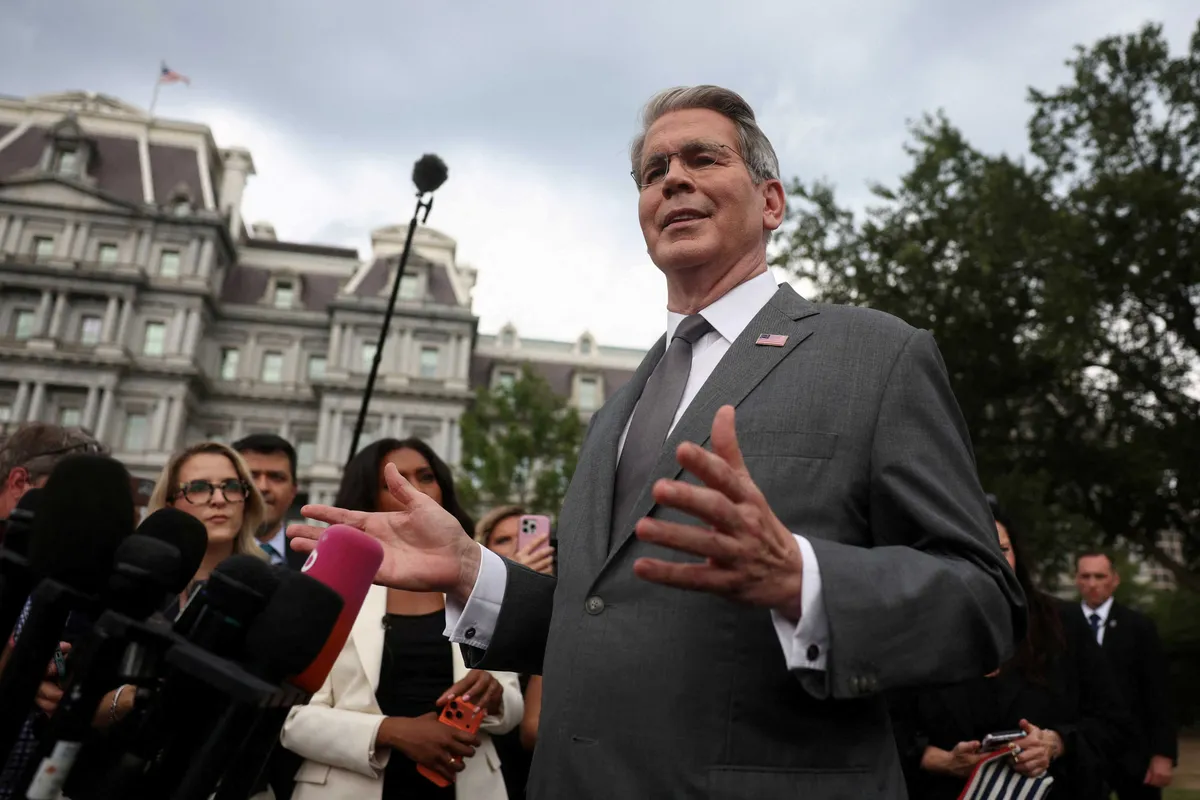
Treasury Secretary Scott Bessent acknowledged on Thursday that he could not explain the day's movement in oil markets.
"We've got a spike in oil prices today that I don't really understand," Bessent said during a White House address.
He made the comment as the international price benchmark for oil rose 2.4 percent to reach $93.78 per barrel shortly before noon on Thursday, according to CNBC. Prices had climbed to their highest level in more than three weeks earlier in the week after Iran pledged that the Strait of Hormuz would remain closed, Reuters reported on Tuesday. The strait, a narrow passage between Iran and Oman at the mouth of the Persian Gulf, carries about 20 million barrels of oil per day — roughly a fifth of global petroleum liquids consumption — and the U.S. Energy Information Administration has called it the world's most important oil transit chokepoint.
On Wednesday, President Donald Trump took to Truth Social to threaten that he would announce the "MOST CRUSHING ECONOMIC OPERATION EVER TAKEN AGAINST ANY COUNTRY!"
When Politico's Dasha Burns requested comment on the threat from a source inside the White House, she was told that Trump has decided to move away from military escalation and toward economic pressure. That pivot in many ways centers the strategy on the department Bessent leads: the Treasury's Office of Foreign Assets Control administers U.S. sanctions programs, the federal government's primary instruments of economic pressure against other countries.
"That means Treasury Secretary Scott Bessent is more involved in the war than Defense Secretary Pete Hegseth at this point," Burns explained.
Yet, despite his position of power as both a war advisor and the leader of the department that balances — or tries to balance — the budget of the U.S. government, Bessent admitted he could not understand how continuing hostilities against a country that controls the Strait of Hormuz, one of the world's primary waterway passages for the oil trade, would cause oil prices to remain high. Energy costs feed directly into gasoline prices and the inflation measures that shape the fiscal and financial policy his department oversees.
The admission left viewers scratching their heads as well, and drew sharp reactions.
"Feels like it's his job to know," replied political commentator Chris Robinson, "but I understand Bessent is just a humble soybean farmer who's estimated worth is half a billion dollars,."
Another political commentator, Jim Stewartson, argued it was a question of intelligence.
"In addition to being an amoral greedmonster," he wrote, "Scott Bessent is unbearably dumb."
But HFI Research, whose Substack on energy policy reaches roughly 19,000 readers, argued it was a question of honesty, writing, "If you are going to lie, at least try."

