Saudi Arabia Faces Shrinking Export Options as Reroutes Hit Capacity and Security Limits
Key Takeaways
- •Saudi Arabia redirected oil exports through its internal Petroline pipeline to Yanbu after Iran shut down the Strait of Hormuz, pushing western port loadings up 330% to approximately 2.47 million barrels per day by March.
- •The Houthi blockade at the Bab el-Mandeb strait forced Saudi vessels to sail north from Yanbu, leaving the Suez Canal and SUMED pipeline as the kingdom's sole remaining maritime export corridor out of the Middle East.
- •The SUMED pipeline has a capacity of 2.5 million barrels per day and the Suez Canal approximately 1 million barrels per day, making it physically impossible for Saudi Arabia to fully reroute all previous export volumes through Egypt.
- •Saudi oil production fell by as much as 25% during the second quarter, yet oil revenues rose 28% from the first quarter as Brent crude gained 47% since the start of the year, helping narrow the country's budget deficit.
- •Strait of Hormuz traffic is slowly recovering, with U.S. Energy Secretary Chris Wright citing approximately 13 million barrels per day exiting the Persian Gulf, representing about 65% of pre-war levels.
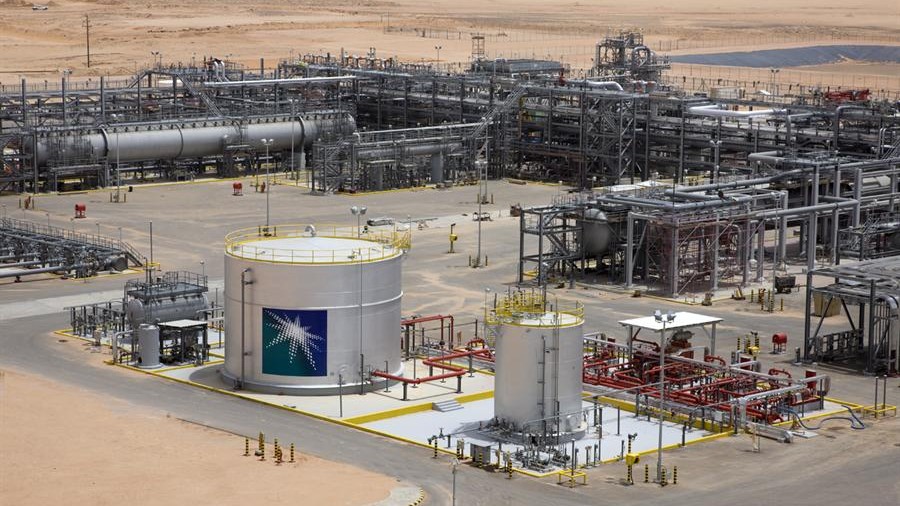
Saudi Arabia, OPEC's largest producer, is running out of viable options to reroute its oil exports as multiple maritime chokepoints become compromised by regional conflict, pushing the kingdom toward an increasingly narrow corridor through Egypt.
When Iran shut down the Strait of Hormuz, Saudi Arabia quickly redirected its oil flows to the Red Sea. That route has since become dangerous due to a Houthi blockade at the Bab el-Mandeb strait—the narrow gateway between the Red Sea and the Gulf of Aden—prompting a further reroute toward Egypt, where two LNG tankers at the Egyptian port of Damietta were recently struck by drones.
In early March, after Iran effectively paralyzed vessel traffic through the world's largest oil chokepoint, every Gulf state with the ability to redirect export flows did so. Saudi Arabia shifted its onshore Arab Light volumes from the Persian Gulf in the east onto the 7-million-barrel-per-day Petroline to the port of Yanbu on its western shores. The Petroline—a twin-pipeline system built in the early 1980s after the Iranian Revolution and the Iran-Iraq War exposed the vulnerability of Gulf shipping lanes—was conceived precisely for such a crisis, giving Riyadh a physical bypass around Hormuz via its own territory. This pushed Yanbu's oil exports to approximately 2.47 million bpd, a 330% surge compared with pre-war levels, according to Windward data.
By April, Saudi Arabia was shipping over 4 million barrels daily from Yanbu, demonstrating the value of alternative routes for crude and refined products. However, Saudi oil flows from the southern Red Sea port subsequently declined. By June, Yanbu loadings had fallen to around 2.39 million bpd—down 41% from the March peak and a 66% drop from total Saudi export levels in January of approximately 7.96 million bpd across both Gulf and Red Sea terminals, according to Wood Mackenzie.
The decline may have stemmed from a temporary resumption of Hormuz traffic in late June, after Iran and the United States reached a ceasefire deal. That agreement subsequently collapsed, missile strikes resumed, and Hormuz was shut down again. According to the latest Windward data, a total of five tankers entered the strait on July 29, with only three exiting the chokepoint—a fraction of pre-war traffic levels.
Windward also reported crude loadings in progress at Yanbu conducted in dark mode. Twelve vessels were observed at the port, including oil tankers and cargo carriers, along with two separate "active ship-to-ship transfer pairs." From Yanbu, Saudi vessels now sail north rather than south to avoid the Houthi blockade, which the Yemeni group declared on Saudi vessels last week.
This leaves Saudi Arabia with a single maritime route out of the Middle East: the Suez Canal and the SUMED pipeline to Egypt's Mediterranean coast. The SUMED pipeline—owned by a consortium of Egypt, Saudi Arabia, Kuwait, the UAE, and Qatar—has a capacity of 2.5 million bpd, making it physically impossible for Saudi Arabia to shift all oil flows previously handled by the East-West pipeline and Yanbu onto that conduit. However, Windward reported that roughly half of those flows could be rerouted to SUMED.
Earlier this week, the firm said it tracked at least three Saudi very large crude carriers moving crude from Yanbu to the Egyptian port of Ain Sukhna, where it would be fed into SUMED. The tankers sailed in dark mode until approaching Suez. Additional tankers were loading Saudi crude from the other end of the SUMED pipeline at the Mediterranean port of Sidi Kerir, carrying the oil onward to Asian buyers.
Theoretically, Saudi Arabia can continue sending oil north via Suez. In practice, scaling this to a level comparable to previous export routes would be difficult, Kpler noted in a recent assessment of options available to Aramco. The analytics firm highlighted that SUMED's capacity is limited to 2.5 million bpd and, critically, that other countries have already reserved portions of that capacity. The Suez Canal itself can handle only about 1 million bpd. Taken together, these constraints suggest Saudi oil flows would shrink in the coming weeks unless the Houthis lift their blockade—a prospect that currently appears unlikely.
With lower Saudi volumes reaching the market, other producers would need to step up, assuming they have the capacity to do so. Saudi Arabia historically holds the largest spare production capacity among OPEC members, meaning any sustained reduction in its exports cannot easily be offset by other suppliers in the short term.
In a moderately positive development for the region, traffic through the Strait of Hormuz appears to be recovering, albeit at a slow pace. ING analysts reported that tanker crossings remained "in single digits" but were higher than earlier levels. U.S. Energy Secretary Chris Wright was cited as saying that approximately 13 million bpd was coming out of the Persian Gulf—65% of pre-war levels, according to ING.
Meanwhile, Saudi Arabia is benefiting from higher oil prices. The country's budget deficit has narrowed considerably as Brent crude has gained 47% since the start of the year. Although oil production fell by as much as 25% over the second quarter—weighing on overall economic growth—oil revenues rose by 28% from the first quarter. Still, Saudi Arabia's geographical vulnerabilities in exporting crude remain a formidable challenge.
By Irina Slav for OilPrice.com

