Vostok Oil Begins Exports via New Bukhta Sever Arctic Terminal
Key Takeaways
- •Russia began exporting crude from Vostok Oil through the new Bukhta Sever terminal after President Putin ordered the first cargo loaded onto the Arc7 tanker Valentin Pikul.
- •Bukhta Sever's first phase has capacity of 30 million tonnes annually, with Rosneft targeting 50 million tonnes by 2030 and potentially 100 million tonnes per year at full build-out.
- •Crude reaches the terminal via a newly completed 790 km Vankor–Payakha–Bukhta Sever pipeline designed for 100 million tonnes a year.
- •Vostok Oil holds a resource base Rosneft estimates at more than 6.5 billion tonnes of low-sulphur crude, suited to refiners facing tighter fuel sulphur rules.
- •The project advanced despite US sanctions on its operating company in January 2025 and EU sanctions on the Valentin Pikul in April.
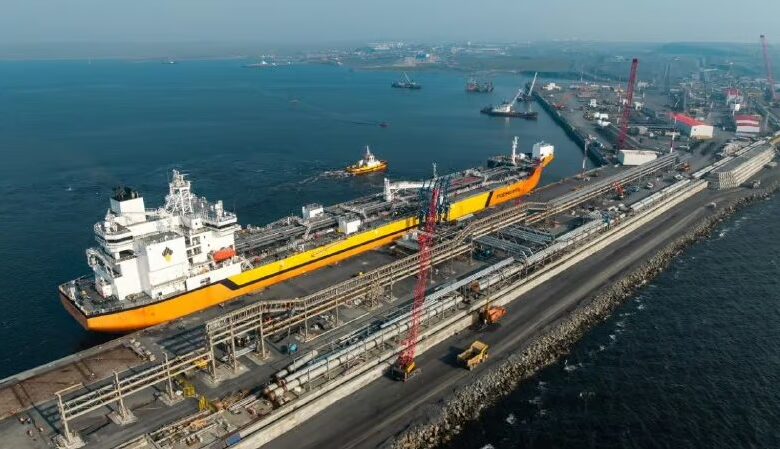
Russia has begun shipping crude from the giant Vostok Oil development through the newly built Bukhta Sever terminal on the Taimyr Peninsula, opening what Moscow intends to become one of the Arctic's largest oil export gateways.
President Vladimir Putin gave the order by video link over the weekend to begin loading the first cargo aboard the Arc7 ice-class tanker Valentin Pikul. Rosneft chief executive Igor Sechin attended the ceremony at Bukhta Sever.
The terminal's first phase has capacity to handle 30m tonnes of crude a year, with Rosneft targeting shipments of around 30m tonnes in the second half of 2027, rising to 50m tonnes by 2030 and potentially 100m tonnes annually thereafter. At full build-out, that throughput would place Bukhta Sever among the world's largest oil export terminals by capacity, comparable in scale to Russia's established Baltic and Black Sea outlets.
Oil reaches Bukhta Sever through the newly completed 790 km Vankor–Payakha–Bukhta Sever pipeline, itself designed for 100m tonnes a year.
The port currently has one oil-loading berth, two cargo berths, a berth for its own fleet, and 14 storage tanks capable of holding 30,000 tonnes apiece. Water depth alongside is 18 m, allowing the terminal to handle Arctic tankers of around 120,000 dwt. A large protective structure has also been built to shield the harbour from heavy ice.
The 120,000 dwt Akademik Gubkin was already waiting at anchor to take the next cargo.
Vostok Oil combines the Vankor and Payakha clusters and other fields across northern Krasnoyarsk, with a resource base Rosneft puts at more than 6.5bn tonnes of low-sulphur oil. Rosneft has positioned the project as a cornerstone of its long-term production plans, and the low-sulphur quality of the crude is suited to refiners facing tighter sulphur specifications in fuel products.
The launch comes despite extensive western efforts to slow the project. The US sanctioned Vostok Oil's operating company in January 2025, while earlier measures targeted contractors building the pipeline and the Bukhta Sever terminal.
The first loading vessel, Valentin Pikul, was itself added to the European Union's sanctions list in April this year. The use of Arc7 ice-class tankers, the class also employed on liquefied natural gas shipments from the Yamal Peninsula, reflects the terminal's dependence on vessels capable of operating in ice-covered Arctic waters along the Northern Sea Route.
