Russia Is Redrawing Its Energy Map Through the Arctic
Key Takeaways
- •The Arctic route from Murmansk to Qingdao spans about 6,400 km and takes roughly 20 days, compared with 12,400 km and around 39 days via the Suez Canal.
- •Arctic LNG 2 has loaded 41 cargoes totalling about 3.1 million tonnes this year, already exceeding last year's NSR volume despite US sanctions and a shortage of dedicated tankers.
- •Europe's full ban on Russian LNG, effective January 2027, is pushing more Yamal LNG cargoes toward Asia, with eastbound NSR volumes rising to about 500,000 tonnes in August 2026 from 350,000 tonnes a year earlier.
- •Rosneft's Vostok Oil project, with a resource base exceeding 48 billion barrels, plans a Sever Bay terminal starting at 30 million tonnes per year and expanding to 2.1 million b/d by 2030.
- •Zvezda is Russia's only shipyard capable of assembling Arc7 LNG carriers, and building ice-class tankers domestically remains a major bottleneck on NSR expansion.
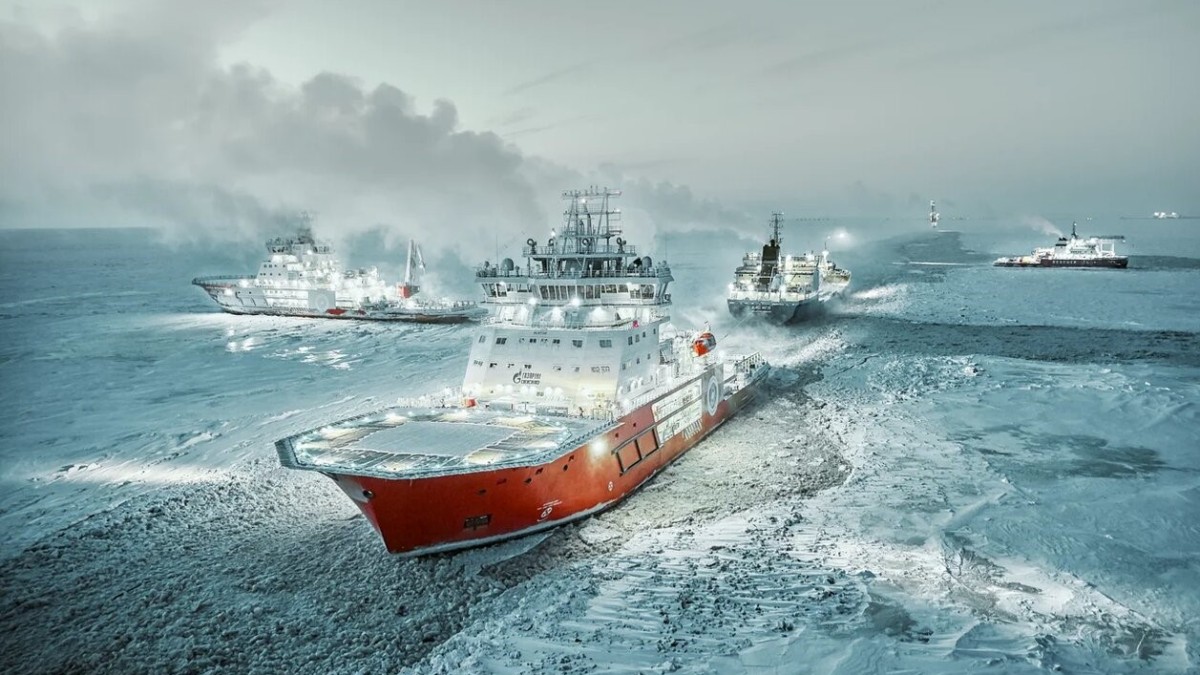
Russia's Northern Sea Route (NSR) is set to become a game-changer for Eurasian energy trade, and Europe's January 2027 ban on Russian LNG is pushing Moscow to bring it to life sooner than planned. LNG will remain the route's foundation, while crude traffic and Rosneft's vast Vostok Oil project could provide far greater scale. For Russia, the prize is a shorter route to Asian customers that avoids foreign-controlled chokepoints such as Suez, Bab el-Mandeb and the Strait of Malacca, and strengthens Moscow's command over its export infrastructure. However, the route's seasonal availability and persistent fleet shortages remain major constraints on its reliability and expansion.
The NSR runs along Russia's Arctic coast from the Kara Strait area to the Bering Strait, stretching about 5,600 km. It lies solely within Russian jurisdiction and is managed through the country's own navigation rules, icebreakers and ports, without any dependence on external canal authorities. Traffic is concentrated between June or July and October, though warming conditions and a growing fleet of Arctic-capable vessels are lengthening the manageable season. For cargo sailing from Murmansk to Qingdao on China's eastern coast, the Arctic route covers about 6,400 km and takes roughly 20 days, compared with 12,400 km and around 39 days via the Suez Canal. The Suez route's growing unreliability — underscored by the disruption to Red Sea shipping lanes since late 2023 — has further reinforced the value of the Arctic shortcut.
Arctic LNG 2: The Next Stage
Arctic LNG 2 represents the next major stage of Russia's Arctic LNG trade. The Gydan Peninsula project was designed to produce 19.8 million tonnes per year across three floating trains, two of which have been completed. Output remains below capacity because of US sanctions and a shortage of dedicated tankers, with China-bound exports beginning gradually last year. Washington has targeted the project with successive rounds of sanctions since late 2023, and the sanctions have also restricted access to Western-built LNG carriers, which is the root of the tanker shortage. Most Arctic LNG 2 sailings used the NSR, carrying a total of 530,000 tonnes of LNG, while only two cargoes took southern routes — underscoring the NSR's central commercial role. This year, 41 cargoes totalling about 3.1 million tonnes have been loaded so far, already exceeding last year's NSR volume. Since 2025, winter operations have been supported by Arc7 carriers transporting LNG to docked FSRUs near Kamchatka and Murmansk, where the cargo is transferred via ship-to-ship transfer onto conventional vessels for final delivery. This has allowed the specialized Arc7 carriers to make shorter, more frequent voyages.
With September typically the busiest period for Arctic shipping, exports are on course to rise further. Novatek is preparing to advance the third train. Two large prefabricated LNG modules were shipped from China to Russia's Belokamenka construction yard in mid-August and are expected to be installed on the concrete gravity-based platform for Arctic LNG 2's third train. They form part of the train's topside assembly, which collectively houses the processing, compression, power and utility systems needed to liquefy natural gas and load the LNG onto carriers. Seven additional modules remain in China at varying stages of completion. The reliance on Chinese fabrication illustrates how Western sanctions have pushed Russian project engineering toward Asian suppliers.
Domestic Shipbuilding Drive
Russia is supporting this growth through domestic shipbuilding. The Arc7 carrier Konstantin Posiet entered service in August, loaded its first cargo at the Arctic LNG 2 terminal late last month and is currently sailing east, while Pyotr Stolypin has been completed and should be launched anytime soon. Alexey Kosygin, the first such carrier launched at the Zvezda shipyard, was delivered in December 2025. Zvezda, in Russia's Far East, is the country's only yard capable of assembling Arc7 LNG carriers. The program initially relied on South Korea's Samsung Heavy Industries for designs, equipment and hull sections. That cooperation stopped after the war in Ukraine triggered sanctions and payment restrictions, pushing Russia to localize a capability previously available only through South Korean yards. Building these sophisticated ice-class tankers domestically remains one of the tightest bottlenecks on NSR expansion, since each carrier takes years to construct and the sanctioned fleet cannot be easily replaced.
Yamal LNG Rerouting East
A further boost to NSR traffic is expected to come from the rerouting of Russian LNG. Novatek's 17.4 million tonnes-per-year Yamal LNG plant in Sabetta, supplied by the South Tambey field, began exports in 2017 and has historically relied on Europe as its main market, with most cargoes delivered under long-term contracts to France, Belgium, Spain, the Netherlands and Portugal. The project operates a fleet of 15 Arc7 icebreaking carriers, which enable year-round westbound deliveries, while eastbound voyages have remained predominantly seasonal.
That pattern is set to change when Europe's full ban on Russian LNG takes effect in January 2027, pushing more Yamal cargoes toward Asia. The ban follows the EU's earlier waves of sanctions on Russian oil and pipeline gas, which left LNG as one of the last major Russian energy flows into the bloc. Firmer JKM spot prices this year — JKM being the East Asia benchmark for spot LNG — have reinforced the commercial incentive for that shift, improving the relative appeal of Asian deliveries. The change is already visible: about 500,000 tonnes sailed east through the NSR in August 2026, up from 350,000 tonnes in August 2025. With September and October typically among the busiest months for Arctic navigation, Yamal's total eastbound LNG trade is on course to increase further this year. For European buyers, the loss of Yamal volumes will need to be replaced by other suppliers, including the United States, Qatar and African producers.
Crude Oil Traffic Broadens the Route's Role
Crude oil traffic is broadening the NSR's role. The route handles Gazprom Neft's ARCO and Novy Port crude and oil shipped from Varandey (24, 35 and 35 degrees API respectively). Occasionally, tankers also carry Urals from Primorsk and Ust-Luga through the Arctic to China, proving that the route can serve oil originating far from its coastline — and this kind of rerouting is happening more frequently lately. Six Urals cargoes made the voyage in 2023, rising to nine in 2025. Six had already sailed in 2026 before September, normally one of the busiest months, while overall oil movements reached 12 vessels in August, against 9 a year earlier. China has been the dominant and almost exclusive destination, but shipments are expected to be tested for India and other markets.
Vostok Oil Could Change the Scale Entirely
Rosneft's Vostok Oil project could change the scale entirely. The project, covering 52 license areas and 13 fields with a resource base exceeding 48 billion barrels, is Russia's largest incremental source of oil production in the 2020s. The company describes the crude as approximately 40 degrees API, with sulphur of 0.01% to 0.1%, suggesting a light, sweet stream that could command a quality premium over Urals if the eventual export blend matches those specifications. Light, low-sulphur crudes are sought after by complex refineries because they yield more light products with less residual fuel, which underpins such quality premia.
The first-stage system centres on the roughly 790-kilometer Vankor-Payakha-Sever Bay pipeline. From Sever Bay, crude would most probably sail east through the NSR toward China during the principal July-to-October season. Such a new shipping route would also give Rosneft greater independence from the pipeline network operated largely by Transneft, the state monopoly that controls most Russian oil pipelines. Rosneft CEO Igor Sechin has reportedly been unsatisfied with Transneft's monopoly over tariffs, adding an incentive to control a separate route to market. Sever Bay is planned to handle initially 30 million tonnes per year, or about 625,000 b/d, before expanding to 2.1 million b/d by 2030.
China is the natural first market because its northern ports capture the greatest geographical benefit and its refiners already process substantial Russian volumes. Moscow is nevertheless seeking additional outlets, including Indonesia, where crude production has been problematic this year. The crisis in the Strait of Hormuz prompted Indonesia to replace disrupted Middle Eastern barrels and diversify its imports, and the need for alternative supplies is compounded by domestic production problems. Indonesian crude output was near 580,000 b/d at the beginning of August, below the government's 610,000 b/d target as field declines proved steeper than expected. Russian supplies could help cover at least part of that shortfall.
The deeper link is the proposed 300,000 b/d Tuban refinery project in East Java, owned 55% by Pertamina and 45% by Rosneft. Its estimated cost has risen from $13.5 billion to $23 billion–$24 billion, the investment decision remains under review, and contractors are being prequalified. Although still a longer-term development, Tuban may be an answer to how Russia can combine Arctic resources and shipping with Asian refining capacity, creating durable demand beyond China.
Redrawing the Energy Map
The NSR does not need to replace Suez or the Cape route to become a game-changer. Its advantage lies in reorganizing Russia's energy flows. Projects such as Vostok Oil mean Moscow's use of the NSR will not be driven by political and security concerns alone. Pipelines, Arctic terminals, ice-class fleets, transshipment hubs and Asian refining partnerships are increasingly being developed around eastbound flows. Russia is not merely redirecting cargoes away from Europe — it is redrawing its energy map, hardwiring the Asian pivot into its ports, pipelines and ships.
By Natalia Katona for Oilprice.com
