Russia Launches Major Vostok Oil Project with First Arctic Loading
Key Takeaways
- •Rosneft launched its Vostok Oil project on Sept. 6, loading the first crude onto the Arc7 ice-class tanker Valentin Pikul at the Bukhta Sever Port on the Kara Sea.
- •A new 790 km pipeline connecting the Vankor and Payakha fields to Bukhta Sever has a design capacity of 100 million mt/year, and the project holds an estimated 7 billion mt resource base of low-sulfur crude.
- •Rosneft CEO Igor Sechin said supplies could reach 30 million mt in the second half of 2027, 50 million mt by 2030, and potentially 100 million mt per year if market conditions allow.
- •Analysts caution that a shortage of heavy ice-class tankers and the closure of the Northern Sea Route from early October could limit near-term export volumes.
- •Russia plans to add four nuclear-powered icebreakers by 2030 to support year-round navigation along the Arctic route.
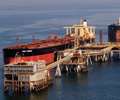
Russia's largest oil producer, Rosneft, announced on Sept. 6 that it has launched its giant Vostok Oil project, opening a new pipeline and loading the first oil onto the Arc7 ice-class Arctic tanker Valentin Pikul at the Bukhta Sever Port on the Kara Sea.
The project is central to Russia's plan to increase oil output across its northern and eastern regions and to ship the barrels via the Northern Sea Route, the Arctic passage that offers significant time and cost savings over alternative routes to market. If Vostok Oil reaches its 50 million mt/year target, output would be roughly equivalent to 1 million b/d, comparable to some of the world's largest single oil projects.
Rosneft CEO Igor Sechin said that commissioning the project will enable the supply of 30 million mt of oil as early as the second half of 2027 and up to 50 million mt by 2030, according to a company statement.
"Further development of the project makes it possible to increase supplies to the market to 100 million mt/year of oil, subject to market demand and favorable economic conditions," Sechin said, adding that the project's life cycle is designed for a century, and with additional exploration, could be extended several times over.
The new pipeline links the Vankor and Payakha fields with Bukhta Sever, spanning 790 km with a design capacity of 100 million mt/year, Rosneft said. Sechin said Vostok Oil holds a resource base of 7 billion mt of high-quality crude with a sulfur content of 0.01%-0.1%, making it comparable in quality to light, sweet benchmark grades that trade at a premium.
Speaking at the project launch, Russian President Vladimir Putin said an important step has been taken toward developing a new oil and gas province of global significance, according to a statement on the Kremlin website dated Sept. 5.
Also speaking during the launch, Russian Deputy Prime Minister Alexander Novak said the project is significant for Russia's energy security and the establishment of new routes.
"It involves utilizing and developing the Northern Sea Route and enabling direct supplies from the field via pipeline and the Bukhta Sever terminal to end-users in both the West and the Asia-Pacific region," Novak said, according to the Kremlin statement.
Russia has become increasingly reliant on supplies to Asia after its invasion of Ukraine triggered Western sanctions that have closed off most of its traditional Western markets. The sanctions have also complicated Russia's access to Western oilfield technology, financing, and insurance for Arctic shipping, factors that have weighed on other major Russian upstream projects.
Harsh Climate
Russia's ambitious plans to develop oil production and supply in the region could face disruptions and delays due to difficult climate conditions.
Ronald P. Smith of Emerging Markets Oil & Gas Consulting Partners said the biggest bottleneck to increasing shipments right now is a profound shortage of heavy ice-class oil tankers.
"The Northern Sea Route will start to close quickly the first week of October, so oil flows will be defined by the size of the ice-class fleet," he said.
He estimates that the Valentin Pikul working alone could probably export around 50,000 b/d on a year-round basis, shuttling oil over to Murmansk for ship-to-ship transfers. During the 2-3 month summer navigation season, this can be supplemented with direct pickup by conventional tankers.
Putin said Russia is building new icebreakers and ice-class vessels to support year-round navigation, aiming to add four nuclear-powered icebreakers by 2030.
Facilities at the Bukhta Sever Port already include an oil-loading berth, two cargo berths, a port fleet berth, and 14 storage tanks with a capacity of 30,000 mt of oil each. Full development will include a total of 102 tanks, Rosneft said.
Source: Platts
