Quaise Energy Closes $180 Million Series B, Boosting Superhot Geothermal Ambitions
Key Takeaways
- •Quaise Energy closed a $180 million Series B round, with $35 million contributed by Nabors Industries, to develop utility-scale superhot geothermal drilling.
- •Quaise's millimeter-wave technology, based on MIT Plasma Science and Fusion Center research, aims to reach rock depths of 10-20 kilometers where temperatures exceed 400 degrees Celsius, enabling supercritical water with far greater energy content than ordinary steam.
- •The Rhodium Group estimates geothermal could supply up to 64 percent of projected growth in data center energy demand by the early 2030s.
- •Oilfield services firms such as Nabors are investing deep-drilling expertise and capital in geothermal ventures, partly as a hedge against long-term uncertainty in their core oil and gas business.
- •Enhanced geothermal offers emissions-free, around-the-clock power that is not location-dependent like traditional geothermal and continues to enjoy bipartisan policy support.
The artificial intelligence boom is driving major growth in energy demand and catalyzing an all-of-the-above approach to energy development, and enhanced geothermal energy is capturing a windfall of investment dollars and renewed policy interest. A new wave of next-generation geothermal projects and startups may now have the backing needed to bring this cutting-edge, round-the-clock clean energy technology out of the lab and into commercial markets across the United States.
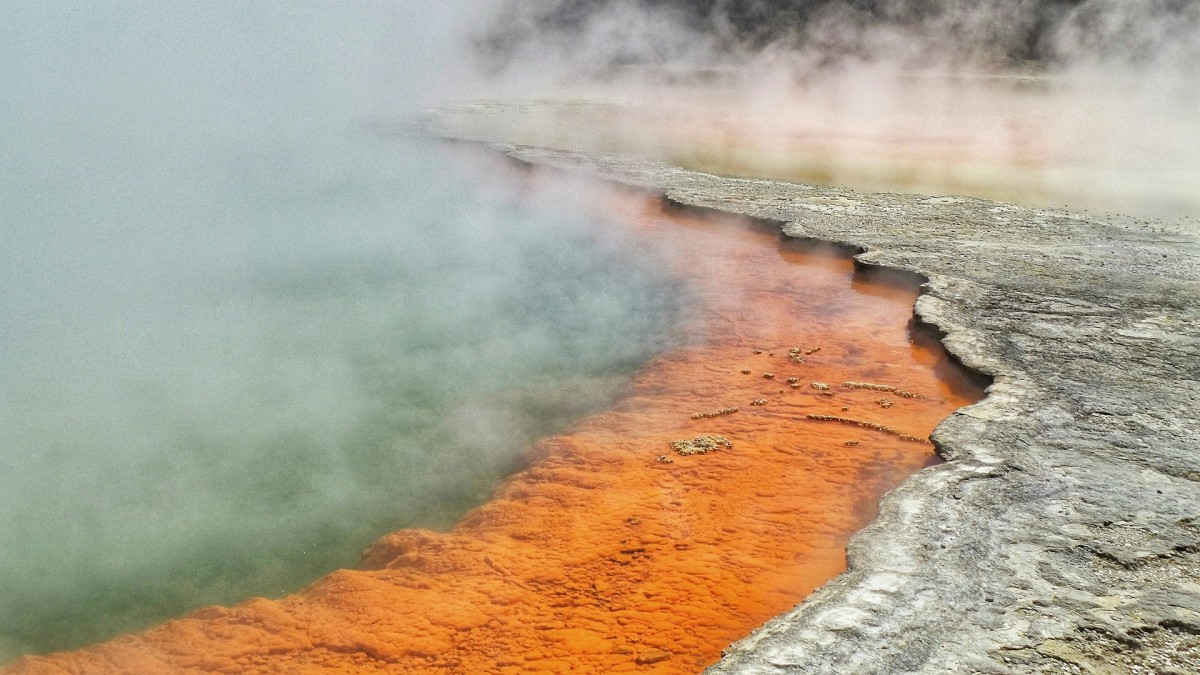
Geothermal energy is not new, but its applications are severely limited in traditional form. The process captures thermal energy from the Earth's core where it naturally escapes to the surface – such as in geysers – and converts that heat into electricity. The problem is that such vents are geological anomalies, making geothermal energy viable and scalable in places like Iceland and almost nowhere else on the planet.
Creative approaches to tapping that natural thermal energy could soon bring geothermal power to a grid near you. Enhanced geothermal methods borrow drilling technologies from the oil and gas sector – and even from nuclear fusion in some cases – to dig deeper into the Earth and access the core's heat from nearly anywhere on the surface. These technologies are highly promising for the clean energy transition and commercial application: they are entirely emissions-free, yet not intermittent like solar and wind. Critically, they also continue to enjoy broad bipartisan support, including strong policy backing from the current administration.
Some companies aim to go a step further, drilling even deeper to reach hotter temperatures for more powerful energy generation. At depths of roughly 10 to 20 kilometers, rock temperatures can exceed 400 degrees Celsius – hot enough for water to become supercritical, a state that carries considerably more energy per unit than ordinary steam and could dramatically boost the output of a single geothermal well. Reaching those temperatures and depths, however, is beyond the practical limits of conventional mechanical drill bits, which wear out quickly in such extreme heat and pressure.
One of the leading startups developing this "superhot" geothermal at utility scale just moved a huge step closer to realizing that plan. Houston-based Quaise Energy announced the final close of its Series B funding this week, raising a total of $180 million in equity financing. A significant portion of that money – $35 million – comes from drilling heavyweight Nabors Industries. Quaise's approach is rooted in research out of MIT's Plasma Science and Fusion Center, which developed the gyrotron technology used to generate millimeter waves. The involvement of Nabors, one of the world's largest onshore drilling contractors, is part of a broader pattern in which oilfield services firms are lending their deep-drilling expertise – and capital – to geothermal ventures, in some cases as a hedge as demand for their core oil and gas business faces long-term uncertainty.
"We are unlocking the most powerful clean energy source on Earth, and the Series B signals deep conviction across a wide range of investors," Carlos Araque, CEO and President of Quaise Energy, was quoted saying in Business Wire.
"Quaise's millimeter wave technology changes the equation entirely by reaching superhot rock at temperatures and depths that are inaccessible with conventional drilling, transforming geothermal from a location-dependent resource into a global energy solution," added Nabors President and CEO Anthony G. Petrello.
The timing for gigawatt-scale geothermal power could hardly be better, as reliable and indigenous forms of clean energy become more important than ever against the backdrop of the AI boom. Data center hyperscalers are driving up energy demand projections at a remarkable rate and reshaping the global energy landscape. Geothermal could be an indispensable part of the solution to this ballooning energy problem. New York-based research firm and think tank Rhodium Group says geothermal could meet up to 64 percent of the expected growth in data center energy demand as soon as the early 2030s.
Geothermal could also transform the energy landscape in quieter but no less important ways, such as by changing how buildings are heated and cooled. As extreme weather conditions grow more common and more intense, energy-efficient heating and cooling is a surprisingly critical piece of the energy security puzzle.
Moreover, the nascent nature of geothermal technology offers key advantages. As Latitude Media reported in April, "geothermal has the chance to get it right the first time" – particularly when it comes to managing public backlash and policy snags such as those that have created major bottlenecks for nuclear, solar, and wind energy.
In short, the moment is right for a geothermal energy breakthrough. Whether or not superhot holds the answer, the sector's progress marks a significant step in the right direction at a critical juncture for national and global energy security.
By Haley Zaremba for Oilprice.com
